A bird with far more fat than chicken and all of it under the skin rather than through the meat, which makes it behave more like a piece of pork than like poultry.
Where it comes from
The mallard was domesticated in Europe and Asia; the muscovy, a different species entirely, was domesticated separately in South America. Chinese duck husbandry is the oldest and most developed, and the Pekin duck behind roast duck everywhere came out of it.
Ducks are raised alongside rice paddies across Asia, eating pests and weeds, which is part of why duck is common in southern Chinese and Southeast Asian cooking and rare where rice is not grown.
Varieties
- Pekin — The standard roasting duck. Thick fat layer, mild meat, the bird behind Peking duck and most Western roast duck.
- Muscovy — Leaner, larger, more like a red meat. Common in France, where it is the usual magret.
- Mulard — A Pekin–muscovy cross raised for foie gras, and the source of most confit legs.
- Duck fat — Rendered from the skin. High smoke point, keeps for months, and the best fat there is for roasting potatoes.
In the kitchen
A duck breast goes into a cold, dry pan skin-side down, and the heat is brought up slowly. That renders the fat instead of searing it shut, and it is the whole difference between crisp skin and a rubbery layer.
Duck legs are tough and need long, slow cooking — confit, submerged in fat, is the classic answer and is a preservation method that happens also to produce the best texture.
Dishes with duck
 Arroz con patoDuck rice tinted green with coriander and dark beer, northern classic
 Moksi metiMixed roast meats – pork belly, char siu and duck – over rice
 Trung Vit LonFertilised duck egg boiled and eaten from the shell with herbs and salt
 Duck confitDuck legs preserved and crisped in their own fat.
 Foie grasRich fattened duck liver, festive starter with brioche and chutney.
 CassouletWhite beans slow-baked with duck confit, sausage, and pork.
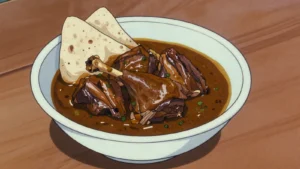 Curry duckDuck curried with green seasoning, river-lime favorite
 Pato no tucupiDuck simmered in tucupi broth with mouth-numbing jambu leaves
Duck is tagged on 11 dishes from 9 countries in the atlas. These notes are written from general knowledge and carry no per-fact citation — see About.