
Ingredients
The paste
- 3 tablespoonsmắm tôm
- the purple fermented shrimp paste
- from a jar
- read the safety note
The whipping
- 2 tablespoonssugar
- or to taste
- juice of 2 limes
- or more, to taste
- 2 tablespoonshot cooking oil
- see the method
- or 1 tablespoon rice wine
- or vodka
The aromatics
- 2 clovesgarlic, finely chopped
- 1or 2 bird’s eye chillies
- finely chopped, to taste
To serve
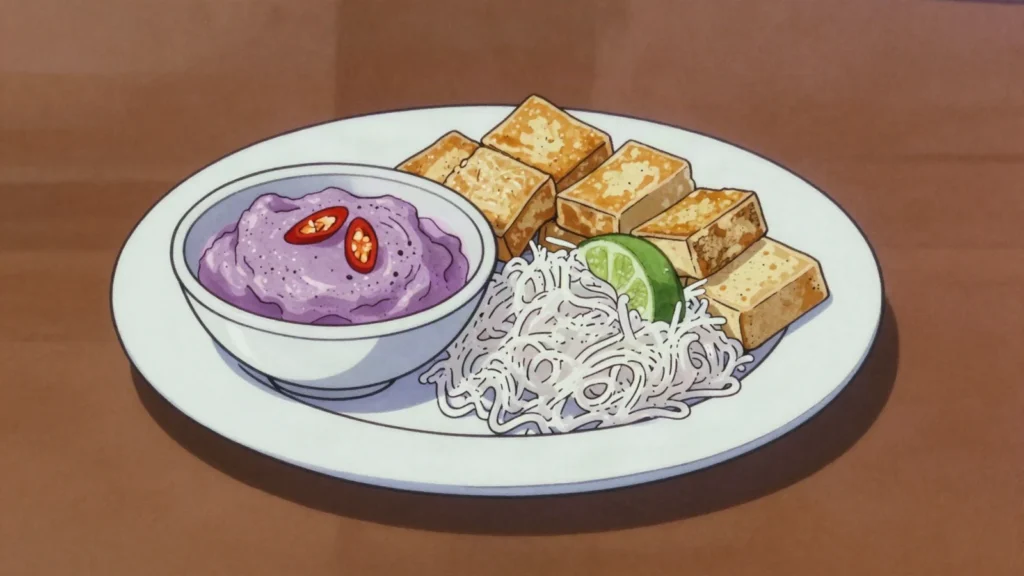
- bún đậu, the noodle and tofu plate
- fried tofu
- boiled pork belly
- rice vermicelli
- perilla, mint, coriander
- cucumber
- green banana, sliced
Directions
- Check the jar is properly sealed. Keep opened jars refrigerated. Use a clean spoon every time. Discard anything that smells wrong beyond its normal pungency. Discard anything showing mould. Adding hot oil raises the temperature somewhat.
- Put the mắm tôm in a small deep bowl. Add the sugar. Add the lime juice. Whisk it hard with a fork or a small whisk. Keep whisking for about a minute.
- Heat the oil in a small pan until it shimmers. Pour it into the bowl while whisking. Hot oil hitting a wet mixture spits.
- Pour it slowly and stand back slightly. Use a deep bowl. Now keep whisking. Stir in the chopped garlic and chilli. Do not add them before whipping.
- Taste it with a small amount. It should be salty first. Add more lime if it is too salty. Add more sugar if it is too sharp. Adjust them to the jar you have.
- Serve it in small individual bowls. It is astringent and firm. Start with a very small amount. The foam collapses within an hour.
- Whisk it again to revive it partly. It keeps two days refrigerated. Keep the lid tight or the smell escapes.
Technique
- Whip it — that is the whole technique. Lime juice and hard whisking make the paste foam, roughly doubling in volume and turning pale lilac, and that transforms an overwhelming paste into a sauce. Unwhipped mắm tôm is not eaten.
- Pour a spoonful of hot oil in while whisking. It helps the mixture emulsify and foam, mellows the raw edge, and raises the temperature of the paste.
- Add the garlic and chilli after whipping, not before. They interfere with the foam.
- Opening a jar fills a room and the smell lingers for hours and clings to hands and clothing. Open a window and warn anyone else in the house — that is practical advice, not a joke. The smell is far stronger than the taste, and whipped with lime and sugar it mellows considerably, so many people who dislike the smell can eat it.
- Brands vary enormously in saltiness, so the sugar and lime quantities are a starting point. Taste and adjust to the jar you have — salty first, then sour, sweet and hot.
- This is a shrimp product and shellfish allergy can cause anaphylaxis. There is no way to make it without shellfish, so tell guests plainly and unmistakably.
- Commercial jarred mắm tôm is produced under controls and preserved by very high salt. Buy from a reputable grocer, keep opened jars refrigerated, use a clean spoon each time, and discard anything mouldy or smelling wrong beyond its normal pungency — fermented does not mean immune to spoilage.
- It is traditionally eaten raw. The hot oil raises the temperature but does not fully cook it, so anyone pregnant or immunocompromised may prefer to avoid raw fermented seafood or use it in cooked dishes instead.
- Hot oil poured into a wet mixture spits. Use a deep bowl, pour slowly and stand back slightly.
- Serve it in individual bowls rather than one shared one — more hygienic, and it lets each person adjust their own.
- Start with a very small amount on the plate. It is far stronger than most dipping sauces and you can always add more.
- The foam collapses within about an hour. Whisk it again to revive it partly, or simply make it fresh, which takes two minutes.
- Store an opened jar inside a sealed bag in the refrigerator. The smell escapes a jar lid, and this genuinely helps.
Substitutions
- Rice wine or vodka replaces the hot oil as the foaming agent and is a common alternative.
- Mắm ruốc is a related and often milder shrimp paste.
- Mắm nêm, the fermented anchovy sauce, is the other pungent Vietnamese dipping sauce.
- Nước chấm, made from fish sauce, lime, sugar and chilli, is the far milder everyday alternative.
- Lemon replaces lime, though lime is what is used.
- There is no vegetarian substitute; a soy-based sauce is a different thing entirely.
Variations
- Bún đậu mắm tôm, the Hanoi plate of noodles, tofu and pork, is the classic pairing.
- Bún riêu, the crab and tomato noodle soup, uses mắm tôm in the broth.
- Chả cá Lã Vọng, the turmeric fish with dill, is served with it.
- Mắm nêm is used with bò lá lốt and other grilled dishes.
- Belacan in Malaysia and kapi in Thailand are the regional cousins.
- A milder version with more sugar and lime is made for those new to it.
Frequently asked questions
What is Mam Tom?
Mam Tom is a sauce & condiment from Vietnam: purple fermented shrimp paste, whipped with lime and chilli until it foams.
How long does Mam Tom take to make?
Mam Tom takes 10 minutes of preparation and none of cooking. The recipe makes makes about 1 small bowl. It is rated easy to make.
What can I substitute in Mam Tom?
Yes, within limits. Rice wine or vodka replaces the hot oil as the foaming agent and is a common alternative. Mắm ruốc is a related and often milder shrimp paste. Mắm nêm, the fermented anchovy sauce, is the other pungent Vietnamese dipping sauce. Nước chấm, made from fish sauce, lime, sugar and chilli, is the far milder everyday alternative. Lemon replaces lime, though lime is what is used. There is no vegetarian substitute; a soy-based sauce is a different thing entirely.
What is the most important thing to get right in Mam Tom?
Pour it slowly and stand back slightly. Use a deep bowl. Now keep whisking. Stir in the chopped garlic and chilli. Do not add them before whipping.