
Ingredients
The pastry layers
- 8to 10 sheets ready-rolled puff pastry
- or masa de mil hojas
- bought from a Chilean bakery
- or homemade puff pastry
- rolled very thin
- flour, for dusting
The filling
- 1.2 kgmanjar
- Chilean dulce de leche
- thick and spreadable
- or 3 tins condensed milk
- cooked into dulce de leche
- see the safety note
Sometimes added
- 200 gchopped walnuts
- 200 mldouble cream, whipped
- for a lighter version
- a little lucuma purée
- or a thin layer of jam
To finish
- icing sugar, to dust
- or crushed pastry trimmings
- chopped walnuts, for the sides
Equipment
- several baking trays
- baking paper
- a rolling pin
- a long serrated knife
- a flat board to press with
Directions
- Check the water level every twenty minutes. Top up with boiling water when needed. Never open the tin while it is still hot. Let it cool completely in the pan first. That cooling takes several hours. Pour the condensed milk into an oven dish. Cover the dish tightly with kitchen foil.
- Set it in a roasting tin of hot water. Bake at one hundred and sixty degrees. Bake for about ninety minutes until brown. Whisk it smooth once it has cooled. Chilean cooks buy the layers ready made.
- Roll it thinner than it comes in the packet. Roll each sheet out on a floured surface. Roll it until it is genuinely thin. A couple of millimetres is about right. Cut it into neat rectangles or squares. Use a plate or a template for consistency.
- Prick each sheet all over with a fork. That stops it rising into a puffy pillow. Heat the oven to two hundred degrees. Lay the sheets on lined baking trays. Lay another sheet of baking paper on top.
- Put a second tray on top of that. That weight keeps the pastry flat as it bakes. Bake for about twelve to fifteen minutes. Lift the top tray for the last few minutes. They should be deep golden and crisp. Bake the trimmings on a separate tray. Let all the layers cool fully before assembling.
- Warm layers melt the manjar and slide. Check the manjar consistency first. It should be thick and spreadable. Warm it very slightly if it is too stiff. Put the first layer on a flat board. Spread a thin even layer of manjar. Thin rather than thick is the rule here.
- Spread it right out to the edges. Scatter chopped walnuts if you are using them. Lay the next pastry sheet on top. Press it down very gently to settle it. Continue alternating pastry and manjar. Finish with a pastry layer on top.
- Lay a board on top and weight it lightly. A couple of tins is enough weight. Chill it pressed for at least six hours. Dust it generously with icing sugar. Press chopped walnuts onto the sides. Use a long serrated knife for this. Trim the edges first for neat squares. Cut small squares, since it is very rich. The cake keeps four days in the fridge.
Technique
- Never boil an unopened tin of condensed milk without keeping it fully covered with water. If the pan boils dry the tin can explode and throw boiling caramel across a kitchen; there are documented serious injuries. Check the water every twenty minutes and top up with boiling water, and never open the tin while hot. The oven method is safer, and buying manjar is safer still and is what most Chilean households do.
- Bake the pastry weighted between two trays. That keeps the sheets flat instead of letting them rise into pillows, and thin flat sheets are the whole structure of the cake. Prick them all over first as well.
- Chilean cooks buy the layers ready made from bakeries, as masa de mil hojas. This is an assembled cake rather than a baked one, and the atlas records that rather than romanticising it. Ready-rolled puff pastry abroad should be rolled thinner than it comes.
- Spread the manjar thin. Too much filling makes the cake collapse and makes it sickly, and thin layers are what give the effect the name promises.
- Press the assembled cake under a board with light weight — a couple of tins is enough. Too much weight squeezes the filling out; the point is to compact the layers so it cuts cleanly.
- Chill for at least six hours and preferably overnight. The pastry absorbs moisture and softens from crisp to tender; cut before that and it shatters.
- Cut with a long serrated knife in a sawing motion, wiping the blade between cuts. Pressing down squashes the layers together.
- Costa Rica’s torta chilena is the close relative, built on the same principle but with short crisp pastry rather than puff, and usually round rather than square. How that cake acquired a Chilean name is not established, and the atlas does not adjudicate it.
Substitutions
- Bought manjar or dulce de leche replaces homemade and is the normal Chilean practice.
- Masa de mil hojas from a Chilean or Latin American bakery replaces puff pastry and is closer to the real thing.
- Whipped cream folded into some of the manjar gives a lighter, less dense filling that some households prefer.
- Chopped walnuts between the layers are a common addition; almonds also work.
- A thin layer of jam alongside the manjar in one or two layers cuts the richness.
- Lucuma purée stirred into some of the manjar gives a distinctly Chilean and Peruvian note.
Variations
- Torta chilena in Costa Rica is the close relative, round and built from short crisp pastry rather than puff.
- French mille-feuille is the European ancestor, filled with pastry cream rather than manjar.
- Chilean torta de hojarascas uses a different, crumblier pastry with the same manjar filling.
- A version with layers of whipped cream and fruit alternating with the manjar is common at modern birthdays.
- Alfajores use the same manjar between two biscuits and are the everyday small version.
- Argentine and Peruvian layered dulce de leche cakes belong to the same family under their own names.
History
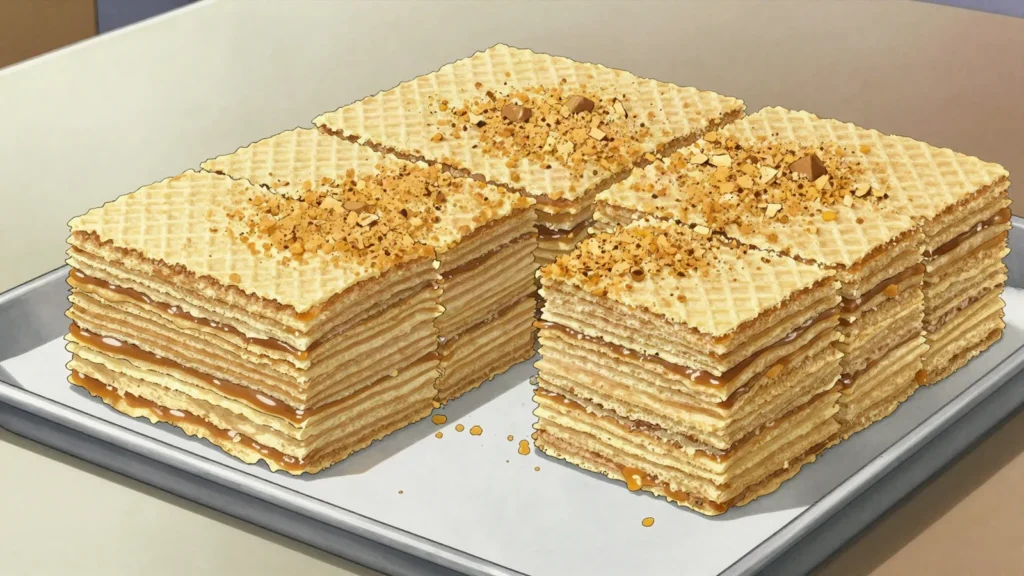
The Chilean birthday cake, assembled from bought puff sheets and dulce de leche.
Frequently asked questions
What is Torta de mil hojas?
Torta de mil hojas is a dessert from Chile: many thin pastry layers stacked with manjar and cut into squares. The Chilean birthday cake, assembled from bought puff sheets and dulce de leche.
How long does Torta de mil hojas take to make?
Torta de mil hojas takes 40 minutes plus chilling of preparation and 40 minutes of cooking. The recipe makes serves 12. It is rated medium to make.
What can I substitute in Torta de mil hojas?
Yes, within limits. Bought manjar or dulce de leche replaces homemade and is the normal Chilean practice. Masa de mil hojas from a Chilean or Latin American bakery replaces puff pastry and is closer to the real thing. Whipped cream folded into some of the manjar gives a lighter, less dense filling that some households prefer. Chopped walnuts between the layers are a common addition; almonds also work. A thin layer of jam alongside the manjar in one or two layers cuts the richness. Lucuma purée stirred into some of the manjar gives a distinctly Chilean and Peruvian note.
What is the most important thing to get right in Torta de mil hojas?
Check the water level every twenty minutes. Top up with boiling water when needed. Never open the tin while it is still hot. Let it cool completely in the pan first. That cooling takes several hours. Pour the condensed milk into an oven dish. Cover the dish tightly with kitchen foil.