
Ingredients
Manjar blanco
- 1 litrewhole milk
- 300 gsugar
- 1/4 teaspoonbicarbonate of soda
- 1vanilla pod, split
Fillings
- 24pecan halves
- or dried figs, prunes or dried apricots
- or candied lime peel
Fondant coating
- 500 gsugar
- 150 mlwater
- 1 tablespoonglucose syrup or a squeeze of lemon
Equipment
- a sugar thermometer
- a marble slab or a cold tray
- small paper cases
Directions
- Put the milk and sugar into a wide heavy pan. Add the split vanilla pod and the bicarbonate of soda. The bicarbonate helps it darken and thicken. Bring it to a simmer, stirring until the sugar dissolves. Then let it cook at a bare simmer for about an hour.
- Stir it every few minutes with a wooden spoon. It will reduce and slowly turn a deep golden brown. Keep going until it is very thick indeed. It should hold a line when you draw the spoon through it.
- Take out the vanilla pod and let it cool completely. Chill it in the refrigerator until it is firm. Toast the pecan halves briefly in a dry pan. Let them cool before using them. Cut dried figs or prunes into halves if they are large. Pat any sticky fruit dry with kitchen paper.
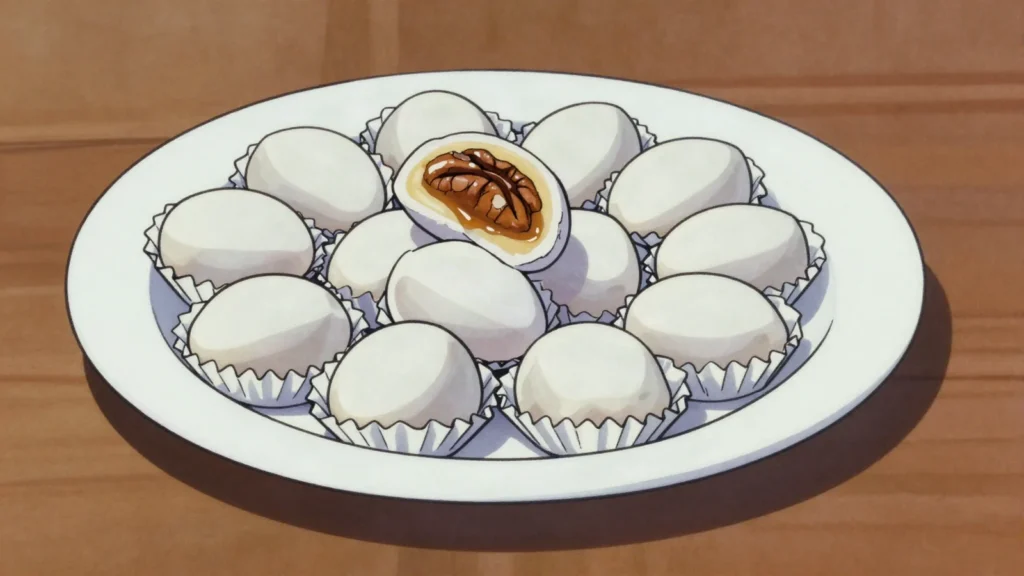
- Take a small piece of the chilled manjar blanco. Flatten it in your palm into a small disc. Set a pecan or a piece of fruit in the middle. Fold the manjar blanco around it and seal it closed. Roll it into a neat oval between your palms.
- Keep your hands slightly cool and lightly oiled. Set each one on a tray lined with paper. Chill the whole tray for thirty minutes. Cold centres are essential for the coating step.
- Put the sugar, water and glucose in a heavy pan. Stir over low heat until the sugar has dissolved. Brush the sides of the pan with a wet brush. Once it is clear, stop stirring completely. Boil it hard until it reaches 115C. Use a thermometer and do not guess at this.
- Pour it immediately onto a cold marble slab. Let it cool undisturbed until it is warm to the touch. Keep working it continuously as it cools. After several minutes it will turn white and opaque. Knead it with your hands until it is smooth.
- Wrap it and let it rest for at least half an hour. Coating the sweets is done with warm fondant. Put the fondant in a bowl over barely simmering water. Warm it gently until it is fluid enough to coat. Do not let it get hot or it will lose its gloss. Add a teaspoon of water if it is too stiff to dip. Take the chilled centres from the refrigerator.
- Drop one into the fondant and turn it with a fork. Lift it out and let the excess drip away. Set it on a lined tray to set. Work quickly because the centres soften as they warm. Return them to the refrigerator if they become soft.
- Let the coated sweets set at cool room temperature. They take about an hour to firm up completely. Set each one in a small paper case. They keep for two weeks in a cool dry place.
Technique
- Ica is the centre of tejas production and the sweets are strongly associated with the region.
- Various origin stories circulate locally, but none of them is firmly documented, so they are best treated as tradition rather than history.
Substitutions
- Tinned dulce de leche, cooked down further in a pan until very thick, saves the long simmering.
- Ready-made fondant sold for cake decorating can be warmed and used for coating.
Variations
- Chocotejas are coated in dark or white chocolate instead of fondant.
- Fillings vary widely and include pecan, fig, prune, candied lime peel and dried aguaymanto.
- Some makers add a splash of pisco to the manjar blanco.
History
A speciality of Ica, sold in boxes to travellers on the southern highway.
Frequently asked questions
What is Tejas?
Tejas is a dessert from Peru: fondant-wrapped sweets filled with pecans, dried fruit and manjar blanco. A speciality of Ica, sold in boxes to travellers on the southern highway.
How long does Tejas take to make?
Tejas takes 1 hour 30 minutes of preparation and 45 minutes of cooking. The recipe makes about 24 sweets. It is rated hard to make.
What can I substitute in Tejas?
Yes, within limits. Tinned dulce de leche, cooked down further in a pan until very thick, saves the long simmering. Ready-made fondant sold for cake decorating can be warmed and used for coating.
What is the most important thing to get right in Tejas?
Keep your hands slightly cool and lightly oiled. Set each one on a tray lined with paper. Chill the whole tray for thirty minutes. Cold centres are essential for the coating step.