
Ingredients
The vegetables
- 6long green peppers
- mild, thin-skinned Mediterranean type
- 2fresh green chillies
- or to taste
- 4ripe tomatoes
- 6 clovesgarlic, unpeeled
The frying
- 150 mlolive oil
- or mild vegetable oil
- or a mixture of the two
The seasoning
- 1 teaspooncaraway seeds
- ground fresh
- half a teaspoon ground coriander
- salt, to taste
- black pepper
The eggs
- 4eggs
- beaten lightly
- or 4 eggs, fried whole on top
To serve
- a good crusty bread
- black olives
- tuna in oil, optional
- harissa, on the side
- a wedge of lemon
Directions
- Add fresh green chillies according to your taste. Tunisian versions are often genuinely quite hot. Wash your hands with soap and then again. Never touch your eyes or face after handling them.
- Wash the peppers and pat them completely dry. Water on the peppers will spit in the hot oil. Leave them whole with their stalks attached. Do not seed them or cut them at this stage. Prick each pepper once with the tip of a knife. Without it they can burst and spit hot oil. Wash the tomatoes and leave them whole too.
- Leave the garlic cloves in their papery skins. Unpeeled garlic will not burn in the hot oil. Use enough oil to come well up the peppers. Heat it over a medium rather than a high flame. Very hot oil burns the skins before the flesh softens.
- Add the peppers and stand slightly back from the pan. Fry them gently, turning them with tongs. Turn them so every side blisters and browns. This takes about ten to fifteen minutes in total.
- Add the garlic cloves after the first five minutes. Add the whole tomatoes for the last five minutes. Lift everything out with a slotted spoon. Put it all into a bowl and cover it tightly. Let it sit for ten minutes before you handle it. It will also be far too hot to touch before then.
- Pull out the stalks and most of the seeds. Peel the tomatoes, whose skins come away easily. Squeeze the garlic cloves out of their skins. The soft garlic paste comes out with light pressure.
- Pour most of the frying oil out of the pan. Leave about three tablespoons of it behind. Return the chopped vegetables to the warm pan. Add the garlic paste and stir it all together. Grind the caraway seeds fresh in a mortar. Add the caraway and the ground coriander. Season generously with salt and black pepper. Cook it over a medium heat for five minutes.
- Stir it so the flavours come together properly. Any excess liquid should cook away in that time. Pour the beaten egg over the hot vegetables. Stir it gently and constantly with a wooden spoon.
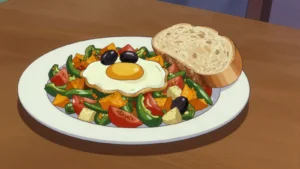
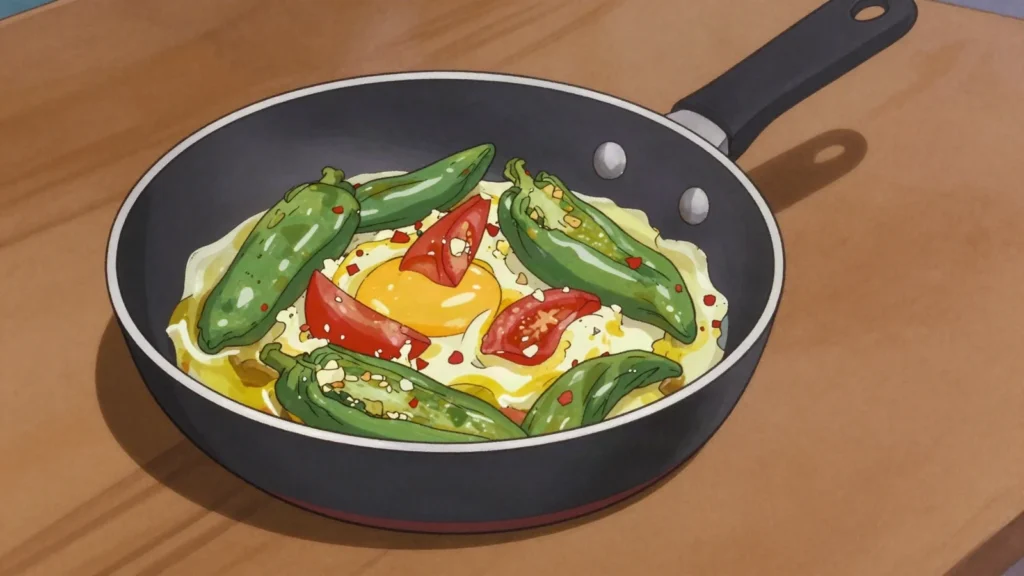
- Keep the heat moderate rather than high. The egg should set into soft, loose curds. Take the pan off the heat while it looks underdone. Make small wells in the vegetable mixture. Crack an egg into each of those wells. Cover the pan and cook until the whites set.
- Leave the yolks soft so they run into the vegetables. There is a note about eggs worth including. Cook the eggs through fully for those diners. Taste it and adjust the salt one last time.
- Serve it warm, straight from the pan if you like. It is never served fridge-cold in Tunisia. Serve it with plenty of good crusty bread. Leftovers keep for three days in the fridge. Bring them back to room temperature before eating. The version without egg keeps rather better.
Technique
- Peeling the fried peppers is the step that makes the dish. It is fiddly and it takes time, but the skins are papery and tough, and leaving them in produces something quite different and much less pleasant.
- Prick each pepper once before it goes into the oil. Whole peppers trap steam, and a trapped pepper can burst and throw hot oil across a kitchen.
- Use long, thin-skinned Mediterranean peppers rather than thick-walled bell peppers. Bell peppers will work but the silky texture that defines tastira does not really happen with them.
- Grind caraway fresh. It is the signature Tunisian spice, it is what distinguishes this from Algerian and Moroccan relatives, and pre-ground caraway loses its aroma within weeks.
- Capsaicin oil from fresh chillies clings to skin for hours and transfers to eyes long after washing. Gloves are worth using if you are cutting several open.
- Soft or runny yolks carry a small salmonella risk that matters more for young children, pregnant women, older people and anyone immunocompromised. Cook the eggs through for those diners; both the scrambled and the whole-egg versions are equally traditional.
Substitutions
- Bell peppers replace the long Mediterranean type if nothing else is available; the texture will be thicker and less silky.
- Mild vegetable oil replaces some or all of the olive oil, which is what many households do given how much oil the dish uses.
- Tinned peeled tomatoes replace fresh ones out of season; drain them well and add them to the pan later.
- Ground caraway replaces freshly ground, though the difference is noticeable. Do not substitute cumin, which points the dish somewhere else entirely.
- The dish can be made entirely without egg, which is common, and it then keeps better.
- Harissa stirred into the pan replaces fresh chillies for heat.
Variations
- Slata mechouia is the grilled and pounded Tunisian relative, made with charred rather than fried vegetables and served as a salad.
- A version with flaked tuna stirred through, rather than served alongside, is common in coastal households.
- Some cooks add a handful of capers or chopped preserved lemon at the end.
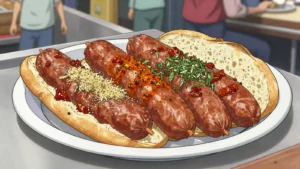
- A version fried with merguez sausage turns it from a side dish into a main.
- Ojja is the closely related Tunisian dish of tomato, pepper and egg, cooked to a looser, saucier consistency and usually with harissa.
- In some households the vegetables are chopped much finer and the dish is spread on bread rather than scooped.
History
A summer plate made when peppers are cheapest; the vegetables are fried whole, peeled, chopped and returned to the pan with egg.
Frequently asked questions
What is Tastira?
Tastira is a salad & side from Tunisia: fried green peppers, tomato and garlic scrambled with egg. A summer plate made when peppers are cheapest; the vegetables are fried whole, peeled, chopped and returned to the pan with egg.
How long does Tastira take to make?
Tastira takes 20 minutes of preparation and 30 minutes of cooking. The recipe makes serves 4. It is rated easy to make.
What can I substitute in Tastira?
Yes, within limits. Bell peppers replace the long Mediterranean type if nothing else is available; the texture will be thicker and less silky. Mild vegetable oil replaces some or all of the olive oil, which is what many households do given how much oil the dish uses. Tinned peeled tomatoes replace fresh ones out of season; drain them well and add them to the pan later. Ground caraway replaces freshly ground, though the difference is noticeable. Do not substitute cumin, which points the dish somewhere else entirely. The dish can be made entirely without egg, which is common, and it then keeps better. Harissa stirred into the pan replaces fresh chillies for heat.
What is the most important thing to get right in Tastira?
Add fresh green chillies according to your taste. Tunisian versions are often genuinely quite hot. Wash your hands with soap and then again. Never touch your eyes or face after handling them.