
Ingredients
Meat and marinade
- 1.2 kglamb shoulder on the bone, in 6 large pieces
- 1 tspground ginger
- 1 tspground turmeric
- 1 tspsweet paprika
- 1 tspblack pepper
- ½ tspsaffron threads, crumbled and steeped in 3 tbsp warm water
- 1 tspras el hanout
- 3garlic cloves, crushed
- 2 tbspolive oil
- 1 tspsalt
Pot
- 2 tbspsmen or 30 g butter
- 2onions, sliced into half moons
- 1large bunch coriander and parsley, tied with string
- 1cinnamon stick
- 350 mlwater
Vegetables and finish
- 3carrots, quartered lengthways
- 2courgettes, halved and quartered
- 300 gpotatoes, in thick wedges
- 2tomatoes, thickly sliced
- 1preserved lemon, pulp discarded, rind in strips
- 120 ggreen or violet olives, rinsed
- 2 tbspcoriander, chopped, to finish
Directions
- Rub the lamb with all the marinade spices, the garlic, oil, salt and the saffron water. Cover and leave at room temperature for 30 minutes, or overnight in the fridge.
- If the tagine is new, soak the base and lid in water for 2 hours and rub the inside with oil before its first use, or it will crack over heat.
- Set the tagine base over a heat diffuser on low heat, melt the smen, and lay the onion slices across the bottom in an even bed. Cook 5 minutes without colouring; they are the cushion that keeps the meat off the hot clay.
- Nestle the lamb on the onions in a single layer, scrape in every bit of marinade, tuck in the herb bundle and cinnamon, and pour the water around, not over, the meat.
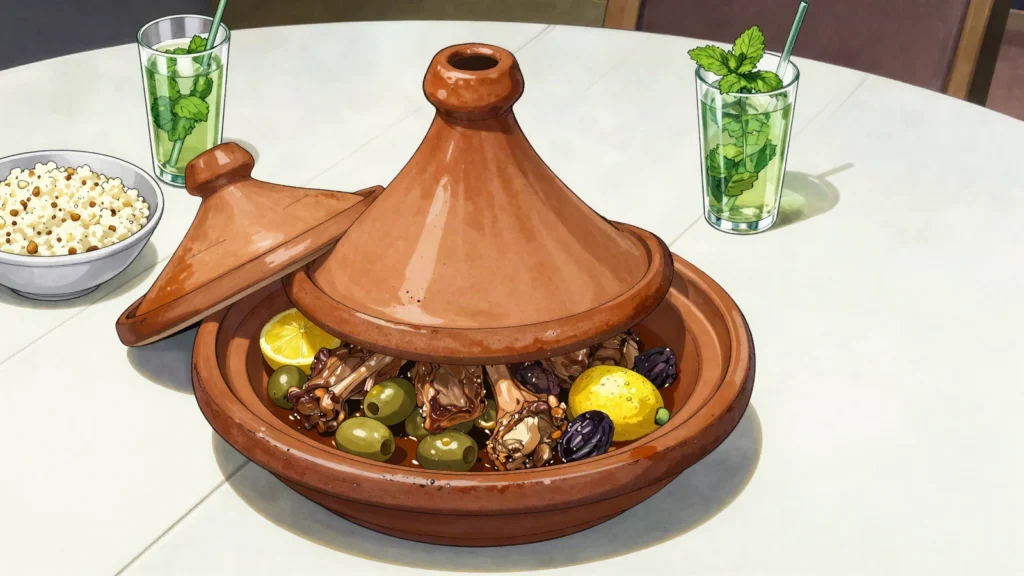
- Fit the conical lid and cook on the lowest steady heat for 1 hour 30 minutes. It should never boil hard, only whisper. Do not lift the lid more than twice; the cone exists to condense steam and return it to the pot, and every peek costs you liquid.
- Turn the meat once, then arrange the carrots and potatoes around and over it, standing the longer pieces up against the mound. Cook 30 minutes covered.
- Add the courgettes and tomato slices, laying them in a fan over the top, and cook 25–30 minutes more, until the vegetables are tender but still hold their shape and the lamb pulls away from the bone with a spoon.
- Scatter over the preserved lemon strips and the olives, replace the lid and cook 5 minutes just to warm them; longer and the lemon goes bitter and the olives go grey.
- Lift the herb bundle out. If the sauce is thin, tilt the lid ajar and raise the heat slightly for 5–10 minutes until it is glossy and clings; there should be sauce, not soup.
- Rest off the heat for 10 minutes, scatter with fresh coriander, and take the tagine to the table with its lid on, to be lifted there. Eat with bread, using it to scoop; no cutlery.
Technique
- A tagine is a steam trap, not a stew pot. The cone condenses vapour on its inner wall and drips it back down, so you start with far less liquid than a casserole and end with a concentrated sauce.
- Low, even heat is everything. Earthenware cracks on direct flame and on thermal shock, so always use a diffuser, always start cold and never add cold liquid to a hot pot.
- The onion bed is structural. It insulates the meat from the clay, gives off moisture as it collapses and dissolves into the sauce as the natural thickener.
- Preserved lemon and olives go in at the very end. They are seasoning, not braising ingredients, and long cooking turns both harsh.
Substitutions
- No tagine pot: a heavy cast-iron casserole with a tight lid, cooked at 150°C (300°F) in the oven for the same times, gives a close result. Add 100 ml less water since more steam escapes.
- Lamb can be swapped for chicken thighs and drumsticks (reduce the first braise to 35 minutes) or for a mix of root vegetables and chickpeas.
- Ras el hanout varies by shop; if yours is very sweet and floral, cut it to ½ tsp and lean on the ginger and pepper instead.
Variations
- Lham bel barkouk, lamb with prunes, cinnamon, honey and fried almonds, the wedding tagine.
- Djaj mqualli, chicken with preserved lemon and olives in a saffron-yellow sauce.
- Kefta mkaouara, meatballs simmered in tomato with eggs cracked in at the end.
History
Named for the distinctive cone-lidded clay pot it is cooked in, not for any single recipe, since tagine describes a cooking method, slow-simmering meat or vegetables with minimal added liquid, that predates any specific dish now associated with the name. The pot’s conical lid is functional rather than decorative: as the stew simmers, steam rises, condenses against the cool upper cone, and drips back down onto the food, continuously basting it with minimal water loss in an arid climate where water was historically scarce. Berber, or Amazigh, communities across North Africa are generally credited with developing the technique well before Arab influence reached the region, and it was later refined further with the sweet-savory combinations of dried fruit, honey and warm spice associated with Moroccan royal court cooking under later dynasties.
Frequently asked questions
What is Tagine?
Tagine is a main from Morocco: slow-braised meat, vegetables, olives or prunes cooked in a conical earthenware pot. Named for the distinctive cone-lidded clay pot it is cooked in, not for any single recipe, since tagine describes a cooking method, slow-simmering meat or vegetables with minimal added liquid, that predates any specific dish now associated with the name. The pot’s conical lid is functional rather than decorative: as the stew simmers, steam rises, condenses against the cool upper cone, and drips back down onto the food, continuously basting it with minimal water loss in an arid climate where water was historically scarce. Berber, or Amazigh, communities across North Africa are generally credited with developing the technique well before Arab influence reached the region, and it was later refined further with the sweet-savory combinations of dried fruit, honey and warm spice associated with Moroccan royal court cooking under later dynasties.
How long does Tagine take to make?
Tagine takes 30 min of preparation and 2 hr 30 min of cooking. The recipe makes 4 servings. It is rated medium to make.
What can I substitute in Tagine?
Yes, within limits. No tagine pot: a heavy cast-iron casserole with a tight lid, cooked at 150°C (300°F) in the oven for the same times, gives a close result. Add 100 ml less water since more steam escapes. Lamb can be swapped for chicken thighs and drumsticks (reduce the first braise to 35 minutes) or for a mix of root vegetables and chickpeas. Ras el hanout varies by shop; if yours is very sweet and floral, cut it to ½ tsp and lean on the ginger and pepper instead.
What is the most important thing to get right in Tagine?
If the tagine is new, soak the base and lid in water for 2 hours and rub the inside with oil before its first use, or it will crack over heat.