
Ingredients
The potatoes
- 1 kgfloury potatoes
- boiled in their skins
- peeled and mashed
- 1 teaspoonsalt
The seasoning
- 4 clovesgarlic, crushed
- a large handful of parsley
- chopped finely
- a handful of coriander, chopped
- 1 teaspoonground cumin
- 1 teaspoonsweet paprika
- half a teaspoon turmeric
- half a teaspoon black pepper
- a pinch of cayenne, optional
- 1egg, beaten
The coating
- 2eggs, beaten
- or 100 g flour
- and 2 eggs, beaten
- for a firmer crust
For frying
- 1 litrevegetable oil
- or enough for 4 cm depth
To serve
- khobz, the Moroccan bread
- or a baguette
- harissa
- sliced tomato and onion
- olives
- a squeeze of lemon
Directions
- Use floury potatoes. They mash smoothly and dry. Boil them in their skins. A wet mash gives patties that fall apart. Boil them until completely soft. Test with a knife, which should slide in easily. Peel them while still hot. Hold them in a cloth if they are too hot. Return the peeled potatoes to the dry pot. Set it over a low heat for a minute.
- Shake it and let steam escape. Mash them while hot. Use a masher or a ricer. Do not use a food processor. Let the mash cool to room temperature. Hot mash cooks the egg you add to it. Cool it before the egg goes in. Add the garlic, herbs and spices.
- Add plenty of parsley and coriander. Use more than feels right. Add the salt and pepper. Add one beaten egg to bind the mixture. Mix it in thoroughly. It should be a firm mash that holds together.
- Taste the mixture before the egg goes in. It should taste well seasoned and quite strong. Taste before adding it instead. Take pieces of the mixture. Roll them into balls and flatten them. Make discs about seven centimetres across.
- Make them about a centimetre and a half thick. Too thick and the centre stays cool. Chill the shaped patties for thirty minutes. Dip each patty in beaten egg. Let the excess drip off. The egg sets into a thin golden crust. Dust the patties in flour first. Use a wide deep pan.
- Fill it no more than one third full. Never leave hot oil unattended. Keep a well fitting lid within reach. If it catches fire, turn off the heat and cover it. Heat the oil to one hundred and seventy-five degrees. It should sizzle immediately. Fry them for about three minutes. Turn them once, carefully. Fry them two minutes more. They should be deep golden.
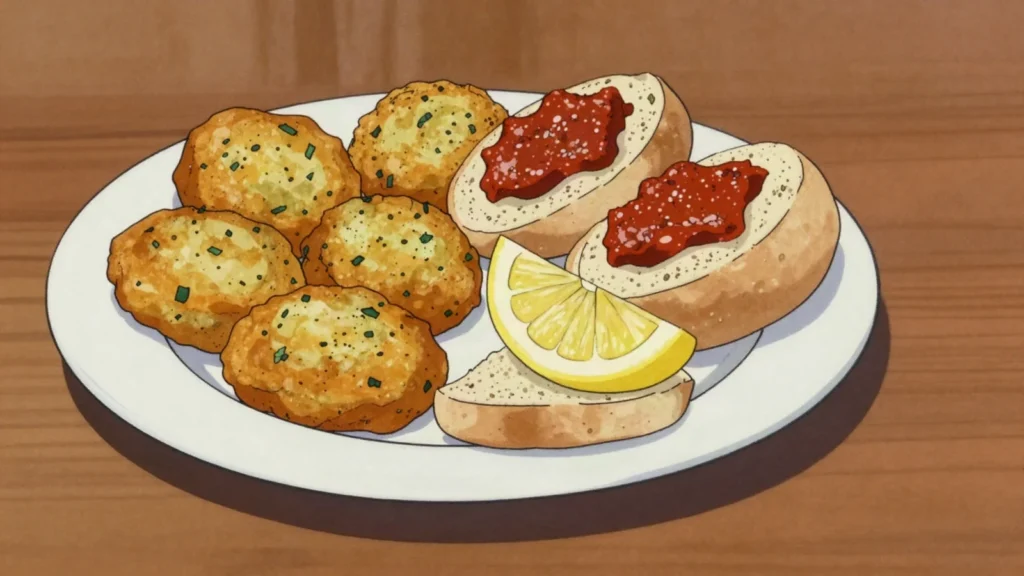
- Lift them out with a slotted spoon. Drain them on a rack over kitchen paper. Let the oil recover between batches. Taste a little before spreading it generously. Spread harissa inside. Push in two or three hot patties. Press them down a little. Add sliced tomato and onion. Add olives.
- Squeeze over lemon. A soft roll collapses under hot potato. Serve them hot, within minutes of frying. Coat them in a flour and water batter instead. They keep two days refrigerated. Freeze them on a tray before bagging. Fry them from frozen at a lower temperature. Give them an extra two minutes.
Technique
- Boil the potatoes in their skins and steam them dry in the pot before mashing. Skin-on potatoes absorb far less water, and a wet mash gives patties that fall apart — the commonest failure here.
- Use floury potatoes and never a food processor. Waxy potatoes stay lumpy and hold water; a processor turns potato into glue instantly and there is no fixing it.
- Cool the mash before the egg goes in. Hot mash cooks the egg into lumpy scrambled threads.
- Chill the shaped patties thirty minutes before frying. They firm considerably and hold together far better in the oil.
- Do not move them for the first minute in the oil. They need time to set a crust, and moved early they break apart; once the coating sets they are robust.
- Season the mixture strongly and taste it before the egg goes in. Potato absorbs a great deal of salt and bland maakouda is a disappointment.
- Use plenty of parsley and coriander. Moroccan cooking is generous with fresh herbs and this needs more than feels right.
- Dusting the patties in flour before the egg gives a thicker, sturdier crust that holds better in the oil. Egg alone is the traditional coating and gives a thinner, more golden one.
- Keep them about a centimetre and a half thick. Thicker and the centre stays cool; thinner and they break.
- Deep-frying rules apply: fill the pan no more than a third, never leave it unattended, keep a lid within reach, and if the oil catches fire turn off the heat and smother it. Never throw water on burning oil.
- Taste the harissa before spreading it generously. Brands vary enormously in heat, from mild to fierce.
- Use a firm bread. Khobz is dense enough to hold hot potato; a soft roll collapses under it.
- A vegan version binds with flour instead of egg and is coated in a flour-and-water batter — more fragile, but it works.
Substitutions
- A baguette replaces khobz where Moroccan bread is unavailable, though a firm bread matters.
- Flour before egg gives a sturdier coating than egg alone.
- Flour and a flour-water batter replace the egg entirely for a vegan version.
- Any chilli paste replaces harissa, though harissa’s caraway and coriander are distinctive.
- Cumin, paprika and turmeric can be adjusted freely; cayenne is optional.
- Baking at 200 degrees with a brush of oil gives a drier but workable result.
Variations
- Maakouda served plain as a side dish is common at home.
- A version with grated cheese worked into the mash is sold at some stalls.
- Batata mchermla, potatoes in a chermoula sauce, is the wet Moroccan potato dish.
- Vada pav in Mumbai puts a spiced potato ball in a soft bun with chutney.
- Aloo tikki in India is the shallow-fried relative.
- Bocadillo de tortilla in Spain is the same principle with omelette.
Frequently asked questions
What is Maakouda?
Maakouda is a street food from Morocco: crisp fried potato patties stuffed into bread with harissa.
How long does Maakouda take to make?
Maakouda takes 30 minutes of preparation and 30 minutes of cooking. The recipe makes makes about 16. It is rated easy to make.
What can I substitute in Maakouda?
Yes, within limits. A baguette replaces khobz where Moroccan bread is unavailable, though a firm bread matters. Flour before egg gives a sturdier coating than egg alone. Flour and a flour-water batter replace the egg entirely for a vegan version. Any chilli paste replaces harissa, though harissa’s caraway and coriander are distinctive. Cumin, paprika and turmeric can be adjusted freely; cayenne is optional. Baking at 200 degrees with a brush of oil gives a drier but workable result.
What is the most important thing to get right in Maakouda?
Shake it and let steam escape. Mash them while hot. Use a masher or a ricer. Do not use a food processor. Let the mash cool to room temperature. Hot mash cooks the egg you add to it. Cool it before the egg goes in. Add the garlic, herbs and spices.