
Ingredients
Herring
- 8salt herring fillets, or 8 fresh herring fillets
- cold water, for soaking
Pickle
- 400 mlwhite vinegar
- 200 mlwater
- 200 gsugar
- 2 tbspwhole allspice
- 1 tbspblack peppercorns
- 4bay leaves
- 2 tspmustard seed
To pack
- 2red onions, sliced into thin rings
- 1carrot, sliced thin
To serve
- dark rye bread
- cold snaps and beer
Directions
- If you are starting from fresh herring rather than salt herring, freeze the fillets solid at −18°C (0°F) or below for at least 24 hours first. This is not about texture — it is what kills the parasites in a fish that is going to be cured in vinegar rather than cooked.
- Soak salt herring in several changes of cold water for 12 to 24 hours, tasting a corner until it is pleasantly salty rather than harsh. Fresh fillets need a 3-hour brine in heavily salted water instead.
- Bring the vinegar, water, sugar, allspice, peppercorns, bay and mustard seed to a simmer, stir until the sugar dissolves, and then cool it completely. Hot pickle poured over herring cooks the surface and turns it woolly.
- Cut the drained fillets into 3 cm pieces.
- Pack the herring, onion rings and carrot in layers into a clean jar and pour over the cold pickle so everything is submerged.
- Seal and refrigerate for at least 48 hours before eating. The vinegar needs that time to firm the flesh through and take the raw bite off the onion.
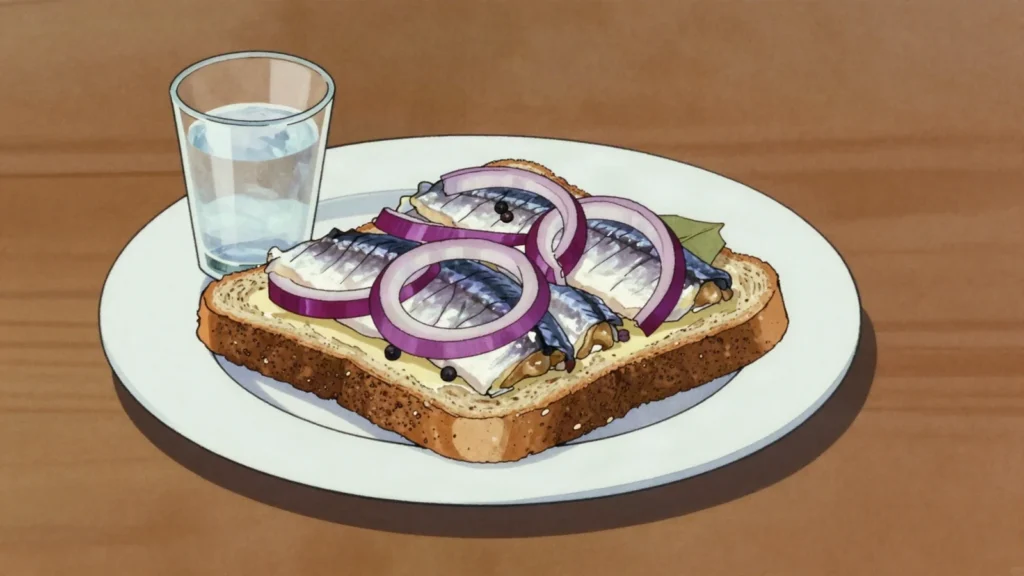
- Serve cold on buttered rye with plenty of the pickled onion, and a glass of snaps. It keeps three weeks in the fridge.
Technique
- The freezing step is the one thing not to skip when starting from fresh fish. Vinegar firms herring; it does not reliably kill what may be in it.
- Taste after soaking, every time. Salt herring varies enormously between producers and an under-soaked batch is inedible.
- Keep it refrigerated. This is a fridge pickle, not a shelf-stable preserve.
Substitutions
- Cider vinegar for white, which is softer.
- Mackerel or sprats, both of which pickle the same way.
- Less sugar for a sharper Swedish-style pickle.
Variations
- Karrysild folds the drained pickled herring into a curried mayonnaise.
- A version with dill and juniper is common at Christmas.
History
Salted Baltic herring was a medieval Danish export controlled from Skanør; vinegar curing turned the preserved fish into the first course of a lunch.
Frequently asked questions
What is Marinerede sild?
Marinerede sild is a fermented & pickled from Denmark: herring cured in vinegar and spices, eaten on rye with snaps. Salted Baltic herring was a medieval Danish export controlled from Skanør; vinegar curing turned the preserved fish into the first course of a lunch.
How long does Marinerede sild take to make?
Marinerede sild takes 30 min plus 24 hours freezing and 2 days pickling of preparation and 10 min of cooking. The recipe makes fills a 1-litre jar. It is rated easy to make.
What can I substitute in Marinerede sild?
Yes, within limits. Cider vinegar for white, which is softer. Mackerel or sprats, both of which pickle the same way. Less sugar for a sharper Swedish-style pickle.
What is the most important thing to get right in Marinerede sild?
If you are starting from fresh herring rather than salt herring, freeze the fillets solid at −18°C (0°F) or below for at least 24 hours first. This is not about texture — it is what kills the parasites in a fish that is going to be cured in vinegar rather than cooked.