
Ingredients
The pastry
- 1 packetfilo pastry
- about 400 g, thawed
- 150 gbutter or ghee
- melted, for brushing
The cream filling
- 1 litrewhole milk
- 80 gcornflour
- 80 gsugar
- 3 tablespoonsrose water
- or orange blossom water
- 2 piecesmastic
- ground with sugar, optional
The syrup
- 500 gsugar
- 300 mlwater
- juice of half a lemon
- 1 tablespoonrose water
- 1cinnamon stick, optional
To fry and finish
- oil, for deep frying
- chopped pistachios
- to scatter
Directions
- Fill it no more than half full at all. Keep a lid nearby to smother a flare-up. Never put water on an oil fire at all. Keep children well away from the pot. The filling is a thick milk cream. Warm cream is impossible to fill with. Cool it right down completely first. Filo is a paper-thin pastry sheet.
- Keep the stack covered with a damp cloth. Work with one sheet at a time. Cover the rest of it immediately. That keeps it workable throughout.
- Use a damp cloth rather than a wet one. A wet cloth makes the filo soggy. Put the sugar and water in a pan. Warm it gently until the sugar dissolves. Stir it until no grains remain. Bring it to a boil and simmer it. Give it about ten full minutes. Stir all the lemon juice into it. Acid stops the sugar crystallising.
- Add it after the boiling is done. Stir the rose water in off the heat. One tablespoon is quite enough. Add it in off the heat entirely. Let the syrup cool completely. It must be cold for hot pastry.
- Whisk the cornflour into cold milk. Use cold milk rather than warm. Cornflour lumps instantly in hot milk. Whisk it entirely smooth first. Heat it gently while whisking constantly. Whisk it right through the heating. Keep whisking hard as it does. That prevents any lumps entirely.
- Keep whisking through that time. Stir in the rose water off the heat. Add it once the pan is off the heat. Heat drives the aroma off entirely. Taste it and adjust cautiously. You cannot take it back out again. Let the cream cool completely.
- Press cling film onto the surface. That stops a skin forming on it. Lay one sheet of filo on the bench. Keep the rest covered with a damp cloth. Work with one sheet at a time. Cover it again the moment you finish. Brush the sheet with melted butter. Brush it on lightly and evenly. It also helps all the layers crisp.
- Lay a second sheet over the first. Brush that with butter as well. Cut the layered filo into strips. Cut strips about eight centimetres wide. Cut them all with a very sharp knife. Cut through all the layers at once. Put a spoonful of cream at one end.
- Use about a tablespoon per strip. Do not overfill any of them at all. Leave real room to fold it over. Fold one corner over into a triangle. Fold it diagonally across the strip. Keep folding down the whole strip. Brush the last flap with butter.
- Press it down firmly to seal it. Check there are no gaps at all. Heat the oil to one hundred and seventy degrees. Too hot and it burns immediately. Work in small batches instead. Lift them out onto a wire rack. Let the excess oil drip away briefly. They must still be genuinely hot.
- Drop the hot pastries into cold syrup. Turn them over once in the syrup. Give them about thirty seconds only. Lift them onto a serving plate. Use a slotted spoon to lift them. Let the excess syrup drip off.
- Set them on a plate rather than a rack. Scatter chopped pistachios over them. Chop the pistachios fairly finely. Scatter them while still sticky. Serving them is done warm or cool. Serve them warm from the syrup. Warm is when they are at their best. The cream is soft and the pastry crisp. Serve them all within the hour. They keep a day at room temperature.
Technique
- The temperature difference is the whole technique: hot pastry takes cold syrup, or cold pastry takes hot syrup, but never both at the same temperature — both hot goes soggy and both cold barely absorbs. Most cooks pour cold syrup over hot pastry, dropping them in straight from the oil.
- Soak them about thirty seconds only and turn them once: longer makes them entirely soggy, and some crispness should remain since that contrast is much of the point.
- A deep pot of hot oil is genuinely dangerous — fill it no more than half full, never leave it unattended, lower the pastries in gently, keep a lid nearby, never put water on an oil fire and keep children away. Boiling sugar syrup is also far hotter than boiling water, sticks to skin and keeps burning, so never touch or taste it hot.
Substitutions
- Orange blossom water stands in for rose water; both are genuinely very strong, one tablespoon is enough and more tastes entirely of soap. Add it off the heat, since heat drives the aroma off.
- The Jordanian version, shaabiyat, is usually baked where this Kuwaiti one is often fried — the main practical difference, and both are genuinely made. The atlas carries both.
Variations
- The cream must be genuinely very thick and completely cold, holding its shape entirely: a loose cream runs out in the oil and makes it spit badly. Whisk the cornflour into cold milk first, since it lumps instantly in hot milk, and cook it two minutes past thickening since raw cornflour tastes chalky.
- Filo dries out extremely fast and cracks when dry — keep the stack under a barely damp cloth, wrung out well since a wet cloth makes it soggy, and work with one sheet at a time.
- Pistachios scattered on top are visible but tree nut allergy can be severe, so say clearly if you have used them; scatter them while the pastries are still sticky so they hold.
History
Ramadan pastry sold by the box alongside luqaimat and dates.
Frequently asked questions
What is Sh’aybiyat?
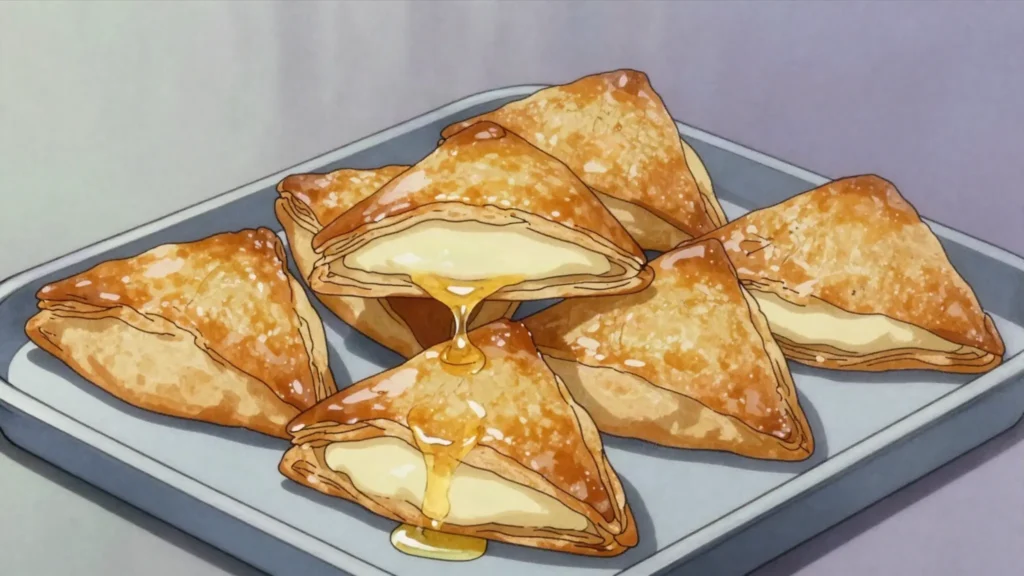
Sh’aybiyat is a dessert from Kuwait: filo triangles filled with sweet cream, fried and soaked in syrup. Ramadan pastry sold by the box alongside luqaimat and dates.
How long does Sh’aybiyat take to make?
Sh’aybiyat takes 1 hour of preparation and 40 minutes of cooking. The recipe makes about 24 pastries. It is rated hard to make.
What can I substitute in Sh’aybiyat?
Yes, within limits. Orange blossom water stands in for rose water; both are genuinely very strong, one tablespoon is enough and more tastes entirely of soap. Add it off the heat, since heat drives the aroma off. The Jordanian version, shaabiyat, is usually baked where this Kuwaiti one is often fried — the main practical difference, and both are genuinely made. The atlas carries both.
What is the most important thing to get right in Sh’aybiyat?
Fill it no more than half full at all. Keep a lid nearby to smother a flare-up. Never put water on an oil fire at all. Keep children well away from the pot. The filling is a thick milk cream. Warm cream is impossible to fill with. Cool it right down completely first. Filo is a paper-thin pastry sheet.