
Ingredients
The dough
- 600 gplain flour
- 250 gbutter or lard
- cold and cubed
- 150 gsugar
- or grated panela
- 2eggs
- about 100 ml cold water
- 1 teaspoonbaking powder
- 1 teaspoonsalt
- 1 teaspoonground cinnamon
The pineapple filling
- 1large pineapple
- peeled, cored and chopped
- or 800 g tinned, drained
- 250 gsugar
- 1cinnamon stick
- 2cloves
- juice of 1 lime
To finish
- 1egg, beaten
- sesame seeds, optional
- sugar, to scatter
To serve
- cut into squares
- with coffee
Directions
- Butter gives a better flavour. It becomes a thick sticky jam. Stir it constantly near the end. Use a heavy pan and a low heat. Never lean over the pan while it boils.
- Use a deep pan rather than shallow. Stir with a long-handled spoon. Peel and core the whole pineapple. Cut the top and base off first. Stand it up and cut the skin down. Cut out all the eyes that remain. It never softens fully in cooking. Cut the core out and discard it. Chop the pineapple flesh finely.
- Chop it small rather than in chunks. Blended jam is smooth and even. Put the pineapple and sugar in a pan. Add the cinnamon stick and cloves. Warm it gently until the sugar dissolves.
- Simmer it until genuinely thick. Give it about forty-five minutes. Stir it more often as it thickens. Stir the lime juice in at the end. It also stops it crystallising. Add it in off the heat entirely. Let the jam cool right down completely. Hot jam melts all the pastry fat. Put the flour, sugar and salt in a bowl. Add the baking powder and cinnamon.
- Whisk them together thoroughly first. The baking powder must spread evenly. Rub the cold fat into the flour. Rub it with your fingertips only. Lift the mixture up as you rub. That keeps it cool and aerated.
- Work it until it looks like coarse sand. Stop while some larger lumps remain. Beat the eggs and then add them. Add cold water gradually after. Add only enough to bring it together. Too much makes it tough entirely.
- Wrap it up and then refrigerate it. Give it at least thirty full minutes. Divide the dough into two parts. Make the base slightly larger. It must line the tin and hold the jam. Press the larger part into a lined tin. Press it out with your fingers. This dough is too crumbly to roll. Press it evenly across the base. Thick patches stay doughy inside. Press it out genuinely carefully.
- Spread the cold jam over the base. Spread it out in an even layer. Leave a small and clear border. Do not overfill the pastry at all. Crumble the remaining dough over it. Break the dough into rough pieces. Scatter them over the whole surface. Leave some gaps for the steam. That gives a smooth closed pastry.
- Brush the top with beaten egg. Egg gives a deep golden shine. Brush it gently over the crumble. Scatter sugar over it as well. Bake it at one hundred and eighty degrees. Give it about forty-five minutes.
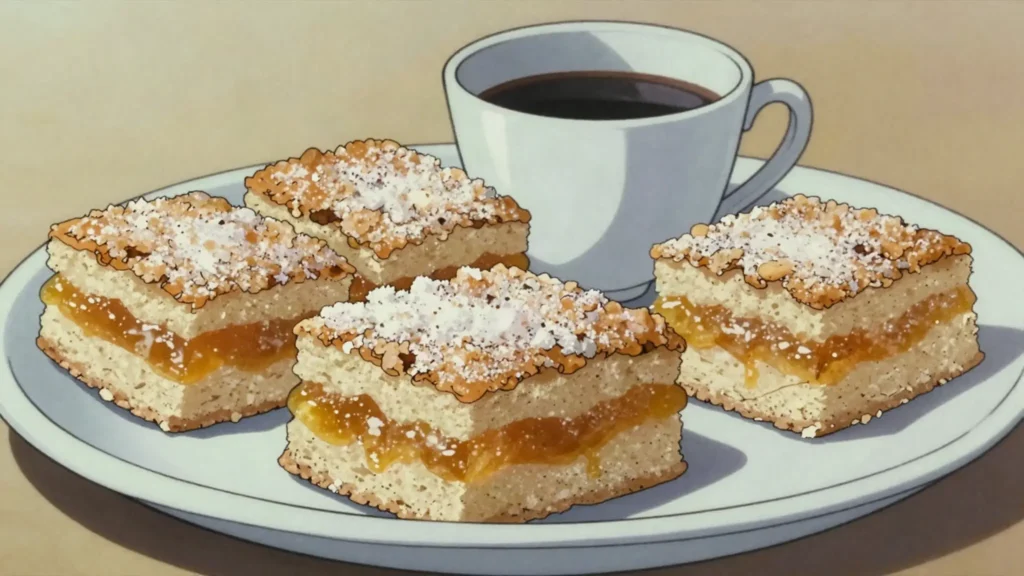
- Lift a corner to look underneath. The base should be golden and firm. Let it cool completely in the tin. The jam is molten hot at first. Cut it into squares with a sharp knife. Use a long sharp knife for it. Cut it once it is entirely cold. Set the squares out on a plate. It keeps four days in a sealed tin.
Technique
- The pineapple jam must be genuinely thick, since a loose jam soaks into the dough and runs out at the edges. Pineapple holds a great deal of water and all of it must cook away, which takes about forty-five minutes and cannot be shortened. Test it by drawing a spoon through: it should leave a clear channel that does not fill in.
- Boiling jam is far hotter than boiling water, sticks to skin and burns badly, and it spits in slow heavy bubbles that throw hot jam upward as it thickens. Use a deep pan, stir with a long-handled spoon and never lean over it. Thick jam also catches and burns on the base, so stir constantly near the end and scrape the bottom.
- Cool the jam completely before it meets the pastry, since hot jam melts the fat and destroys the short texture, and let the baked pastry cool completely in the tin before cutting — the jam is molten at first, sets firm as it cools, and causes bad burns.
Substitutions
- Lard is traditional in Salvadoran baking and gives a shorter crumblier result where butter gives better flavour; both are genuinely used, but lard is an animal fat, so say clearly which you have made.
- Semita alta is the tall thick version with more dough and less filling, and semita pacha the flatter one with a higher filling ratio; bakeries sell both side by side. Some press a solid top layer on rather than crumbling it, and both are genuinely done.
Variations
- This dough is short and crumbly rather than smooth and elastic — rub the cold fat in to a coarse sand with fingertips only, add just enough liquid that it barely holds together, and do not knead it at all. It is too crumbly to roll, so press it into the tin with your fingers.
- Cut the tough fibrous pineapple core out and discard it, since it never softens fully; chop the flesh small rather than in chunks, since fine pieces break down far faster and spread more evenly.
- Stir the lime juice in off the heat at the end, which sharpens the sweet pineapple and stops the jam crystallising, and fish out the cinnamon stick and cloves.
History
Descended from the Spanish acemita; Salvadoran bakeries sell it as semita alta or pacha, and it is the classic accompaniment to coffee.
Frequently asked questions
What is Semita de piña?
Semita de piña is a bread & pastry from El Salvador: layered shortbread pastry filled with pineapple jam, cut in squares. Descended from the Spanish acemita; Salvadoran bakeries sell it as semita alta or pacha, and it is the classic accompaniment to coffee.
How long does Semita de piña take to make?
Semita de piña takes 1 hour plus resting of preparation and 45 minutes of cooking. The recipe makes about 16 squares. It is rated medium to make.
What can I substitute in Semita de piña?
Yes, within limits. Lard is traditional in Salvadoran baking and gives a shorter crumblier result where butter gives better flavour; both are genuinely used, but lard is an animal fat, so say clearly which you have made. Semita alta is the tall thick version with more dough and less filling, and semita pacha the flatter one with a higher filling ratio; bakeries sell both side by side. Some press a solid top layer on rather than crumbling it, and both are genuinely done.
What is the most important thing to get right in Semita de piña?
Butter gives a better flavour. It becomes a thick sticky jam. Stir it constantly near the end. Use a heavy pan and a low heat. Never lean over the pan while it boils.