
Ingredients
The sardines
- 20fresh sardines
- scaled, gutted and butterflied
- heads and backbones removed
The chermoula
- a large bunch coriander
- chopped
- a bunch parsley, chopped
- 6garlic cloves, crushed
- 2 teaspoonsground cumin
- 1 teaspoonsweet paprika
- 1 teaspoonhot paprika
- or chilli powder
- juice of 2 lemons
- 4 tablespoonsolive oil
- 1 teaspoonsalt
To coat and fry
- 150 gplain flour
- or semolina flour
- oil, for shallow frying
- a wide heavy pan
To serve
- lemon wedges
- bread
- harissa, optional
Directions
- Make it shortly before using it. That is obvious enough in this dish. Chop all of the fresh herbs finely. Use a very sharp knife for it. Chop them cleanly in one pass. Chop them finer than the leaves. Discard only the thick woody ones. Mix the herbs with the crushed garlic. Add the cumin and both paprikas.
- Crush it to a paste with salt first. Use the flat of a large knife. Stir in the lemon juice and oil. It should be a thick spreadable paste. Add more oil if it is too stiff. Add more herbs if it is too wet. It should be sharp, garlicky and green. Taste it and adjust the lemon. Taste it and then adjust the salt.
- Rinse the butterflied fillets. Rinse them gently in cold water. Check for any remaining large bones. Pull out anything that you find. Pat the fillets completely dry. Lay half the fillets skin side down.
- Lay them out on a board or tray. Season them only very lightly. Spread chermoula over each fillet. Spread it on quite fairly thinly. A thick layer squeezes out in frying. Cover the whole fillet evenly. Leave the edges slightly clear. Lay a second fillet on top skin up. Press it down gently to seal it.
- Press the edges together lightly. Give them about twenty minutes. Put the flour on a wide plate. Season the flour lightly with salt. Spread it out in an even layer. Keep one hand dry for handling. Press each sandwich into the flour.
- Coat both of the sides thoroughly. Press it down gently as you coat. Shake off all the excess flour. Thick flour goes gummy in the oil. Heat a shallow layer of oil in a pan. About one centimetre is quite enough. Stand well back as they go in. Keep your face well away from it.
- Lay the sandwiches in the hot oil. Give them about three minutes a side. Work in small batches instead. Turn them once with a wide spatula. They break apart if turned carelessly.
- Turn them in one confident movement. Judging them takes a careful look. Lift them all out onto a wire rack. Let all the excess oil drip away. That softens the coating within minutes. Serve them straight from the pan. The coating softens within minutes. Fry them all to order if you can. Squeeze it over just before eating. They do not keep at all well after.
Technique
- Pat the fillets completely dry before flouring: wet fish spits badly in hot oil and the flour will not stick to it. Then shake off excess flour, since a thick coating goes gummy in the pan.
- Sardines have many small bones and although the backbone comes out when butterflied, smaller ones stay behind. They soften considerably in frying and are mostly edible, but larger ones are still noticeable — say so before people eat.
- Sardines cook genuinely fast, so give them about three minutes a side and no more; break one open the first time to check the flesh is white and firm rather than translucent. Fish spits as it hits hot oil, so lower them in gently and keep your face well away.
Substitutions
- Semolina flour gives a crisper coating than plain flour, being coarser; both are genuinely used.
- Refrigerate the assembled sandwiches about twenty minutes so they firm up and the chermoula flavours the fish, but not much longer — the lemon starts to cure the flesh and changes the texture.
Variations
- Chop the herbs with a very sharp knife in one clean pass, since a blunt blade bruises the leaves and bruised herbs go dark and bitter; fine coriander stalks go in too, chopped finer than the leaves, with only the thick woody ones discarded.
- Spread the chermoula fairly thinly with the edges left slightly clear, since a thick layer squeezes out during frying, and turn each sandwich once with a wide spatula fully underneath — they break apart if turned carelessly.
- Morocco is the world’s largest sardine exporter with canneries at Safi and Agadir dating from the 1920s; most of the catch is canned for export while fresh sardines stay cheap locally, which is why they became the coastal street snack. The atlas also carries Monégasque sardines farcies and Portuguese sardinhas assadas.
History
Morocco is the world’s largest sardine exporter; canneries at Safi and Agadir grew from the 1920s, and cheap fresh sardines became the coastal street snack.
Frequently asked questions
What is Sardines mchermel?
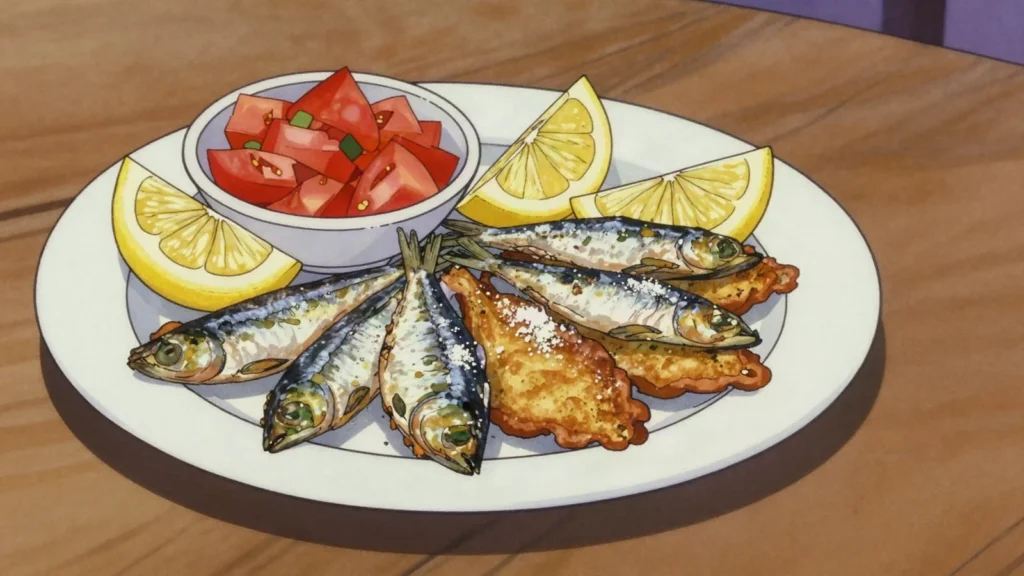
Sardines mchermel is a street food from Morocco: butterflied sardines sandwiched around chermoula, floured and fried to order. Morocco is the world’s largest sardine exporter; canneries at Safi and Agadir grew from the 1920s, and cheap fresh sardines became the coastal street snack.
How long does Sardines mchermel take to make?
Sardines mchermel takes 40 minutes of preparation and 20 minutes of cooking. The recipe makes serves 4. It is rated medium to make.
What can I substitute in Sardines mchermel?
Yes, within limits. Semolina flour gives a crisper coating than plain flour, being coarser; both are genuinely used. Refrigerate the assembled sandwiches about twenty minutes so they firm up and the chermoula flavours the fish, but not much longer — the lemon starts to cure the flesh and changes the texture.
What is the most important thing to get right in Sardines mchermel?
Lay them out on a board or tray. Season them only very lightly. Spread chermoula over each fillet. Spread it on quite fairly thinly. A thick layer squeezes out in frying. Cover the whole fillet evenly. Leave the edges slightly clear. Lay a second fillet on top skin up. Press it down gently to seal it.