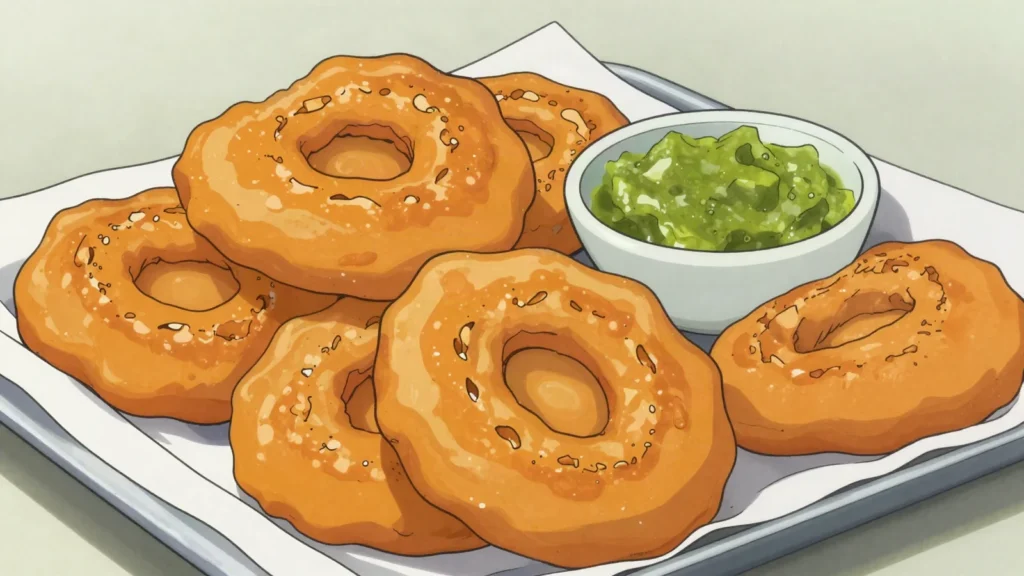

Ingredients
Dough
- 500 gplain flour
- 400 gpumpkin, zapallo, cooked and puréed
- 80 glard or butter, melted
- 1 tspsalt
- 1 tspbaking powder
- a little warm water if needed
To fry
- oil or lard, for deep frying
Savoury, to serve
- pebre
- mustard
- ají chileno
- avocado
Sweet, for sopaipillas pasadas
- 250 gchancaca, raw cane sugar block
- 500 mlwater
- 1 stickcinnamon
- the peel of 1 orange
Equipment
- a round cutter of about 8 cm
- a fork
Directions
- Use a dense dry squash rather than a watery one. Cook the pumpkin by boiling or steaming it, then drain it thoroughly. Drain it and let it steam dry, because wet pumpkin purée makes a slack dough that soaks up oil.
- Mash it smooth while still warm and let it cool to lukewarm. Mix the flour, salt and baking powder, then work in the warm pumpkin and the melted lard.
- Add water only if it will not come together, and add as little as possible. The amount of flour genuinely varies with how wet the pumpkin is, so go by feel rather than by measurement. Knead it briefly into a smooth, soft dough. Do not over-knead. Rest it, covered, for 30 minutes. Roll it out to about 5 mm thick.
- Cut rounds with a cutter or a glass. Prick right through, in several places. Heat the oil to 180°C (355°F). Test with a scrap: it should rise and bubble at once without browning instantly.
- Fry them a few at a time for about a minute a side until golden. Do not crowd the pan, which drops the temperature and makes them greasy. Take them out while they are still pale gold, because they darken as they drain.
- Drain them on a rack rather than paper. For the savoury version, serve them hot with pebre, the Chilean salsa of coriander, onion, chilli and tomato. Break up the chancaca and dissolve it in water with the cinnamon and orange peel, then simmer 15 minutes.
- Thicken it slightly with a spoonful of flour slaked in cold water, which is the traditional method. Now put the fried sopaipillas into the warm syrup and let them soak for a few minutes. Soak them warm rather than cold, so they drink up the syrup and go soft right through. Serve them in a bowl with plenty of the syrup, warm.
Technique
- Chancaca is unrefined cane sugar sold in blocks and panela is the usual substitute.
- Southern Chilean sopaipillas are made without pumpkin and are square.
- They are sold from carts and stalls all over Santiago, especially in winter.
Substitutions
- Butternut squash in place of zapallo.
- Panela or dark muscovado in place of chancaca.
Variations
- Sopaipillas pasadas, soaked in chancaca syrup.
- The southern version, without pumpkin.
- Served with pebre and avocado, as a full snack.
History
Fried pumpkin dough eaten with pebre or chancaca on rainy days; the name descends from the Mozarabic xopaipa, oil-soaked bread.
Frequently asked questions
What is Sopaipillas?
Sopaipillas is a street food from Chile: fried pumpkin-dough rounds with pebre, or chancaca syrup when raining. Fried pumpkin dough eaten with pebre or chancaca on rainy days; the name descends from the Mozarabic xopaipa, oil-soaked bread.
How long does Sopaipillas take to make?
Sopaipillas takes 30 min plus 30 min resting of preparation and 25 min of cooking. The recipe makes about 20. It is rated easy to make.
What can I substitute in Sopaipillas?
Yes, within limits. Butternut squash in place of zapallo. Panela or dark muscovado in place of chancaca.
What is the most important thing to get right in Sopaipillas?
Use a dense dry squash rather than a watery one. Cook the pumpkin by boiling or steaming it, then drain it thoroughly. Drain it and let it steam dry, because wet pumpkin purée makes a slack dough that soaks up oil.