
Ingredients
The herbs
- a large bunch coriander
- leaves and fine stalks
- washed and dried
The rest
- 4green chillies
- or to taste
- 4garlic cloves
- 1 teaspoonsalt
- juice of 1 lime
- a little water
- if needed
Sometimes added
- 2cm ginger
- 1small onion
- a few mint leaves
- 1 tablespoonoil
The tool
- a ros kari
- a flat grinding stone with a roller
- or a mortar and pestle
- or a blender
Directions
- Make small quantities each time. Wash with soap and plenty of water. Work in a well ventilated space. Do not lean out over the stone. Wash it and spin or shake it dry.
- Let it air dry there for a while. That extra step genuinely helps. Wash the coriander thoroughly. Wash it in a large bowl of water. Lift it out rather than pouring it. Dry the coriander very thoroughly.
- Use a spinner or a clean cloth. Then let it air dry a little more. Cut off the thick woody stalks. Only the thick ones are discarded. Chop them roughly before grinding. Pull the stems off the chillies. Pull the green stems right off.
- Chop the chillies roughly as well. Leave them in for a hot chutney. Remove them all for a milder one. Put the ingredients on the ros kari. Start with the garlic and the salt.
- Salt acts as an abrasive here. Grinding them early makes a wet mess. Repeat that until it is smooth. It takes several minutes of real work. Add a little water to turn it. Add only as much water as it needs. Too much makes a watery chutney. Squeeze the lime juice into the paste.
- Add it as soon as it is ground. It does not stop it entirely though. Make it close to the serving time. Taste it and then adjust the salt. It should be sharp, hot and green. Adjust it all to your own taste. This chutney is genuinely quite hot. Taste a small amount at a time. Have rice or bread ready to hand.
- Add a little water only if needed. A thick paste is what is wanted. Stir a little oil right through it. Oil helps preserve the colour. Some households use it and some do not. Put it in a small bowl on the table. People take a little onto their plate. Make it fresh wherever you can.
Technique
- Green chillies carry real capsaicin, which transfers readily to hands and then to eyes and skin, and grinding releases it into the air where it irritates eyes and throat. Wear gloves, work in a ventilated space, do not lean over the stone, and wash with soap and plenty of water since water alone does not remove it.
- The coriander must be genuinely dry before grinding: wet herbs give a watery paste that also spoils faster and refuses to grind properly. Wash it in a bowl and lift it out rather than pouring, so the grit stays behind, then spin or shake it dry and let it air dry a little.
- Grind in order of hardness — garlic and salt first, since salt acts as an abrasive, then the chillies, and the coriander last of all. Soft leaves break down instantly and grinding them early just makes a wet mess.
Substitutions
- A mortar and pestle crushes in the same way as the ros kari and gives a genuinely good result, though it is slower for a large batch; a blender works acceptably but chops rather than crushes, giving a wetter coarser paste — pulse it rather than running it, and add only as much water as it needs.
- Ginger, a small onion and a few mint leaves are all used in versions, and a little oil stirred through helps preserve the colour and gives a glossier finish; some households use it and some do not.
Variations
- Add the lime juice as soon as it is ground: it brightens the chutney and the acid slows the darkening considerably, though it does not stop it entirely — this is a raw uncooked relish, best within a day, and the green darkens and the flavour flattens as it stands. Make small quantities.
- The fine coriander stalks go in with the leaves and carry real flavour; only the thick woody ones are discarded.
- The ros kari is a flat grinding stone worked with a heavy roller under body weight, which crushes rather than chops and releases far more oil and aroma than chopping — that is why the tool persists. Indian labourers brought it to Mauritius under indenture from the 1830s, in conditions often genuinely harsh and often without the possibility of return.
History
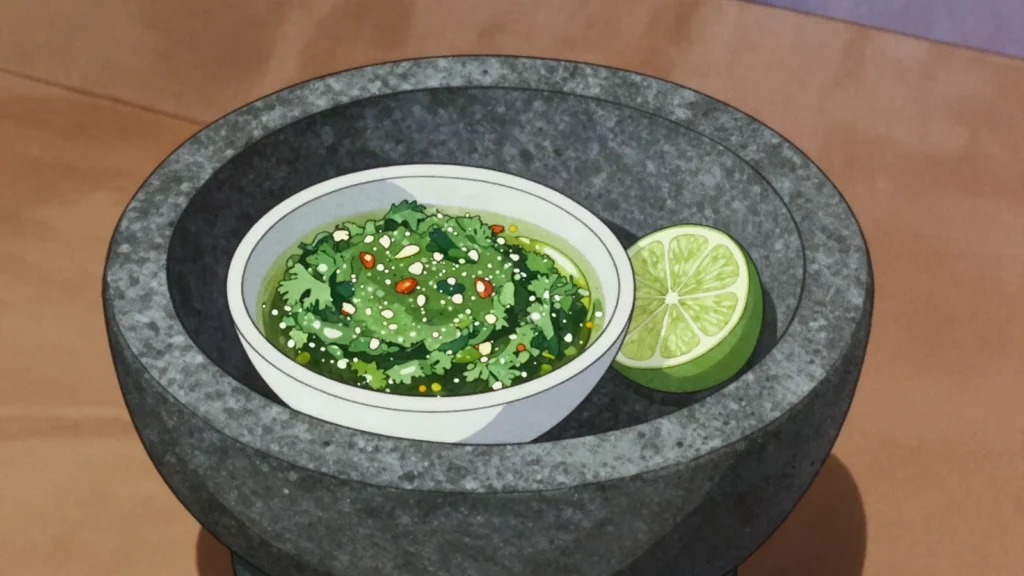
Ground on the ros kari, a flat stone with a roller, the tool Indian labourers brought and Mauritian kitchens still keep.
Frequently asked questions
What is Satini cotomili?
Satini cotomili is a sauce & condiment from Mauritius: coriander, chili and garlic ground on a stone into a green chutney. Ground on the ros kari, a flat stone with a roller, the tool Indian labourers brought and Mauritian kitchens still keep.
How long does Satini cotomili take to make?
Satini cotomili takes 20 minutes of preparation and no cooking at all. The recipe makes about 150 g. It is rated easy to make.
What can I substitute in Satini cotomili?
Yes, within limits. A mortar and pestle crushes in the same way as the ros kari and gives a genuinely good result, though it is slower for a large batch; a blender works acceptably but chops rather than crushes, giving a wetter coarser paste — pulse it rather than running it, and add only as much water as it needs. Ginger, a small onion and a few mint leaves are all used in versions, and a little oil stirred through helps preserve the colour and gives a glossier finish; some households use it and some do not.
What is the most important thing to get right in Satini cotomili?
Make small quantities each time. Wash with soap and plenty of water. Work in a well ventilated space. Do not lean out over the stone. Wash it and spin or shake it dry.