
Ingredients
The grubs
- about 30 sago palm weevil larvae
- live and fresh
- from a trusted source
To roast
- banana leaves
- wilted over a flame
- or bamboo skewers
- a little salt
Sometimes added
- a squeeze of lime
- chopped chilli
- wild greens, to wrap
The fire
- hot coals
- or an open fire
- a wire rack
Directions
- Dust mite allergy suggests the same. Anyone affected should avoid them. Rinse the live grubs in clean water. Rinse them gently in cold water. Pick out any of the wood fragments.
- Drain them thoroughly afterward. They move about a very great deal. Keep them in a covered container. Cut banana leaves into rectangles. A few seconds each side is enough.
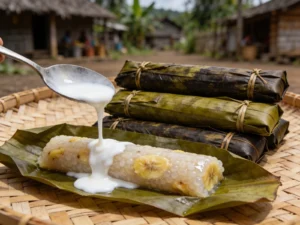
- Fold with the grain rather than across. That stops it tearing as you fold. Lay grubs in the centre of a leaf. Put six or eight in each parcel.
- Spread them in a single layer. Do not pile them all up at all. Sprinkle a little salt over them. Salt is often the only seasoning. They need very little else at all.
- Fold the leaf right over the grubs. Fold one long side over first. Fold the other long side over that. Tie the parcel with a strip of leaf. The parcel must not open at all. Check each one before cooking. Let the fire burn down to coals.
- Wait until they glow under grey ash. Cooking them takes about ten minutes. Lay all the parcels on the coals. Turn them over every few minutes. They need about ten full minutes.
- Cook them for longer if they are. Skewered grubs cook in five minutes. Stand back from the fire a little. Judging them takes a careful look. Cook them longer if it is not. Serving them is always done hot. Serve them straight from the fire. They are eaten hot from the leaf.
Technique
- The grubs are eaten raw in some places, which is a genuine traditional practice, but raw insects can carry parasites and harmful bacteria that cooking removes — a documented food safety point. The atlas records the raw practice honestly and recommends cooking, which is the safer of the two ways. Cook them right through: they should be firm and browned outside and set rather than liquid inside.
- Insects can trigger allergic reactions, and people with shellfish or dust mite allergies are at higher risk because the proteins are chemically related — a well documented cross-reaction. Anyone affected should avoid them.
- The larvae must come from a clean source, since they live in rotting palm wood: do not gather them from unknown timber, and never from treated or painted wood or wood near industrial waste. Buy them from those who harvest properly.
Substitutions
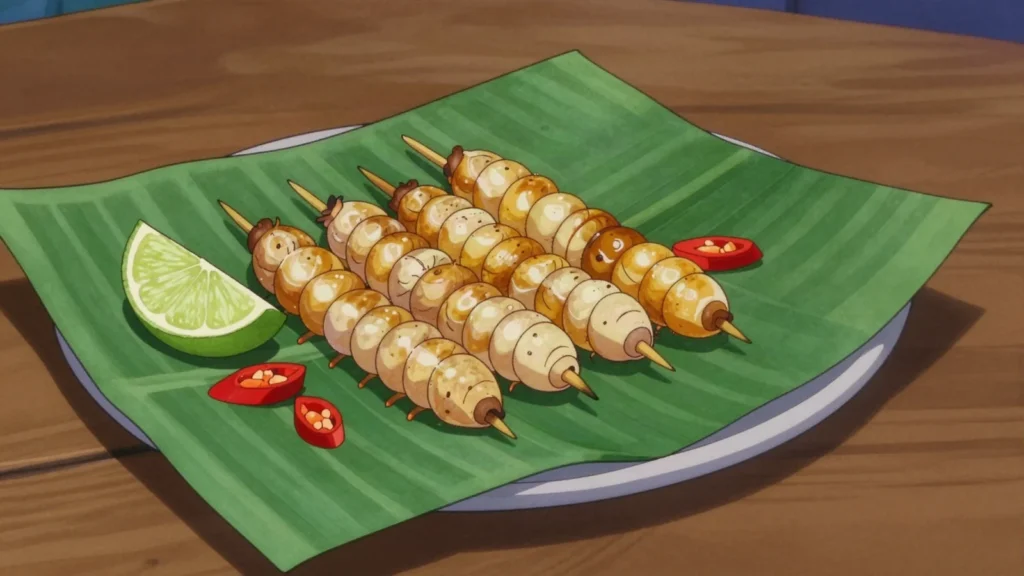
- Threading the grubs onto skewers and grilling them directly over coals gives a crisper browned result in about five minutes, turned constantly; both that and wrapping in leaves are genuinely done. They are very fatty and the fat spits and flares on the coals, so stand back a little.
- Salt is often the only seasoning, since the grubs are rich on their own and need very little — a lime squeeze and chopped chilli are added in some places.
Variations
- This is a genuine traditional food, nutritious and widely valued rather than a novelty or a dare, and the atlas records it as ordinary food. The larvae are high in fat and protein, which is well documented and why the practice persists. The atlas also carries palm weevil larvae, the same insect eaten in West Africa.
- A sago palm is felled deliberately, its pith washed for starch and the trunk then left to rot for weeks so weevils lay eggs in the soft wood — the same palm gives both the sago and the grubs, and nothing is wasted. The atlas carries sago pancake, made from that starch.
- Wilt the banana leaves over a flame for a few seconds a side and fold with the grain rather than across, since the leaf splits along it; put six or eight grubs in a single layer per parcel, since piled grubs cook very unevenly.
History
Harvested from rotting sago palms in the Sepik lowlands, where East Sepik province holds an annual sago grub festival in Wewak.
Frequently asked questions
What is Sago Grubs?
Sago Grubs is a snack from Papua New Guinea: fat palm-weevil larvae from felled sago logs, eaten raw or roasted in leaves. Harvested from rotting sago palms in the Sepik lowlands, where East Sepik province holds an annual sago grub festival in Wewak.
How long does Sago Grubs take to make?
Sago Grubs takes 15 minutes of preparation and 15 minutes of cooking. The recipe makes serves 4. It is rated medium to make.
What can I substitute in Sago Grubs?
Yes, within limits. Threading the grubs onto skewers and grilling them directly over coals gives a crisper browned result in about five minutes, turned constantly; both that and wrapping in leaves are genuinely done. They are very fatty and the fat spits and flares on the coals, so stand back a little. Salt is often the only seasoning, since the grubs are rich on their own and need very little — a lime squeeze and chopped chilli are added in some places.
What is the most important thing to get right in Sago Grubs?
Fold with the grain rather than across. That stops it tearing as you fold. Lay grubs in the centre of a leaf. Put six or eight in each parcel.