
Ingredients
The nuts
- 30namambe fruits
- Inocarpus fagifer
- the Tahitian chestnut
To cook
- water, to cover
- salt
- or hot wood ash and embers
- for roasting
Sometimes served with
- grated coconut
- coconut cream
- a little salt
Or grated into
- laplap
- puddings
Directions
- Cook the kernels before eating them. Boiling and roasting in hot ashes are both traditional. Cut the fleshy coat away from the fruit. Crack the thin fibrous outer shell.
- Take the whole seed out of it. The shell is thin rather than hard. Peel the brown seed coat right off. Soak the seeds overnight in water.
- Put the peeled kernels in a pot. Cover them well with cold water. Add plenty of salt to the water.
- Bring the pot up to a full boil. Cooking them takes about an hour. Let them boil steadily throughout. Give them about one full hour.
- Boil them longer if they resist. Bury the kernels in hot wood ash. Let them roast for about half an hour. Judging roasted ones takes a check.
- Break one of them open to look. It should be floury right through. Brush the ash off the roasted kernels. Wipe them over with a dry cloth.
- Pile them all into a warm bowl. Add a little salt over them to serve. Scatter grated coconut over them. Grate the cooked kernels finely. Work them into a laplap or a pudding. Cooked kernels keep only a few days.
Technique
- The raw kernel is toxic and must be cooked — stated flatly in the agroforestry literature, and not a matter of preference. The honest position is that no source names the toxic compound or its mechanism, and removing the toxins is listed as outstanding research, so the hazard is real while its chemistry is genuinely unpublished. Boiling and roasting in hot ashes are both traditional; do not taste a raw kernel.
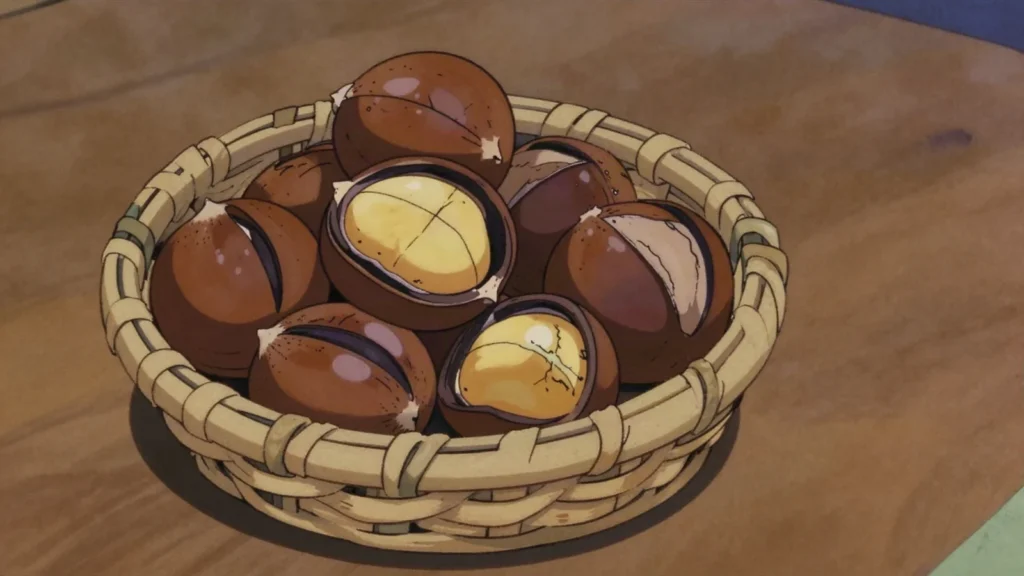
- Namambe is the Bislama name of the tree and nut rather than a prepared dish, and the atlas records it as such. The atlas also describes boiling it in its pod, but the fruit is not a pod — despite the tree being a legume, it bears a one-seeded drupe-like fruit with a fleshy fibrous coat and thin shell that does not split open. Only the kernel is food: the outer flesh and the seed testa are both inedible and removed.
- The shelled kernel is highly perishable, discolouring within a short time of shelling, and even cooked kernels keep only a few days — which is why the fruit is traditionally stored whole, dried on racks, buried or layered in grass, and shelled as needed.
Substitutions
- Roasting in hot ashes is as traditional as boiling, and the whole fruit is also baked and opened afterwards.
- Soak the seeds overnight before peeling, which softens the testa so it peels rather than needing to be scraped.
Variations
- Tahitian chestnut is misleading on two counts: the tree is not from Tahiti, its likely origin being Malesia and Melanesia, and it is not botanically a chestnut.
- The commonest use is grating the cooked kernel into laplap and puddings rather than eating it alone.
- Eating cooked kernels causes flatulence, which is recorded plainly in the literature and is a comfort issue rather than a toxicity one.
History
Inocarpus fagifer grows in coastal swamps throughout Vanuatu and is a reliable food when gardens are between harvests.
Frequently asked questions
What is Namambe?
Namambe is a snack from Vanuatu: tahitian chestnut boiled in its pod; floury and mild, eaten by hand. Inocarpus fagifer grows in coastal swamps throughout Vanuatu and is a reliable food when gardens are between harvests.
How long does Namambe take to make?
Namambe takes 20 minutes of preparation and 1 hour of cooking. The recipe makes serves 6. It is rated easy to make.
What can I substitute in Namambe?
Yes, within limits. Roasting in hot ashes is as traditional as boiling, and the whole fruit is also baked and opened afterwards. Soak the seeds overnight before peeling, which softens the testa so it peels rather than needing to be scraped.
What is the most important thing to get right in Namambe?
Take the whole seed out of it. The shell is thin rather than hard. Peel the brown seed coat right off. Soak the seeds overnight in water.