
Ingredients
The pork
- 1.5 kgpork shoulder
- skin on if you can
- or leftover roast pork
The mojo marinade
- juice of 6 sour oranges
- or 4 oranges and 2 limes
- 12garlic cloves, crushed
- 2 teaspoonsdried oregano
- 2 teaspoonsground cumin
- 100 mlolive oil
- salt and black pepper
To assemble
- 6Cuban rolls
- or crusty white rolls
- 2white onions, thinly sliced
- extra mojo, to spoon over
Sometimes added
- a little butter
- for the bread
- hot sauce
Directions
- Crush the garlic to a paste with salt. Salt gives the blade something to work against. Combining it is straightforward enough. Mix the garlic with the citrus juice. Add the oregano and the cumin.
- Add the olive oil and black pepper. It also helps the marinade cling. Whisk the olive oil in properly. Some cooks warm the oil first. Set aside about a third of the mojo. That portion never touches raw pork.
- Keep the two clearly separate. Score the pork skin and its fat. It also helps the fat render out. Cut through the skin but not the meat. Score it in a diamond pattern. Make deep cuts into the meat with a knife. A marinade only reaches the surface otherwise. Rub the mojo all over the pork. Work it right into all the cuts.
- Cover it and then refrigerate it. Four hours is a workable minimum. Take the pork out an hour before. Let it come towards room temperature. Cold meat cooks very unevenly. Heat the oven to one hundred and sixty degrees. Pork shoulder needs slow cooking.
- Set the pork in a roasting tin. Cover the whole tin with foil. Roast it for about three hours. That keeps it moist as it cooks. Baste it with the pan juices every hour. Basting keeps the surface moist. Take all of the foil right off. Roast it for another thirty minutes. Watch it so that it does not burn.
- Let the pork rest for twenty minutes. Shredding it hot loses all of them. Pull the meat apart with two forks. Chop the crisp skin into pieces. Do not discard the crisp crackling. Spoon the reserved mojo over the meat. Toss it all through the shredded meat. Cuban bread is soft with a thin crust.
- Butter the cut sides and toast them. Toasting stops the bread going soggy. Pile the shredded pork into the roll. Fill it generously rather than sparingly. Pile the meat up high inside it.
- Pile thinly sliced raw onion on top. The onion must be raw and thin. Slice it as thinly as you can. Spoon a little more mojo over it. Add a little hot sauce if you like. Serving it is always done immediately. Assemble every sandwich fresh.
Technique
- Set aside about a third of the mojo before it touches the raw pork, and spoon that portion over the cooked shredded meat. Marinade that has touched raw meat is not reused, so keep the two clearly separate. The fresh mojo brightens the roasted meat and puts raw garlic sharpness back, and that contrast is the point.
- Marinate overnight, with four hours a workable minimum, but not much beyond a day: the citrus acid softens the surface of the meat and too long makes it mushy and pale.
- Pork shoulder needs slow cooking at about one hundred and sixty degrees because it is full of connective tissue that breaks down only with gentle heat — it is done when a fork twists it apart with no resistance. Then take the foil off, raise the heat and give it thirty minutes to crisp the skin, and chop that crackling back through the shredded meat rather than discarding it.
Substitutions
- Two parts orange juice to one of lime approximates the sour orange, which sits between the two in sharpness; it is the standard substitution.
- Warming the oil with the garlic mellows it, since raw garlic in mojo is very sharp; both versions are made.
Variations
- The sandwich is built from the leftovers of the whole pig roasted at Christmas and celebrations, so it is thrift rather than design.
- Raw thinly sliced white onion is not optional — cooked onion gives a different dish entirely.
- There is no lettuce, tomato or mayonnaise: pork, onion, mojo and bread, and that restraint is deliberate.
History
Built from the leftovers of the whole pig roasted at Christmas and Cuban celebrations, sold at street windows.
Frequently asked questions
What is Pan con lechón?
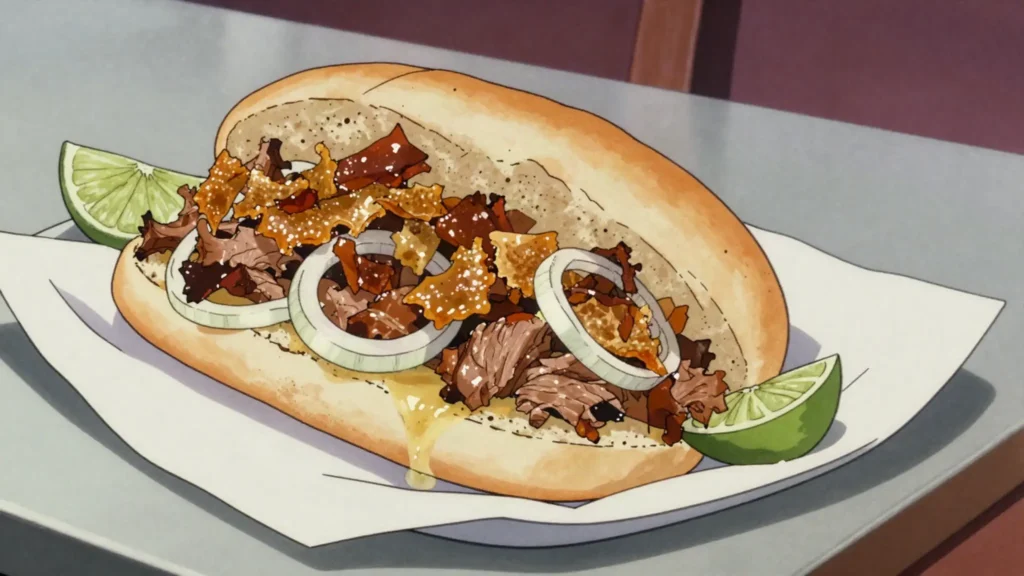
Pan con lechón is a street food from Cuba: roast pork with mojo and raw onion piled into a crusty Cuban roll. Built from the leftovers of the whole pig roasted at Christmas and Cuban celebrations, sold at street windows.
How long does Pan con lechón take to make?
Pan con lechón takes 30 minutes plus marinating of preparation and 4 hours of cooking. The recipe makes serves 6. It is rated medium to make.
What can I substitute in Pan con lechón?
Yes, within limits. Two parts orange juice to one of lime approximates the sour orange, which sits between the two in sharpness; it is the standard substitution. Warming the oil with the garlic mellows it, since raw garlic in mojo is very sharp; both versions are made.
What is the most important thing to get right in Pan con lechón?
Add the olive oil and black pepper. It also helps the marinade cling. Whisk the olive oil in properly. Some cooks warm the oil first. Set aside about a third of the mojo. That portion never touches raw pork.