
Ingredients
Meat
- 1 kgbeef chuck or shoulder, in 5 cm pieces
- 1 tspsalt
- 1 tspblack pepper
- 80 mlgroundnut oil
Base
- 3onions, chopped
- 6garlic cloves, crushed
- 150 gtomato paste
- 4ripe tomatoes, blended
- 20 gfresh ginger, grated
- 2stock cubes
- 1whole scotch bonnet chilli
- 1bay leaf
- 1.2 litreswater
Vegetables and rice
- 500 glong-grain rice, rinsed until the water runs clear
- 300 gwhite cabbage, in wedges
- 2carrots, in thick batons
- 1aubergine, quartered
- 200 ggreen beans
Directions
- Season the beef and brown it hard in the oil in a wide heavy pot, in batches, until crusted on all sides — 10 minutes. Lift it out.
- Fry the onion in the same oil over medium heat for 10 minutes until deep gold, then add the garlic and ginger for 1 minute.
- Add the tomato paste and fry it patiently for 8 to 10 minutes, stirring constantly. It should darken from red to brick and the oil should visibly separate around it — this step is the entire colour and depth of riz gras and cannot be rushed.
- Pour in the blended tomatoes and cook 10 minutes more until thick and jammy, then add the water, stock cubes, bay leaf, the whole chilli and the browned meat.
- Simmer covered for 40 minutes until the meat is tender, then lift the meat out and keep it warm. Add the cabbage, carrot, aubergine and beans and cook 10 minutes until just tender, then lift those out too.
- Measure the broth: you want about 1 litre for 500 g of rice. Top up with water or reduce as needed, and taste — it should be slightly saltier than you want the final dish.
- Stir the rinsed rice into the broth, bring to a boil, then cover tightly and drop to the lowest heat for 20 minutes without lifting the lid.
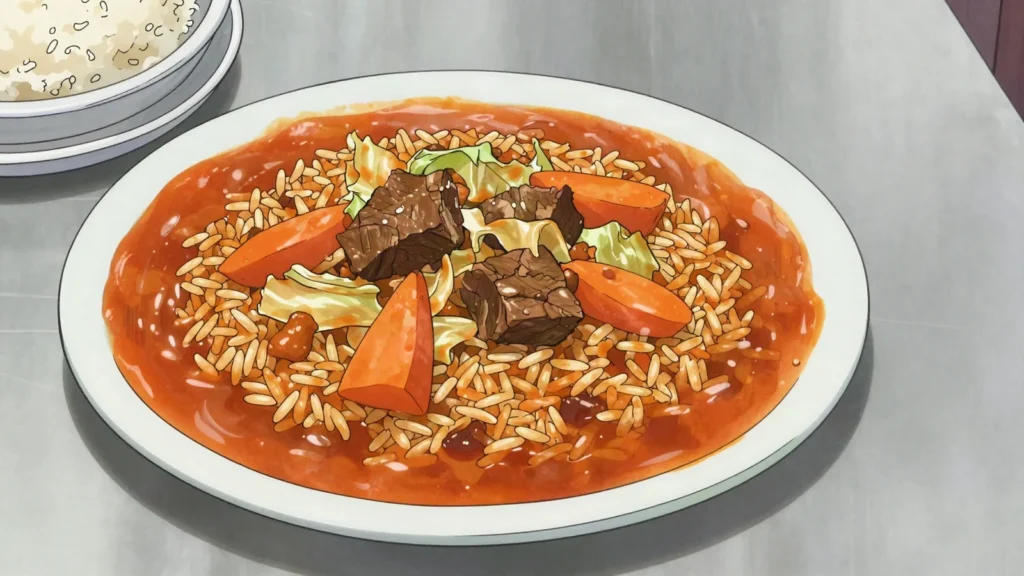
- Turn off the heat and rest 10 minutes. The grains should be separate, deep orange and slick with oil; a lightly caught crust at the base is prized. Pile the rice on a platter, arrange the meat and vegetables on top, and serve from the middle of the table.
Technique
- Riz gras means fat rice, and the fat is the point — the oil that separates out of the tomato base coats every grain. Trimming it back gives you a dull, dry rice.
- It shares ancestry with jollof and with Senegalese thieboudienne, but the Burkinabè version cooks the vegetables in the same pot and serves them whole on top rather than blending them away.
- Leave the scotch bonnet whole and unpierced. It perfumes the broth without making the pot too hot for children.
Substitutions
- Lamb or chicken can replace the beef; chicken needs only 25 minutes of simmering.
- If you cannot find a scotch bonnet, use a habanero, or 1 tsp of chilli flakes added with the tomato paste.
Variations
- Riz gras au poulet, made with a whole jointed chicken, is the standard maquis lunch.
- Some cooks add a handful of dried fish to the broth for a deeper savoury note, which is closer to the Malian version.
History
Rice cooked with tomato, onion and meat or fish into a rich, flavourful one-pot dish, its name meaning literally fat rice in French, developed in Burkina Faso within the broader West African tradition of tomato-based rice dishes found across the region, closely related to Senegalese thieboudienne and Nigerian jollof rice, though riz gras maintains its own particular Burkinabé character and preparation. Rice itself became more widely available and affordable across Burkina Faso through the 1900s, and riz gras developed into a popular dish for both everyday meals and celebrations, valued for its rich, savory flavour achieved through slow cooking the rice directly in the tomato-and-meat sauce rather than serving a sauce separately over plain rice.
Frequently asked questions
What is Riz gras?
Riz gras is a main from Burkina Faso: rich one-pot rice cooked in tomato broth with meat and vegetables. Rice cooked with tomato, onion and meat or fish into a rich, flavourful one-pot dish, its name meaning literally fat rice in French, developed in Burkina Faso within the broader West African tradition of tomato-based rice dishes found across the region, closely related to Senegalese thieboudienne and Nigerian jollof rice, though riz gras maintains its own particular Burkinabé character and preparation. Rice itself became more widely available and affordable across Burkina Faso through the 1900s, and riz gras developed into a popular dish for both everyday meals and celebrations, valued for its rich, savory flavour achieved through slow cooking the rice directly in the tomato-and-meat sauce rather than serving a sauce separately over plain rice.
How long does Riz gras take to make?
Riz gras takes 30 min of preparation and 1 hr 15 min of cooking. The recipe makes 6 servings. It is rated medium to make.
What can I substitute in Riz gras?
Yes, within limits. Lamb or chicken can replace the beef; chicken needs only 25 minutes of simmering. If you cannot find a scotch bonnet, use a habanero, or 1 tsp of chilli flakes added with the tomato paste.
What is the most important thing to get right in Riz gras?
Add the tomato paste and fry it patiently for 8 to 10 minutes, stirring constantly. It should darken from red to brick and the oil should visibly separate around it — this step is the entire colour and depth of riz gras and cannot be rushed.