
Ingredients
The batter
- 400 gplain flour
- about 900 ml water
- 1 teaspoonsalt
- 1egg, optional
- for strength
The fillings
- processed cheese triangles
- or grated cheese
- 1egg per bread
- mehyawa fish sauce
- honey or date syrup
- for the sweet version
The equipment
- a large flat griddle
- a tawa or heavy plate
- a scraper or spatula
- a cloth, to wipe
To serve
- rolled or folded
- straight from the griddle
- with tea
Directions
- Pour the batter and spread it fast. Use a ladle and a spreader instead. That keeps hands off the hot plate. Spread it thin so it cooks fast. The batter is extremely thin indeed. Put the flour and salt in a large bowl. Add the water gradually at first.
- Whisk it into a smooth thick paste. Lumps never come out of a thin batter. Whisk in the rest of the water. Add it gradually while whisking. It becomes extremely thin and loose. Pour the batter through a sieve. Lumps tear the thin sheet on the plate. Cover the batter and let it rest. Give it at least thirty full minutes.
- Whisk it again before you start. Whisk it between breads as well. Otherwise the last ones are watery. Heat the griddle until genuinely hot. It must be hot enough to set instantly. Wait for longer before starting. The plate is used dry rather than oiled. Oil makes the thin batter slide about. It also stops it spreading thin.
- Ladle batter onto the hot plate. Pour it in a thin stream as you move. Work outward in a spiral pattern. Cover the plate quickly and thinly. Spread it immediately with a spreader. Work fast before it sets solid. Do not try to patch every gap.
- Add the filling while it is on the plate. Do it while the bread is still soft. Work quickly from this point on. Adding the cheese is straightforward enough. Spread the cheese over the hot bread. Spread it with the back of a spoon. Cover about half of the surface.
- Crack an egg onto the hot bread. Spread it thin with a spatula. Break the yolk and spread it out. A thin layer cooks in seconds. Use it sparingly rather than thickly. A very thin smear is quite enough. Roll or fold the hot bread up.
- Fold it in half and then in half again. Serving them is always done immediately. Serve them straight from the griddle. They are at their best within a minute. Make them one at a time to order. Use a dry cloth or a metal scraper. Keep the surface entirely clean. Plain ones keep a week in a tin.
Technique
- The batter is roughly two parts water to one of flour and looks far too thin — it is genuinely meant to pour like thin cream, and that thinness is what gives the wafer texture where a thick batter gives a soft pancake. Rest it thirty minutes so the flour hydrates and it spreads evenly, and whisk it again between breads since the flour settles and the last ones come out watery.
- The traditional method smears batter onto a searing plate with the bare hand, which is a genuine burn risk done with long practice. Ladle it and spread it fast with a wooden spreader or the back of a ladle instead, which keeps hands off the plate.
- Mehyawa is made entirely from fermented fish, is smeared inside and then hidden by rolling, and nobody can tell it is there — say clearly what has gone in, since fish allergy can be severe and it also makes the bread non-vegetarian.
Substitutions
- Processed cheese triangles are the standard filling, which sounds surprising but is genuinely what is used: they melt smoothly without splitting and spread easily, where real cheese can go oily and stringy.
- Honey or date syrup drizzled on while the bread is hot makes the sweet version, as common as the savoury one.
Variations
- Use the plate dry rather than oiled, since oil makes the thin batter slide about and stops it spreading; wipe it with a dry cloth between breads so stuck bits do not burn onto the next one.
- It is cooked on one side only and never turned, the top cooking from the plate’s heat — turning it would toughen it entirely. Small holes and gaps are normal and the lacy texture is characteristic, so do not try to patch them.
- Add the filling while the bread is still soft and roll or fold it at once, since it crisps within seconds and a crisp bread cracks when folded. An egg must be spread thin so it cooks through, since a thick layer stays runny and carries a salmonella risk.
History
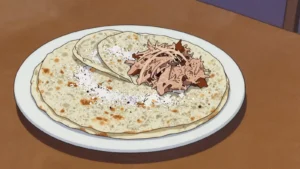
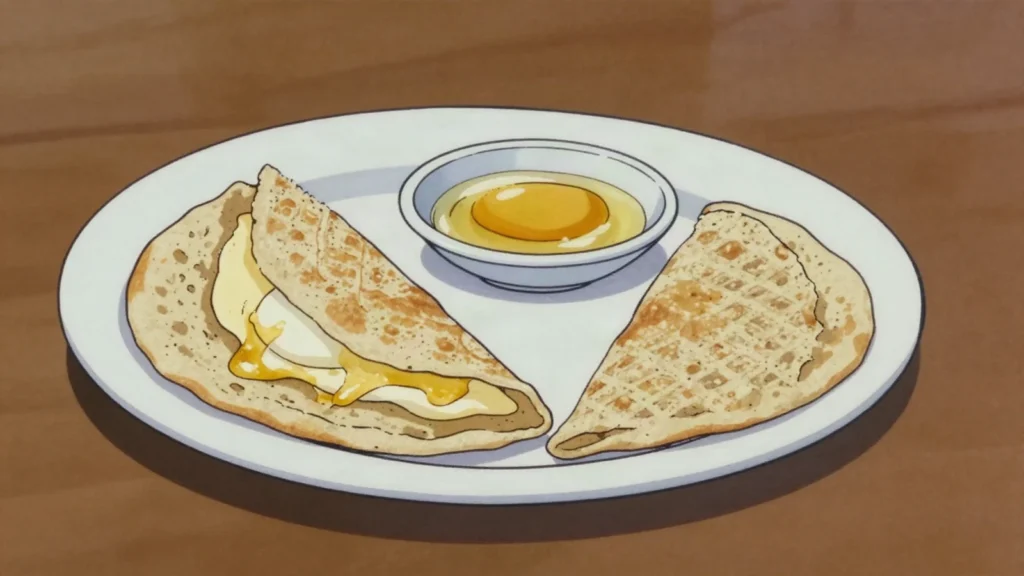
Thin crepe cooked on a hot plate and filled with cheese or mehyawa fish sauce.
Frequently asked questions
What is Regag?
Regag is a bread & pastry from Qatar: crisp wafer-thin bread with cheese, egg or honey. Thin crepe cooked on a hot plate and filled with cheese or mehyawa fish sauce.
How long does Regag take to make?
Regag takes 20 minutes plus resting of preparation and 20 minutes of cooking. The recipe makes about 12 breads. It is rated hard to make.
What can I substitute in Regag?
Yes, within limits. Processed cheese triangles are the standard filling, which sounds surprising but is genuinely what is used: they melt smoothly without splitting and spread easily, where real cheese can go oily and stringy. Honey or date syrup drizzled on while the bread is hot makes the sweet version, as common as the savoury one.
What is the most important thing to get right in Regag?
Whisk it into a smooth thick paste. Lumps never come out of a thin batter. Whisk in the rest of the water. Add it gradually while whisking. It becomes extremely thin and loose. Pour the batter through a sieve. Lumps tear the thin sheet on the plate. Cover the batter and let it rest. Give it at least thirty full minutes.