
Ingredients
The fish
- 600 gvery fresh tuna
- or firm reef fish
- read the safety note first
- skinned and boned
- cut into 2 cm cubes
The cure
- juice of 6 to 8 limes
- enough to cover the fish
- 1 teaspoonsalt
The coconut cream
- the flesh of 1 mature coconut
- grated and squeezed
- or 400 ml thick tinned coconut cream
- see the note
The vegetables
- 1onion, very finely sliced
- or 4 spring onions
- 1cucumber, diced
- 2tomatoes, deseeded and diced
- 1chilli, finely chopped
- optional
- salt and black pepper
To serve
- cold, in a bowl
- with rice
- or boiled taro or breadfruit
- lime wedges
Directions
- Keep the fish refrigerated at every stage. Work quickly. Return it to the refrigerator between steps. Do not let it sit out on a warm counter. Cut it into cubes of about two centimetres. Smaller cubes cure through too fast and go chalky. Use a sharp knife. Put the cubes in a non-metal bowl. Use glass, ceramic or plastic. Pour enough lime juice to cover the fish. Add the salt. Stir it through.
- Cure it for fifteen to thirty minutes. Over-curing makes the fish chalky and dry. Cut a cube open to check. Drain the lime juice off. The fish keeps curing while it sits in acid.
- Add a spoonful back rather than all of it. Crack a mature coconut and grate the flesh. Add a little warm water. Squeeze it hard through muslin. The first pressing is the thick cream. Pierce the soft eye and drain the water. Hold it over a bowl in one hand.
- Turn it as you tap. Never hold a coconut in your palm and swing a machete at it. Use thick coconut cream, not thin milk. Do not shake the tin. Slice the onion very finely. Soaking the slices in cold water ten minutes softens it. Drain and dry them before adding. Dice them small. Deseed the tomatoes.
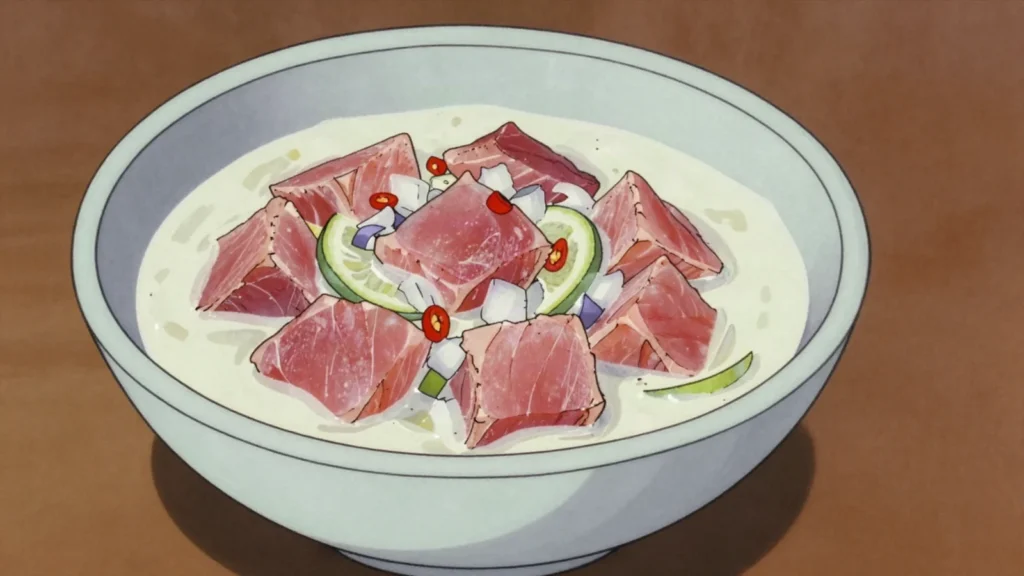
- Put the drained fish in a bowl. Add the onion, cucumber and tomato. Add the chilli if you like. Pour the coconut cream over. Fold it together gently. Fold rather than stir. Season with salt and black pepper.
- Taste it carefully. It should be creamy, sour and fresh at once. Add a little of the lime juice back if it is flat. Chill it for thirty minutes before serving. It must be served genuinely cold.
- Serve it from the refrigerator. Set the bowl in ice if it is a hot day. Discard anything left standing out for hours. Serve it cold in a bowl. Serve rice or a root vegetable alongside. Serve lime wedges. It does not keep.
Technique
- This is a raw fish dish and the risks are real. Many wild marine fish carry parasitic worms such as anisakis, and lime juice does not kill them — curing in acid does nothing to parasites. Only freezing or thorough cooking does.
- Buy fish that has already been frozen for raw consumption and ask the fishmonger directly. A common standard is minus 20 degrees for seven days or minus 35 for about twenty hours; domestic freezers often run around minus 18 and do not reach that. “Sashimi-grade” is not a legally defined term everywhere and generally means the fishmonger vouches for it, so who you buy from matters. Commercially caught tuna is usually frozen hard at sea, which is why it is so widely eaten raw.
- Ciguatoxins in tropical reef fish are destroyed by nothing — not cooking, not freezing, not curing. The fish looks and tastes normal and there is no test a cook can perform; local knowledge is the only real protection. The atlas gives the full warning under grilled reef fish.
- Anyone pregnant, immunocompromised, with liver disease, very young or elderly should not eat raw fish.
- Cure for fifteen to thirty minutes and no longer. Over-curing turns the fish chalky and crumbly instead of silky, which is the commonest failure here — the outside should be opaque with the very centre still slightly translucent.
- Drain the lime juice off after curing. The fish keeps curing while it sits in acid, and draining also stops the coconut cream splitting. Add a spoonful back if the finished dish tastes flat.
- Cut the fish into two-centimetre cubes with a sharp knife. Smaller cubes cure through too fast and go chalky, larger stay raw in the centre, and a blunt knife crushes raw fish into mush.
- Use a glass, ceramic or plastic bowl. Lime juice reacts with aluminium and unlined copper and takes on a metallic taste.
- Keep the fish refrigerated at every stage, work quickly, and serve it straight from the fridge. Acid slows bacterial growth but does not stop it.
- Deseed the tomatoes. The seeds and jelly water the dish down and thin the coconut cream.
- Fold rather than stir. Cured fish is delicate and hard stirring breaks it up.
- Fresh coconut cream is noticeably better than tinned, which tastes flatter and slightly cooked. If using tinned, take the thick cream and do not shake the tin. Never hold a coconut in your palm and swing a blade at it — tap around its equator with the back of a heavy knife instead.
- Eat it within a few hours. It does not keep overnight: the fish goes chalky, the cream separates and the vegetables weep.
- The atlas holds a near-identical Kiribati entry, differing in its description only by the words coconut milk rather than cream. The atlas cannot establish a real difference beyond that and records both under their countries rather than inventing distinctions.
Substitutions
- Any firm fish frozen for raw consumption replaces tuna.
- Thick tinned coconut cream replaces fresh, at some cost in flavour.
- Spring onions replace sliced onion for a milder result.
- Lemon replaces lime, though lime is what is used.
- Chilli, ginger or capsicum are added in various island versions.
- Cooking the fish briefly instead makes a different dish and removes the raw-fish risks entirely.
Variations
- Raw fish in coconut milk in Kiribati is the near-identical neighbour dish.
- Oka i’a in Samoa, ota ika in Tonga and ika mata in the Cook Islands are the same idea.
- Poisson cru in Tahiti is the best known version outside the Pacific.
- Kokoda in Fiji often adds more chilli and capsicum.
- Ceviche in Peru cures fish in lime without coconut and is a separate tradition.
- A version with the fish briefly seared rather than raw is made for those who prefer it.
Frequently asked questions
What is Raw Fish in Coconut Cream?
Raw Fish in Coconut Cream is a main from Tuvalu: fresh tuna or reef fish with lime and thick coconut cream.
How long does Raw Fish in Coconut Cream take to make?
Raw Fish in Coconut Cream takes 30 minutes plus curing of preparation and none of cooking. The recipe makes serves 4. It is rated easy to make.
What can I substitute in Raw Fish in Coconut Cream?
Yes, within limits. Any firm fish frozen for raw consumption replaces tuna. Thick tinned coconut cream replaces fresh, at some cost in flavour. Spring onions replace sliced onion for a milder result. Lemon replaces lime, though lime is what is used. Chilli, ginger or capsicum are added in various island versions. Cooking the fish briefly instead makes a different dish and removes the raw-fish risks entirely.
What is the most important thing to get right in Raw Fish in Coconut Cream?
Keep the fish refrigerated at every stage. Work quickly. Return it to the refrigerator between steps. Do not let it sit out on a warm counter. Cut it into cubes of about two centimetres. Smaller cubes cure through too fast and go chalky. Use a sharp knife. Put the cubes in a non-metal bowl. Use glass, ceramic or plastic. Pour enough lime juice to cover the fish. Add the salt. Stir it through.