
Ingredients
Harvest
- 1coconut palm with an unopened flower spathe
- A sharp toddy knife
- Coconut-fibre cord or a strip of rag, for binding the spathe
- A clean bottle or half coconut shell, with a cover of leaf or cloth
- Fresh water, for rinsing the vessel
To serve
- 500 mlfresh kaleve, strained
- Ice, or a cool shaded place
- Optional: 250 ml water, to lengthen it
- Optional: grated coconut flesh, to eat alongside
Directions
- Slice a thin shaving off the tip with the toddy knife. Clear sweet sap begins to bead at the cut within minutes.
- Tie a clean covered bottle or coconut shell under the cut so the sap drips in, and shield the opening from rain, ants and dust. Climb to the tree twice a day, at dawn and at dusk, take a fresh paper-thin shaving off the tip to reopen the flow, and swap in a clean vessel.
- Rinse each vessel with fresh water before rehanging. A dirty bottle sours the sap within an hour.
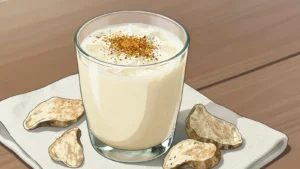
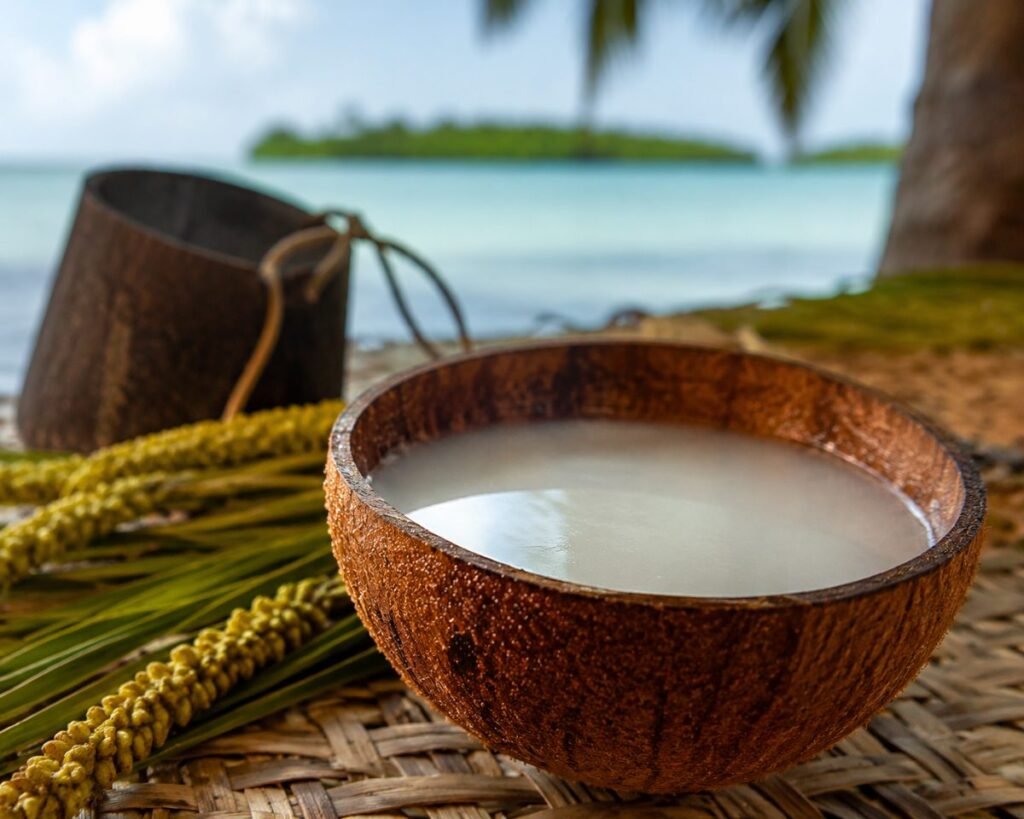
- Strain the collected sap through a clean cloth. Fresh kaleve is pale, cloudy, faintly sweet and slightly effervescent – drink it within a few hours, cold.
Technique
- Kaleve is the staple everyday drink of Tuvalu and one of the few reliable sources of sugar and some vitamins on low coral atolls where little will grow.
- Toddy tapping is skilled, dangerous work – climbing a palm twice a day in all weather – and a good tapper is respected. The cut must be shaved, not gouged; a deep cut kills the spathe and ends the flow.
- Fermentation begins on its own the moment collection stops. Whether you drink kaleve sweet or sour is a matter of how long the bottle has stood, not of any added ingredient.
Substitutions
- Away from the tropics there is no real substitute, but bottled fresh coconut sap (sold as coconut nectar or neera) is the same liquid, and unrefined coconut sugar is dried kamaimai.
- Coconut water from a green nut is a different thing entirely – thinner and less sweet – but it fills the same everyday role.
Variations
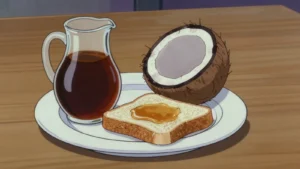
- Kamaimai, the sap boiled down to a molasses-like syrup poured over pancakes and taro.
- Fermented kaleve, sour and mildly alcoholic, drunk after a day or two.
History
A sweet sap harvested from the coconut palm’s flower stalk, closely related to similar coconut sap traditions found across Kiribati, the Marshall Islands and the wider Pacific Islands region, documented across Tuvalu for many generations as a significant traditional beverage reflecting the coconut palm’s central importance to daily life and diet across the country’s low-lying coral atolls. Harvesting kaleve requires the same careful, skilled technique of binding and cutting the palm’s flower stalk found across related Pacific coconut-sap traditions, allowing a slow, sustained flow of sweet sap to be collected over an extended period. Kaleve remains an important traditional drink across Tuvalu, consumed both fresh and in a naturally fermented form, closely tied to the broader Pacific Islander cultural significance of the coconut palm.
Frequently asked questions
What is Kaleve?
Kaleve is a drink from Tuvalu: sweet coconut toddy collected morning and evening, the staple drink. A sweet sap harvested from the coconut palm’s flower stalk, closely related to similar coconut sap traditions found across Kiribati, the Marshall Islands and the wider Pacific Islands region, documented across Tuvalu for many generations as a significant traditional beverage reflecting the coconut palm’s central importance to daily life and diet across the country’s low-lying coral atolls. Harvesting kaleve requires the same careful, skilled technique of binding and cutting the palm’s flower stalk found across related Pacific coconut-sap traditions, allowing a slow, sustained flow of sweet sap to be collected over an extended period. Kaleve remains an important traditional drink across Tuvalu, consumed both fresh and in a naturally fermented form, closely tied to the broader Pacific Islander cultural significance of the coconut palm.
How long does Kaleve take to make?
Kaleve takes 20 min twice daily of preparation and 12 hr collection of cooking. The recipe makes about 1.5 litres a day from one tree. It is rated hard to make.
What can I substitute in Kaleve?
Yes, within limits. Away from the tropics there is no real substitute, but bottled fresh coconut sap (sold as coconut nectar or neera) is the same liquid, and unrefined coconut sugar is dried kamaimai. Coconut water from a green nut is a different thing entirely – thinner and less sweet – but it fills the same everyday role.
What is the most important thing to get right in Kaleve?
Toddy tapping is skilled, dangerous work – climbing a palm twice a day in all weather – and a good tapper is respected. The cut must be shaved, not gouged; a deep cut kills the spathe and ends the flow.