
Ingredients
The pastry
- 300 gplain flour
- 150 gcold butter, cubed
- 80 gsugar
- 1egg yolk
- 2 tablespoonscold water
- a pinch of salt
The rhubarb
- 800 grhubarb stalks
- leaves cut off and discarded
- chopped
- 100 gsugar
- 2 tablespoonssemolina
- or ground almonds
The custard top
- 200 mlsour cream
- 2eggs
- 100 gsugar
- 1 tablespoonplain flour
- 1 teaspoonvanilla
Or the crumble top
- 100 gplain flour
- 80 gcold butter
- 60 gsugar
- a pinch of cinnamon
Directions
- Cut them right off and discard them. Rhubarb suits short cold summers well. Put the flour, sugar and salt in a bowl. Add all of the cold cubed butter. Rub it in to a coarse crumb texture. Rub it with your fingertips only.
- Lift the mixture up as you rub it. That keeps it cool and well aerated. Add the egg yolk and the cold water. Bring it together into a dough. Add only enough to bring it together. Too much water makes the pastry tough. Add it in just a splash at a time. Wrap it up and then refrigerate it. Give it at least thirty full minutes.
- Roll the pastry out on a floured surface. Roll it about four millimetres thick. Thick enough to hold the wet filling. Keep it even across the whole sheet. Lift the pastry into the tart tin.
- Roll it round the pin to lift it. That stops it stretching and tearing. Leave it a little proud at the rim. Give it about twenty full minutes. Line the pastry with paper and weights. Fill it right up to the very rim. Bake it at one hundred and ninety degrees. Give it about fifteen full minutes. Bake it five more minutes uncovered. It should look pale and just set.
- Cut every leaf off and discard it. Cut right at the top of each stalk. Leave no leaf material at all. Wash the trimmed stalks thoroughly after. Chop the stalks into short lengths. About two centimetres is a good size.
- Keep them a reasonable even size. Toss the chopped rhubarb in the sugar. Let it stand for about twenty minutes. Drain that liquid right off after. That is liquid the pastry never meets. Scatter the semolina over the baked base. Spread it in a thin even layer. Cover the whole of the base with it.
- Spread the drained rhubarb over the base. Spread it in a single even layer. Keep the layer reasonably shallow. Whisk the sour cream with the eggs. Add the sugar, flour and vanilla. It stops it splitting as it bakes. Pour the custard over the rhubarb. Pour it slowly and quite evenly. Let it settle between the pieces. It should just cover the fruit.
- Rub the butter into the flour and sugar. Rub it to a rough crumb texture. Leave some larger lumps in it. Do not work it into a fine sand. Scatter the crumble over the rhubarb. Cover it in an even loose layer.
- Bake it at one hundred and eighty degrees. Give it about thirty-five minutes. Shake the tin very gently to test it. A liquid ripple means it needs longer. Let the tart cool completely in the tin. Cutting it warm gives a runny slice. Cut it into wedges with a sharp knife. Serve whipped cream alongside it. It keeps three days refrigerated.
Technique
- Rhubarb leaves are genuinely toxic, containing high levels of oxalic acid, and must never be eaten — well documented rather than folklore. Cut them off at the top of each stalk, discard every part of the leaf and wash the stalks after trimming. This applies to every rhubarb dish.
- Rhubarb releases a great deal of liquid and a soggy base is the common failure. Three things address it together: blind bake the case before filling, toss the chopped rhubarb in sugar for twenty minutes and drain off what it releases, and scatter semolina over the baked base to absorb what remains as it bakes.
- Ease the pastry into the tin with no tension at all rather than stretching it over, since stretched pastry shrinks back in the oven and the sides slump; leave it a little proud at the rim and chill the lined tin twenty minutes before blind baking.
Substitutions
- Ground almonds or breadcrumbs work as well as semolina for the absorbent layer — any absorbent layer does the same job.
- A crumble top is as traditional as the sour cream custard, giving more texture where the custard is softer and creamier; rub it only to a rough crumb with some larger lumps left in, since those give the best texture.
Variations
- Sour cream in the custard gives a tang against the sweet fruit and is characteristic of Baltic baking, where plain cream gives a blander result; a tablespoon of flour stabilises it so it does not split and helps it set.
- Let the tart cool completely, at least an hour, since the custard sets fully as it cools and cutting it warm gives a runny slice.
- The atlas also carries Icelandic rabarbarasulta, rhubarb boiled down into jam — rhubarb is a reliable crop in short cold summers and runs right across the Baltic and Nordic cuisines.
History
Summer baking across Estonia, where rhubarb grows in almost every garden plot.
Frequently asked questions
What is Rabarberikook?
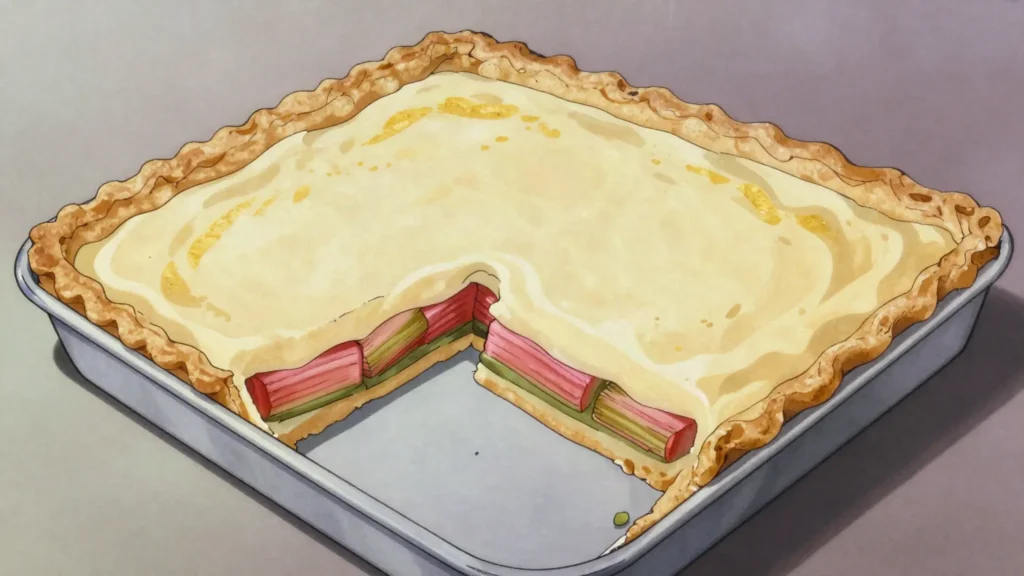
Rabarberikook is a dessert from Estonia: rhubarb tart on shortcrust with a custard or crumble top. Summer baking across Estonia, where rhubarb grows in almost every garden plot.
How long does Rabarberikook take to make?
Rabarberikook takes 40 minutes plus chilling of preparation and 50 minutes of cooking. The recipe makes serves 8. It is rated medium to make.
What can I substitute in Rabarberikook?
Yes, within limits. Ground almonds or breadcrumbs work as well as semolina for the absorbent layer — any absorbent layer does the same job. A crumble top is as traditional as the sour cream custard, giving more texture where the custard is softer and creamier; rub it only to a rough crumb with some larger lumps left in, since those give the best texture.
What is the most important thing to get right in Rabarberikook?
Roll the pastry out on a floured surface. Roll it about four millimetres thick. Thick enough to hold the wet filling. Keep it even across the whole sheet. Lift the pastry into the tart tin.