
Ingredients
Dough
- 500 gpolvilho azedo (sour cassava starch)
- 250 mlwhole milk
- 125 mlsunflower oil
- 125 mlwater
- 10 gfine salt
- 3large eggs, at room temperature
Cheese
- 250 gqueijo minas meia-cura, coarsely grated
- 50 gparmesan-style hard cheese, finely grated
Directions
- Weigh the polvilho into a large bowl or the bowl of a stand mixer. Have everything else ready before you start, because the next step happens fast.
- Bring the milk, water, oil and salt to a full rolling boil in a small pan.
- Pour the boiling liquid over the starch all at once and beat immediately with a wooden spoon or the paddle attachment. The starch seizes into a lumpy, gluey mass — this scald is the whole technique and is what makes the crumb stretchy.
- Let the mixture cool to about 50°C (120°F), roughly 10 minutes, beating occasionally to release the steam. If you add egg while it is hotter than that, it scrambles.
- Beat in the eggs one at a time, waiting until each is fully absorbed. The dough will look broken after each egg and come back together after a minute of beating.
- Add both cheeses and beat 2 minutes more, until the dough is smooth, very sticky and glossy, and pulls in a sheet off the paddle.
- Oil your hands and roll walnut-sized balls of about 30 g, spacing them 4 cm apart on lined trays. The dough can be refrigerated at this stage or frozen solid and baked straight from frozen.
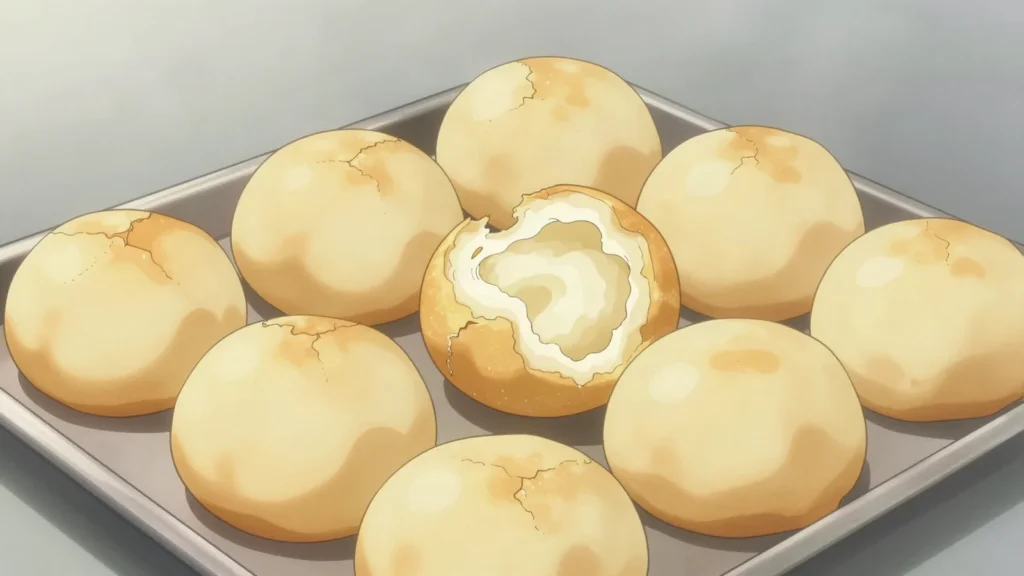
- Bake at 190°C (375°F) for 20 to 25 minutes until puffed, cracked on top and pale gold — not brown. Eat within the hour, while the inside is still molten and elastic.
Technique
- Polvilho azedo (sour, naturally fermented) gives the sharper tang and the bigger puff; polvilho doce (sweet) gives a denser, milder roll. Most mineiro households use azedo or a mix of the two. Ordinary tapioca starch is polvilho doce.
- This is naturally gluten-free, which is why it travels so well, but it also means there is no gluten holding the puff up — opening the oven in the first 15 minutes collapses them.
- Queijo canastra or meia-cura is a semi-cured cow’s cheese with real acidity. A young cheddar plus the hard grating cheese approximates it; a mild mozzarella does not, and gives a bland, rubbery result.
Substitutions
- No queijo minas: use 150 g mature cheddar and 100 g halloumi-style cheese grated together for the right balance of salt, tang and stretch.
- The milk can be replaced entirely by water in the scald; the puffs will be slightly less tender but the technique is unchanged.
Variations
- Pão de queijo recheado is baked around a nugget of cream cheese, guava paste or catupiry.
- In bakeries across Minas the same dough is piped into a ring tin as a large sharing bread called rosca de polvilho.
History
Small, baked cheese bread rolls, made from tapioca starch rather than wheat flour, giving them a distinctively chewy, springy interior, documented across Brazil, particularly associated with the state of Minas Gerais, reflecting that region’s historic dairy farming tradition and the Indigenous use of cassava-derived tapioca starch well before European contact. Its tapioca starch base, naturally gluten-free, distinguishes pão de queijo clearly from wheat-based breads found in much of the rest of the world, and the rolls’ distinctive chew comes directly from that starch’s particular properties when baked. Pão de queijo remains one of Brazil’s most beloved and widely eaten snacks, commonly served warm as a breakfast food or afternoon treat across the entire country.
Frequently asked questions
What is Pão de queijo?
Pão de queijo is a bread & pastry from Brazil: chewy cassava-and-cheese puffs from Minas, breakfast standard. Small, baked cheese bread rolls, made from tapioca starch rather than wheat flour, giving them a distinctively chewy, springy interior, documented across Brazil, particularly associated with the state of Minas Gerais, reflecting that region’s historic dairy farming tradition and the Indigenous use of cassava-derived tapioca starch well before European contact. Its tapioca starch base, naturally gluten-free, distinguishes pão de queijo clearly from wheat-based breads found in much of the rest of the world, and the rolls’ distinctive chew comes directly from that starch’s particular properties when baked. Pão de queijo remains one of Brazil’s most beloved and widely eaten snacks, commonly served warm as a breakfast food or afternoon treat across the entire country.
How long does Pão de queijo take to make?
Pão de queijo takes 25 min of preparation and 25 min of cooking. The recipe makes makes about 30 puffs. It is rated easy to make.
What can I substitute in Pão de queijo?
Yes, within limits. No queijo minas: use 150 g mature cheddar and 100 g halloumi-style cheese grated together for the right balance of salt, tang and stretch. The milk can be replaced entirely by water in the scald; the puffs will be slightly less tender but the technique is unchanged.
What is the most important thing to get right in Pão de queijo?
Pour the boiling liquid over the starch all at once and beat immediately with a wooden spoon or the paddle attachment. The starch seizes into a lumpy, gluey mass — this scald is the whole technique and is what makes the crumb stretchy.