
Ingredients
The noodles
- 500 gfine cornmeal
- or corn flour, not cornflour starch
- 150 gpotato starch
- about 400 ml boiling water
- 1 teaspoonsalt
The cold broth
- 1 litrebeef or anchovy stock
- chilled
- 2 tablespoonssoy sauce
- 1 tablespoonvinegar
- 1 teaspoonsugar
To garnish
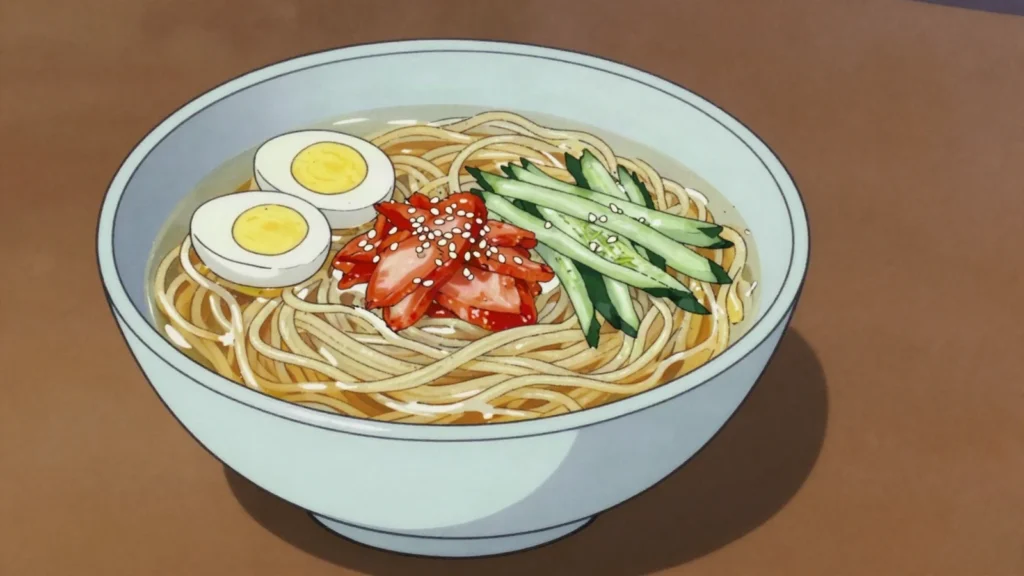
- cucumber, shredded
- 1boiled egg, halved
- kimchi, sliced
- toasted sesame seeds
The equipment
- a noodle press
- or a potato ricer
- a large pot of boiling water
Directions
- Use fine cornmeal or corn flour. This dish needs the ground grain. Mix the cornmeal and potato starch. Add the salt in to them as well. Stir them together thoroughly. Bring the water to a rolling boil. It must be genuinely at a boil. Pour the boiling water into the flour. Add it gradually while mixing.
- Mix it with a wooden spoon at first. The mixture is far too hot for hands. Let it cool before working it further. Take real care with the boiling water. Judging the dough takes a squeeze.
- Squeeze a handful in your palm. It should hold together firmly. Add more boiling water if it crumbles. Add more cornmeal if it is sticky. Adjust it just a little at a time. Knead it once it is cool enough. Give it about five full minutes.
- Cover the dough and let it rest. Give it about twenty full minutes. Bring a large pot of water to a boil. Set the noodle press right over it. The press must sit over the pot. Set it up before you fill the press. Have absolutely everything ready first.
- Steam rises straight into your hands. Keep your hands clear of the steam. Do not lean out over the hot pot. Fill the press with the dough. Press it down slowly and steadily. Press with steady even pressure. Keep it moving down continuously. It takes real force to extrude. Cut the noodles off with scissors. Otherwise they come out endlessly long.
- Cut them at a manageable length. Cooking them takes only minutes. Let them boil for about four minutes. They float when they are done. Lift one out and taste it first. It should be chewy and cooked through. Drain all the noodles at once. Rinse them thoroughly in cold water. It also stops them cooking further. Rub them gently as you rinse them. Understanding the cold version is worth explaining.
- Drain them all very thoroughly. Shake them dry in the colander. Let them drain for a full minute. Making the broth is straightforward enough. Season the stock with soy and vinegar. Add the sugar in to it as well. Cold noodle broth is sharp and savoury.
- Taste it and adjust both of them. Chilling it is essential for the cold version. Chill the whole broth thoroughly. It should be genuinely very cold. Divide the noodles between bowls. Pour the cold broth over them. Lay the cucumber over the noodles.
- Set the half boiled egg beside it. Add the sliced kimchi as well. Scatter sesame seeds over the top. Understanding the hot version is worth explaining. Serve it with chopsticks and a spoon. The noodles do not keep once cooked. Make only what you will eat now.
Technique
- Corn has no gluten, and gluten is what holds a wheat noodle together — so the dough is made with genuinely boiling water, which gelatinises some of the corn starch so it can act as the binder in gluten’s place. Cold water gives a dough that crumbles. Potato starch is added for chewiness and elasticity and helps the dough extrude.
- The dough cannot be rolled and cut because it has no stretch; it is pressed through holes straight into boiling water and cooks as it is extruded. That is essential rather than convenient — the extruded noodle is fragile and breaks if handled before cooking. Press with steady even pressure, since jerky pressing gives broken noodles, and cut them off with scissors as they enter the water.
- Use fine cornmeal or corn flour, the ground whole grain — not cornflour starch, which is the extracted starch. The names are confusingly similar and the two are completely different.
Substitutions
- A sturdy potato ricer does the job of a Korean noodle press; a flimsy one will break, since it takes real force to extrude the stiff dense dough.
- The same noodles go into hot broth for the winter version; both are made in the north.
Variations
- Maize grows on steep northern slopes where paddy rice, which needs flat wet land, cannot — so it became the staple grain there and corn noodles replaced wheat ones. That is regional cooking adapting to the grain available.
- Rinse the cooked noodles thoroughly in cold water, rubbing gently, since surface starch makes them stick; use iced water for the cold version, which firms them and makes them chewier.
- Keep your hands clear of the steam and do not lean over the pot, since you are pressing directly over boiling water.
History
Corn became a survival crop on North Korea’s steep northern slopes, and pressed corn noodles replaced wheat in provinces where rice is scarce.
Frequently asked questions
What is Okssusu Guksu?
Okssusu Guksu is a main from North Korea: chewy corn noodles in cold or hot broth, a mountain-province staple. Corn became a survival crop on North Korea’s steep northern slopes, and pressed corn noodles replaced wheat in provinces where rice is scarce.
How long does Okssusu Guksu take to make?
Okssusu Guksu takes 40 minutes of preparation and 20 minutes of cooking. The recipe makes serves 4. It is rated hard to make.
What can I substitute in Okssusu Guksu?
Yes, within limits. A sturdy potato ricer does the job of a Korean noodle press; a flimsy one will break, since it takes real force to extrude the stiff dense dough. The same noodles go into hot broth for the winter version; both are made in the north.
What is the most important thing to get right in Okssusu Guksu?
Use fine cornmeal or corn flour. This dish needs the ground grain. Mix the cornmeal and potato starch. Add the salt in to them as well. Stir them together thoroughly. Bring the water to a rolling boil. It must be genuinely at a boil. Pour the boiling water into the flour. Add it gradually while mixing.