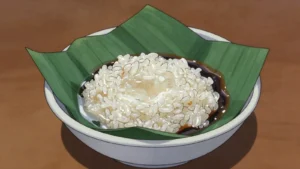

Pollock fermented with millet, radish and chilli until sour and tender. It is a Hamgyŏng coastal preserve that used grain to carry fish through the winter, and refugees carried the technique south after the Korean War.
It is an ambient ferment of raw fish in a sealed crock, where the salt and acidity balance has no reliable domestic gauge, and it traditionally depends on a cold Hamgyŏng winter to slow everything but the lactic bacteria.
What goes into it
- pollock, cut in pieces
- cooked millet or rice
- radish
- chilli powder
- garlic and ginger
- salt
How it is made
The fish is salted for a day or two and drained, then mixed with cooked millet, shredded radish, chilli and aromatics and packed into a sealed crock. Lactic bacteria feed on the grain starch and acidify the whole mass over one to several weeks in the cold, souring the fish and preserving it.
How long it takes: one to several weeks in the cold
How it is eaten
In small amounts with rice and soju, or as a banchan.
History
A Hamgyong coastal preserve using grain to ferment fish through winter; refugees carried the technique south after the Korean War.
Frequently asked questions
What is Myeongtae Sikhae?
Myeongtae Sikhae is a fermented & pickled from North Korea: pollock fermented with millet, radish and chili until sour and tender. A Hamgyong coastal preserve using grain to ferment fish through winter; refugees carried the technique south after the Korean War.
How is Myeongtae Sikhae made?
The fish is salted for a day or two and drained, then mixed with cooked millet, shredded radish, chilli and aromatics and packed into a sealed crock. Lactic bacteria feed on the grain starch and acidify the whole mass over one to several weeks in the cold, souring the fish and preserving it. It takes one to several weeks in the cold.
Can I make Myeongtae Sikhae at home?
No, and the atlas gives no method for it. It is an ambient ferment of raw fish in a sealed crock, where the salt and acidity balance has no reliable domestic gauge, and it traditionally depends on a cold Hamgyŏng winter to slow everything but the lactic bacteria.
What goes into Myeongtae Sikhae?
Pollock, cut in pieces, cooked millet or rice, radish, chilli powder, garlic and ginger, salt.
How is Myeongtae Sikhae eaten?
In small amounts with rice and soju, or as a banchan.