
Ingredients
Rice
- 500 gberas dagang, or half glutinous and half long-grain rice
- 400 mlthick coconut milk
- 1 tspsalt
Aromatics
- 2 tbspfenugreek seeds, halba
- 5cm ginger, julienned
- 4shallots, sliced
- 2 stalkslemongrass, bruised
Gulai ikan tongkol
- 600 gtuna or mackerel steaks
- 400 mlcoconut milk
- 3 tbspfish curry powder
- 1 tbsptamarind paste in 100 ml water
- 2 stalkslemongrass
- 3 slicesasam gelugor, dried tamarind
Curry paste
- 8dried chillies, soaked
- 6shallots
- 4 clovesgarlic
- 3cm ginger
- 2cm galangal
- 1 tspturmeric
To serve
- acar timun, cucumber and carrot pickle
- hard-boiled egg
- solok lada or fried fish
Directions
- Wash the rice and soak it for at least 3 hours, or overnight. Drain it and steam it for 20 minutes, which is the first of two steamings. Now the coconut milk: warm it with the salt but do not let it boil.
- Tip the half-steamed rice into a bowl and pour the warm coconut milk over it. Add the fenugreek, ginger, shallots and lemongrass and fold them through. Let the rice stand 15 minutes and absorb the coconut milk completely. The rice must drink the milk before it goes back in the steamer, which is why it sits.
- Steam it again for a further 25 to 30 minutes until the grains are soft and glossy. It is what gives nasi dagang its particular soft, rich, separate grain.
- Fry the paste in oil for 8 to 10 minutes until it darkens and the oil separates out. Wait for the oil to split from the paste, which is the sign the aromatics are properly cooked. Add the fish curry powder and fry another 2 minutes.
- Pour in the coconut milk, the tamarind water and the asam gelugor, and bring to a bare simmer. Never boil a coconut gravy hard, because it splits and goes oily and grainy.
- Add the lemongrass and simmer 10 minutes, then slide in the fish steaks. Poach the fish gently for 8 to 10 minutes only, turning once. Tuna dries out quickly and it should be taken off the heat while still just moist at the centre.
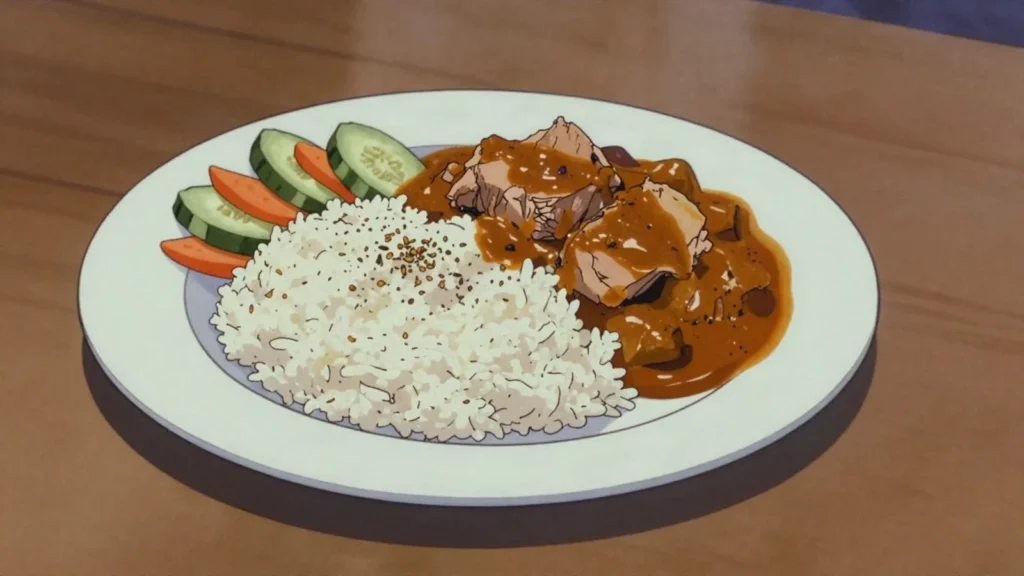
- Taste the gravy: it should be sour, rich and hot, with the tamarind clearly present. Serve a mound of the rice with the fish curry beside it, the pickle, and half a boiled egg.
Technique
- Ikan tongkol, a small tuna, is the traditional fish and mackerel is the common substitute.
- It is wrapped in banana leaf for takeaway, which perfumes the rice.
- It is eaten with the hands in its home region.
Substitutions
- Half glutinous and half long-grain rice, in place of beras dagang.
- Tamarind paste in place of asam gelugor, using a little more.
Variations
- The white Kelantan version.
- With chicken curry instead of fish.
- Served with solok lada, stuffed chillies.
History
Rice cooked with coconut milk and fenugreek, served with a rich fish curry, most strongly associated with Malaysia’s eastern coastal states of Terengganu and Kelantan, its name meaning literally trading rice, generally understood to reflect its historic role as a filling, portable meal favored by traders and merchants traveling along Malaysia’s eastern coast and its historic maritime trade routes. Its specific rice variety, often a mix of regular and glutinous rice, and its fenugreek seasoning distinguish nasi dagang clearly from plainer coconut rice dishes found elsewhere in Malaysia, giving it a particular regional identity tied specifically to the country’s eastern coastal Malay culture. It remains especially popular as a breakfast dish across Terengganu and Kelantan specifically.
Frequently asked questions
What is Nasi Dagang?
Nasi Dagang is a breakfast from Malaysia: rice steamed in coconut milk with fenugreek, served with tuna curry at dawn. Rice cooked with coconut milk and fenugreek, served with a rich fish curry, most strongly associated with Malaysia’s eastern coastal states of Terengganu and Kelantan, its name meaning literally trading rice, generally understood to reflect its historic role as a filling, portable meal favored by traders and merchants traveling along Malaysia’s eastern coast and its historic maritime trade routes. Its specific rice variety, often a mix of regular and glutinous rice, and its fenugreek seasoning distinguish nasi dagang clearly from plainer coconut rice dishes found elsewhere in Malaysia, giving it a particular regional identity tied specifically to the country’s eastern coastal Malay culture. It remains especially popular as a breakfast dish across Terengganu and Kelantan specifically.
How long does Nasi Dagang take to make?
Nasi Dagang takes 30 min plus 3 hr soaking of preparation and 1 hr of cooking. The recipe makes 6 servings. It is rated medium to make.
What can I substitute in Nasi Dagang?
Yes, within limits. Half glutinous and half long-grain rice, in place of beras dagang. Tamarind paste in place of asam gelugor, using a little more.
What is the most important thing to get right in Nasi Dagang?
Wash the rice and soak it for at least 3 hours, or overnight. Drain it and steam it for 20 minutes, which is the first of two steamings. Now the coconut milk: warm it with the salt but do not let it boil.