
Ingredients
The yam
- 2 kgyam
- white or yellow yam
- unpeeled
- scrubbed clean
- or cut into large pieces
To finish
- 4 tablespoonsred palm oil
- or vegetable oil
- salt, to taste
- 1or 2 hot chillies
- chopped, or a pepper sauce
- 1onion, finely sliced
- optional
For the fire
- a wood or charcoal fire
- burned down to embers
- long tongs
To serve
- a fish or meat stew
- or on its own
- a hot pepper sauce
- grilled fish
Directions
- Wash your hands after peeling. Look for a firm tuber with no soft spots. Cut sections should look white or pale yellow.
- Discard any showing dark or slimy patches. Yam skin is thick and bark-like. Cut it into sections of about ten centimetres. Leave the skin on each section.
- Let it burn right down. That takes thirty minutes or more. Keep water or sand nearby. Keep children and animals away. Do not use petrol to light or revive a fire.
- Use proper firelighters or a chimney starter. Long tongs keep your hands away from the embers. Turn them every ten minutes. Give them forty to fifty minutes. Roast the whole sections at two hundred degrees. Give them about an hour.
- Wrap them in foil for a softer result. Leave them unwrapped for a drier one. Peel it, cut it and boil it twenty-five minutes. Let the roasted yam cool for five minutes. It is scaldingly hot inside.
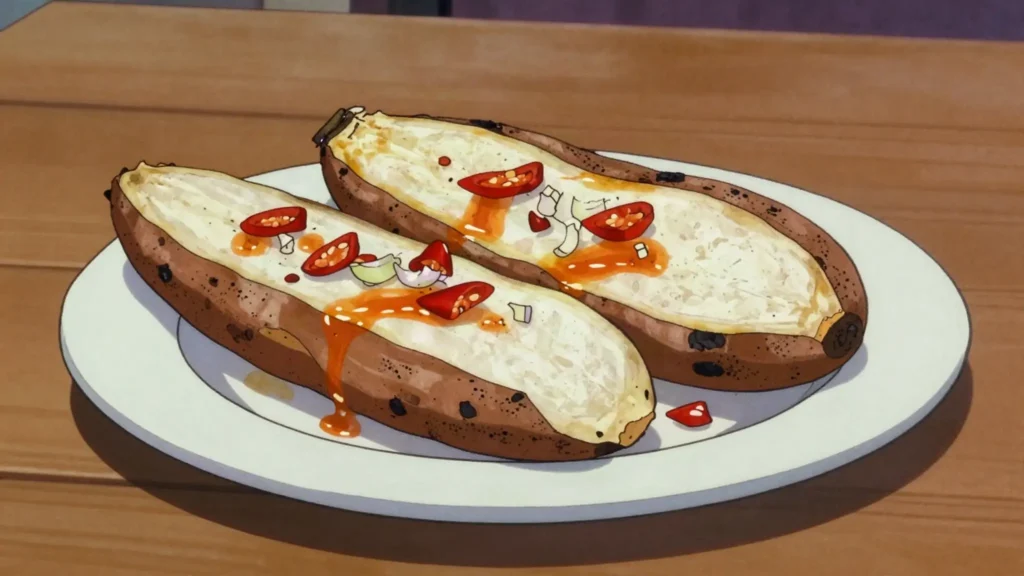
- Steam escapes when you do. Keep your face away. It should be white and floury. Pour red palm oil over the hot flesh. Sprinkle salt over. Add chopped chilli or pepper sauce.
- Add sliced raw onion if you like. Poured over hot yam it is genuinely good. Serve it hot, split open. Serve a pepper sauce on the table. It is best hot from the fire. Cut it into slices and fry them. Raw whole yam keeps weeks in a cool dry place.
Technique
- Roast the yam in its skin. The thick bark-like skin insulates the flesh from direct heat and traps moisture, so the yam steams inside rather than drying out — the skin chars black and is discarded.
- Cut a large yam into ten-centimetre sections, skin on. A whole tuber takes a very long time.
- Let the fire burn down to a bed of glowing embers with no flames. Flames char the outside without cooking through.
- Test with a skewer pushed through the skin — it should slide into soft flesh. The skin will be black and cracked, which is expected.
- Charcoal and wood produce carbon monoxide, which has no colour, smell or taste and kills in enclosed spaces. Burn it outdoors only, never in a garage, tent or shed, and never bring a used grill inside. Keep water or sand nearby, keep children away, and never use petrol to light or revive a fire.
- Let it stand five minutes and keep your face away when you split it. It is scaldingly hot inside and steam escapes.
- Yam is not sweet potato. True yam is a Dioscorea tuber with rough brown bark-like skin and starchy dry white or yellow flesh — the confusion is entrenched, particularly in North America, and they are entirely different plants.
- Cultivated yam is safe cooked but should not be eaten raw. Some wild yam species are genuinely toxic and need long processing, so do not gather wild yams without expert knowledge — buy cultivated yam from a shop.
- Raw yam sap makes some people’s skin itch. Wear gloves if it affects you and wash your hands after handling it.
- Yam flesh is drier than potato, and that dryness is correct — it is why the dish needs the oil poured over it.
- The palm oil goes on raw, poured over the hot flesh, which keeps its colour and flavour. Red palm oil is unrefined and strongly flavoured, a different product from refined palm oil.
- Buy a firm tuber with intact skin and no soft or slimy patches. Yam spoils from the cut end inward. Store it in a cool dry place, never in the refrigerator, which damages it.
- Leftover yam sliced and fried is genuinely good and is how it is usually used.
Substitutions
- An oven at 200 degrees for about an hour replaces the fire, at the cost of the smoke.
- Boiling the peeled yam for twenty-five minutes gives a different and equally common dish.
- Vegetable oil or butter replaces red palm oil, without its colour or character.
- Cassava or plantain can be roasted the same way in embers.
- Any hot pepper sauce replaces fresh chilli.
- Sliced raw onion over the hot yam is a common addition.
Variations
- Boiled yam served with a stew is the everyday preparation across the region.
- Yam pounded into fufu is the other great use of the tuber.
- Asun and other roasted foods are cooked on the same embers.
- Roasted plantain, boli, is prepared the same way in Nigeria.
- Yam fried into chips is a common street snack.
- Boiled cassava served with palm oil is the close relative in the same country.
Frequently asked questions
What is Name asado?
Name asado is a salad & side from Equatorial Guinea: yam roasted in the embers, split open and eaten with palm oil and chilli.
How long does Name asado take to make?
Name asado takes 10 minutes of preparation and 50 minutes of cooking. The recipe makes serves 4. It is rated easy to make.
What can I substitute in Name asado?
Yes, within limits. An oven at 200 degrees for about an hour replaces the fire, at the cost of the smoke. Boiling the peeled yam for twenty-five minutes gives a different and equally common dish. Vegetable oil or butter replaces red palm oil, without its colour or character. Cassava or plantain can be roasted the same way in embers. Any hot pepper sauce replaces fresh chilli. Sliced raw onion over the hot yam is a common addition.
What is the most important thing to get right in Name asado?
Let it burn right down. That takes thirty minutes or more. Keep water or sand nearby. Keep children and animals away. Do not use petrol to light or revive a fire.