
Ingredients
Salad
- 4very ripe tomatoes (about 600 g), cut into thick wedges
- 1cucumber (about 300 g), half-peeled in stripes and cut into thick half-moons
- 1green bell pepper (about 150 g), cut into thin rings
- 1small red onion (about 80 g), sliced into thin rings
- 100 gKalamata olives, with their stones
- 200 gfeta, in one thick slab, not crumbled
Dressing
- 80 mlGreek extra virgin olive oil
- 1 tspdried oregano (rigani), rubbed between the palms
- ½ tspflaky sea salt
- A few capers or a handful of caper leaves, optional
To serve
- Good bread, for the papara at the end
Directions
- Choose tomatoes that smell of tomato and give slightly under the thumb. A horiatiki is only as good as its tomatoes; out of season, do not make it.
- Cut the tomatoes into wedges over the serving bowl so none of the juice is lost, and salt them lightly straight away.
- Add the cucumber, pepper rings and onion. If the onion is fierce, rinse the slices in cold water and pat dry.
- Scatter the olives over, stones in. Greeks leave them whole; pitted olives go soft and lose flavour.
- Turn everything gently with your hands, just twice, to distribute the salt without bruising the tomatoes.
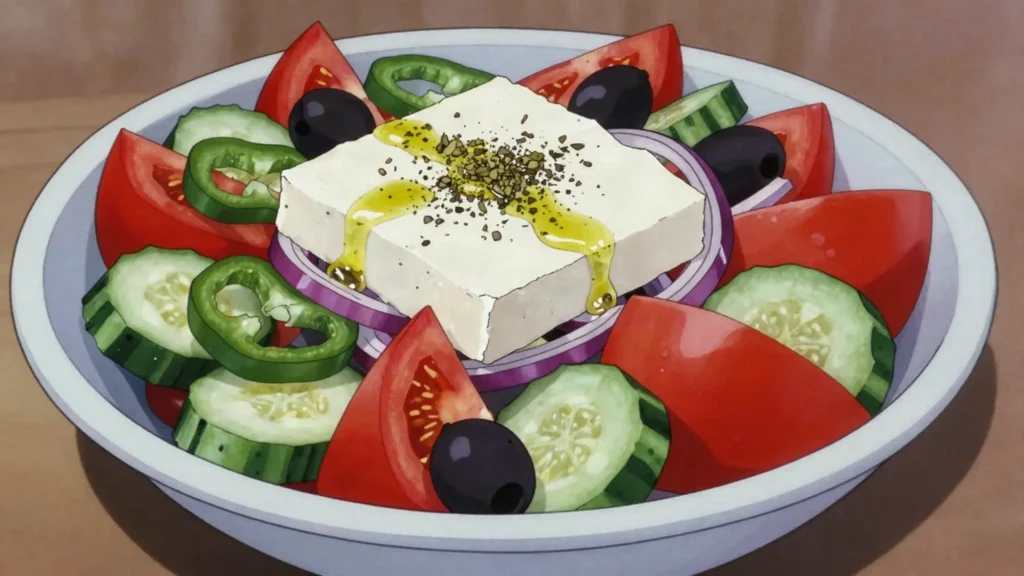
- Lay the slab of feta flat on top, whole, so it sits like a lid. Never crumble it into the bowl.
- Rub the oregano between your palms over the feta to release its oil, then pour the olive oil slowly over the cheese so it runs down into the vegetables.
- Serve at once, at room temperature, with bread. The point of the dish is the papara at the end: the last piece of bread wiped through the tomato juice, oil and salty whey.
Technique
- There is no lettuce in a horiatiki. Lettuce belongs in maroulosalata, a different winter and spring salad dressed with dill and spring onion.
- Traditionally there is no vinegar and no lemon either; the acid comes from the tomatoes and the brine of the feta. Some tavernas add a splash of red wine vinegar and this is genuinely disputed.
- Salt the tomatoes, not the cheese. Feta is already salty, and salting it twice makes the whole bowl inedible.
- Serve it at room temperature. Cold blunts the tomatoes and makes the olive oil cloudy and waxy.
Substitutions
- No Greek feta: use another sheep’s milk brined cheese such as Bulgarian sirene; cow’s milk white cheese is much blander and wetter.
- No Kalamata olives: any brine-cured black olive with a stone works; avoid pitted, dyed black olives entirely.
Variations
- Dakos from Crete, built on a soaked barley rusk with grated tomato and mizithra instead of feta.
- Santorini style, with caper leaves, chlorotyri and the island’s small sweet tomatoes.
- Horiatiki with a slice of paximadi under the vegetables to soak up the juices.
History
A salad combining tomato, cucumber, green pepper, red onion, olive and a block of feta cheese, dressed simply with olive oil and oregano, developed in Greece and closely tied to the country’s Mediterranean agricultural bounty, with each core ingredient, the tomato, cucumber, olive and feta, reflecting produce and dairy long central to Greek farming and food culture. Its notably simple dressing, just good olive oil and dried oregano without vinegar in its most traditional form, reflects a Greek culinary philosophy that prioritizes the quality and freshness of a few ingredients over elaborate preparation or seasoning. Greek salad, called horiatiki or village salad in Greek, remains one of the country’s most internationally recognized culinary exports.
Frequently asked questions
What is Greek salad?
Greek salad is a salad & side from Greece: tomato, cucumber, olives, feta slab, oregano, olive oil. A salad combining tomato, cucumber, green pepper, red onion, olive and a block of feta cheese, dressed simply with olive oil and oregano, developed in Greece and closely tied to the country’s Mediterranean agricultural bounty, with each core ingredient, the tomato, cucumber, olive and feta, reflecting produce and dairy long central to Greek farming and food culture. Its notably simple dressing, just good olive oil and dried oregano without vinegar in its most traditional form, reflects a Greek culinary philosophy that prioritizes the quality and freshness of a few ingredients over elaborate preparation or seasoning. Greek salad, called horiatiki or village salad in Greek, remains one of the country’s most internationally recognized culinary exports.
How long does Greek salad take to make?
Greek salad takes 15 min of preparation and 0 min of cooking. The recipe makes 4 servings. It is rated easy to make.
What can I substitute in Greek salad?
Yes, within limits. No Greek feta: use another sheep’s milk brined cheese such as Bulgarian sirene; cow’s milk white cheese is much blander and wetter. No Kalamata olives: any brine-cured black olive with a stone works; avoid pitted, dyed black olives entirely.
What is the most important thing to get right in Greek salad?
Choose tomatoes that smell of tomato and give slightly under the thumb. A horiatiki is only as good as its tomatoes; out of season, do not make it.