
Ingredients
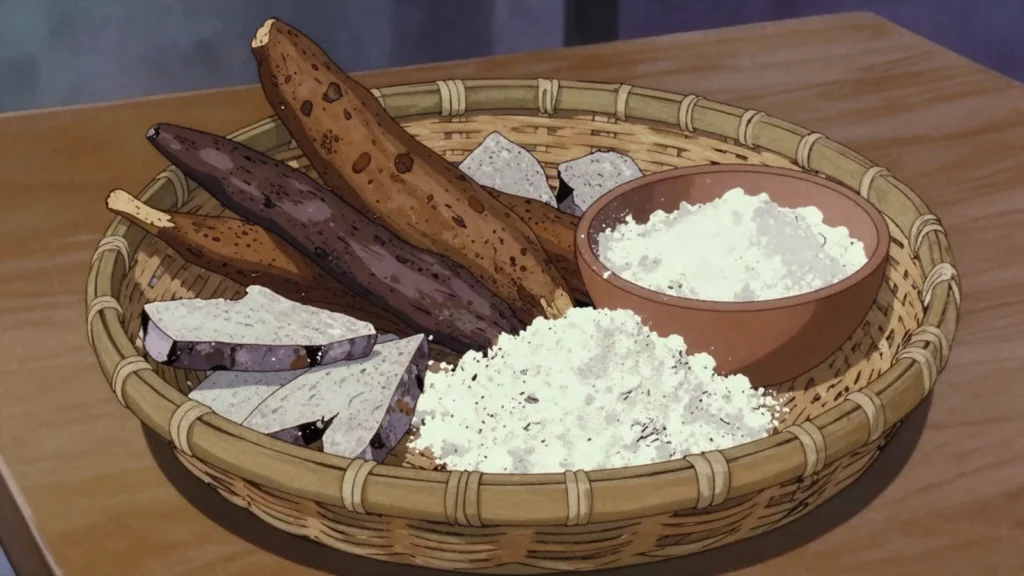
Cassava
- 4 kgcassava root, firm, unblemished, as fresh as you can get
- water to cover, about 8 litres
- 1large clean plastic drum, glazed pot or food-grade bucket
Equipment
- 1sharp knife for scoring the bark-like skin
- clean cloths and raised drying racks or clean mats
- a mill, or a large mortar and pestle, for grinding the dried root
Directions
- Wash the roots, cut them into 15 cm lengths and score the thick skin lengthways, but leave the skin on for the soak; it is peeled off after fermentation.
- Pack the pieces into the drum and cover with cool water by at least 10 cm, weighting them down so nothing sits above the surface.
- Leave to steep in the shade at ambient tropical temperature, 25–30°C (75–85°F), for 3–5 days. Bacteria and wild yeasts soften the flesh and break down the bitter compounds; the water turns cloudy, sour-smelling and slightly fizzy.
- Test at day three: a piece should crush easily between finger and thumb and smell sharply sour rather than sweet. If it is still firm, give it another day.
- Drain, and peel away the loosened skin and the woody central fibre with your fingers; both come away easily now.
- Break the soft flesh into pieces with your hands and rinse briefly.
- Spread the pieces in a single layer on raised racks in full sun and dry 2–4 days, turning them twice a day and bringing them under cover at night so the dew does not rewet them.
- The bombo is ready when the pieces are hard, chalky white and rattle against each other; a piece should snap rather than bend.
- Store the dried chunks in a sealed sack in a dry place, and mill to fuba de bombo as needed. That flour, stirred into boiling water, becomes funge, the everyday staple.
- Grind small batches only, as the flour picks up damp and goes musty within a few weeks.
Technique
- The soak is a food-safety step, not just a softening one. Cassava contains cyanogenic glycosides, and bitter varieties contain a great deal; the combination of long steeping, thorough draining and full sun drying is what makes the root safe to eat. Never shortcut it by boiling fresh bitter cassava instead.
- Discard the soaking water away from where anyone drinks or bathes, and never reuse it.
- Judge the ferment by smell. A clean bombo smells sour and yeasty like sourdough starter. If it smells putrid or slimy strings form on the pieces, throw the batch out.
- Angolan households in Malanje and the Uige plateau ferment in a stream in a weighted sack, which keeps the water moving and cool; a drum with a daily water change is the closest home equivalent.
Substitutions
- No sun: dry in a very low oven at 60°C (140°F) with the door propped open, 8–12 hours, or in a dehydrator. The flavour is fractionally less sour but the result is the same.
- Sweet cassava, the kind sold waxed in European shops, ferments in about three days and needs less drying, but has less of the sharp, characteristic bombo tang.
Variations
- Fuba de bombo, the fermented flour, cooked stiff into funge de bombo, the grey-white staple of the Angolan interior.
- The same soaked root pounded wet instead of dried, which is the starting point for quiquanga.
- A blend of half bombo flour and half maize flour, for a milder funge.
History
Soaking for days removes cassava’s toxic cyanogens and sours the root; the dried bombó is ground into the flour that makes funge.
Frequently asked questions
What is Bombó?
Bombó is a fermented & pickled from Angola: cassava root steeped in water until it ferments, then dried and milled. Soaking for days removes cassava’s toxic cyanogens and sours the root; the dried bombó is ground into the flour that makes funge.
How long does Bombó take to make?
Bombó takes 40 min of preparation and 4 days fermenting plus 3 days drying of cooking. The recipe makes about 1.5 kg dried root, enough for 2 kg of flour. It is rated medium to make.
What can I substitute in Bombó?
Yes, within limits. No sun: dry in a very low oven at 60°C (140°F) with the door propped open, 8–12 hours, or in a dehydrator. The flavour is fractionally less sour but the result is the same. Sweet cassava, the kind sold waxed in European shops, ferments in about three days and needs less drying, but has less of the sharp, characteristic bombo tang.
What is the most important thing to get right in Bombó?
Test at day three: a piece should crush easily between finger and thumb and smell sharply sour rather than sweet. If it is still firm, give it another day.