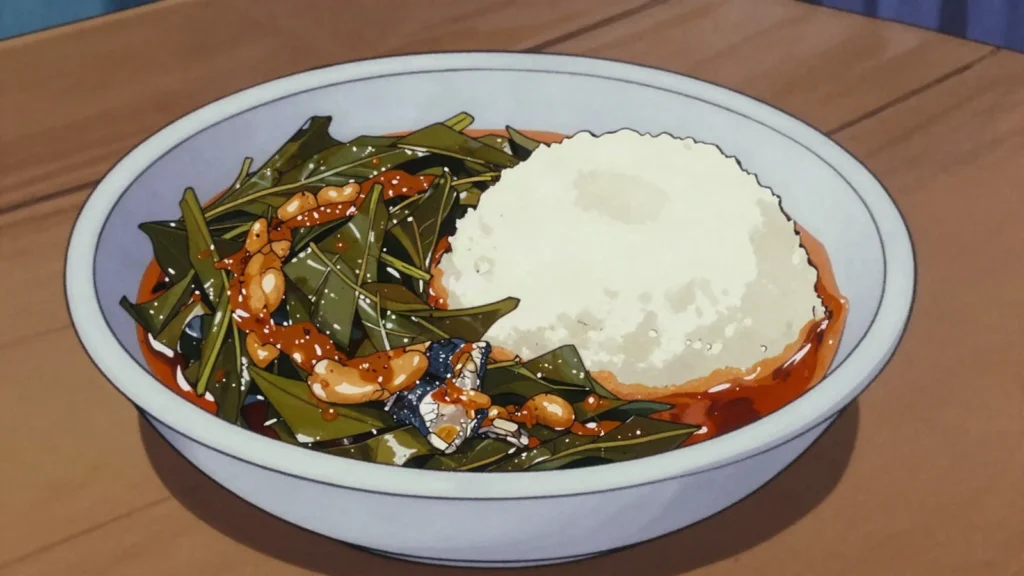

Ingredients
The leaves
- 400 gmfumbwa
- gnetum leaves, shredded very finely
- fresh or frozen
- or 400 g spinach
- or collard greens, shredded
- see the note on substitutes
The fish
- 200 gsmoked fish
- smoked catfish or mackerel
- soaked and boned
- or 200 g dried fish
- soaked longer
The groundnut paste
- 200 gsmooth peanut butter
- unsweetened
- or 250 g roasted groundnuts, ground
- loosened with hot water
The base
- 4 tablespoonsred palm oil
- 2onions, finely chopped
- 4 clovesgarlic, crushed
- 2tomatoes, chopped
- optional
- 1or 2 hot chillies
- or to taste
- 1stock cube, optional
- about 700 ml water
- salt and black pepper
To serve
- chikwangue, the cassava loaf
- or fufu
- or rice
- or plantain
- pili pili, the chilli sauce
Directions
- Stack the leaves and roll them tightly. Slice across as finely as you possibly can. It takes time and it is worth it. Cook the base and the peanut sauce fully first. Add spinach only in the last ten minutes. Discard nuts that are shrivelled, discoloured or mouldy. Discard anything that tastes bitter or musty.
- Use unsweetened smooth peanut butter. Check it contains no added sugar. Check it contains no palm oil already. Peanut butter is far too thick to add directly. Whisk it with hot water first. Add water gradually until it pours. It should be like single cream.
- Soak it in hot water for twenty minutes. Dried fish needs longer, up to an hour. Pick the bones out carefully. Flake the flesh into pieces. Many African stews keep the bones in. Bone it properly for small children. Warm it gently to melt it. Do not heat palm oil until it smokes.
- Heat the palm oil in a large heavy pot. Add the chopped onions. Cook them for about ten minutes until soft. Add the garlic and the chillies. Cook them for two minutes. Add the tomatoes if you are using them.
- Cook them down for five minutes. Add the flaked smoked fish. Add the water and the stock cube. Bring it to a simmer. Add the shredded gnetum. Cover it and simmer for about forty-five minutes. It needs that time to become tender. Taste a strand after forty-five minutes. It should be tender enough to chew easily. Add water if the pot runs dry. Whisk the loosened peanut butter into the pot.
- Stir it through thoroughly. Simmer it gently for twenty minutes more. Stir it regularly once the peanut is in. It should be thick and clinging. Add hot water to loosen it. Season with salt and black pepper. Taste carefully. Serve it hot in a wide bowl.
- Serve a starch alongside. It is sold ready made by African grocers. Take a piece of the starch with the right hand. Press a dent into it with your thumb. Use that to scoop up the stew. It keeps four days refrigerated. Add water when reheating it. Stir it constantly as it reheats.
Technique
- Shred the leaves as finely as you possibly can — threads rather than strips. Whole or coarsely cut gnetum stays tough and stringy and is unpleasant to eat; fine shredding is what makes it edible and lets the sauce coat it. Frozen ready-shredded gnetum from an African grocer skips the whole step.
- Give the gnetum forty-five minutes to an hour and a half. It is genuinely tough and never becomes soft like spinach — firm and slightly chewy is correct. Taste a strand and keep going if it fights back.
- Loosen the peanut butter with hot water to the consistency of single cream before it goes in. Added thick it forms lumps that never break up.
- Stir regularly once the peanut paste is in. It catches on the base easily, and a caught pot tastes burnt throughout with no way to rescue it.
- Oil separating and rising once the peanut is in is normal and wanted. It shows the sauce has cooked properly and is not a sign of splitting.
- This is built on groundnut paste and cannot be made without it. Peanut allergy is one of the commonest severe allergies and can cause anaphylaxis — say so plainly and unmistakably.
- Groundnuts can carry aflatoxins, produced by moulds in humid climates and linked to liver damage with chronic exposure. Roasting does not destroy them, so buy from a reputable source and discard anything shrivelled, discoloured, mouldy or tasting bitter or musty.
- Use unsweetened peanut butter and check it has no added sugar or palm oil. Sweetened peanut butter ruins the dish.
- Soak smoked fish in hot water for twenty minutes — dried fish up to an hour — to soften it and draw out salt, then bone it carefully. Warn anyone unused to picking bones out, and bone it properly for children.
- Do not heat palm oil until it smokes, whatever a recipe says about bleaching it. Overheating any oil produces harmful compounds and fills the kitchen with acrid smoke.
- Gnetum is harvested from the wild rather than farmed, demand has grown considerably, and overharvesting is a documented concern — particularly where whole vines are taken rather than leaves picked. Cultivation efforts are under way. The atlas records that and takes no further position.
- Gnetum has no close substitute. Spinach and collard greens are used abroad but are far softer and less bitter and cook in minutes — the dish becomes something else, still good. If you use spinach, cook the base and sauce fully first and add it only in the last ten minutes.
- Taste before adding salt. The smoked fish and the stock cube both bring plenty.
Substitutions
- Frozen shredded gnetum replaces fresh and skips the shredding entirely.
- Spinach or collard greens replace gnetum abroad, giving a softer and quite different dish.
- Ground roasted groundnuts replace peanut butter and give more texture.
- Dried fish replaces smoked, needing longer soaking.
- Vegetable oil replaces red palm oil, at the cost of colour and character.
- Beef or smoked meat can replace or join the fish.
Variations
- Eru in Cameroon uses the same leaf with waterleaf and is very close.
- Fumbwa in the DR Congo is the same dish under a related name.
- Afang soup in Nigeria uses okazi leaf in the same way.
- Pondu, cassava leaf cooked with palm oil, is the other great Congolese greens dish.
- Dongo-dongo, the okra sauce with fish, is served with the same starches.
- A version with beef or smoked meat alongside the fish is made where meat is affordable.
Frequently asked questions
What is Mfumbwa?
Mfumbwa is a soup & stew from Republic of the Congo: shredded wild gnetum leaves stewed with palm oil, peanut paste and smoked fish.
How long does Mfumbwa take to make?
Mfumbwa takes 30 minutes of preparation and 1 hour 15 minutes of cooking. The recipe makes serves 6. It is rated medium to make.
What can I substitute in Mfumbwa?
Yes, within limits. Frozen shredded gnetum replaces fresh and skips the shredding entirely. Spinach or collard greens replace gnetum abroad, giving a softer and quite different dish. Ground roasted groundnuts replace peanut butter and give more texture. Dried fish replaces smoked, needing longer soaking. Vegetable oil replaces red palm oil, at the cost of colour and character. Beef or smoked meat can replace or join the fish.
What is the most important thing to get right in Mfumbwa?
Soak it in hot water for twenty minutes. Dried fish needs longer, up to an hour. Pick the bones out carefully. Flake the flesh into pieces. Many African stews keep the bones in. Bone it properly for small children. Warm it gently to melt it. Do not heat palm oil until it smokes.