
Ingredients
Sauce
- 600 glamb shoulder on the bone, cut into 4 cm pieces
- 1large onion, finely chopped
- 4 tbspolive oil
- 4 tbsptomato paste
- 1 tbspbzaar (turmeric, coriander, caraway, cinnamon, black pepper, clove)
- 1 tbspfilfil (dried red chilli powder), or to taste
- 1 tspturmeric
- 1 tspground cinnamon
- 200 gcooked chickpeas
- 2 tspsalt
- 1.5 litreswater
Pasta
- 500 gdried macaroni, penne or bucatini
To finish
- 1 tspdried mint, crumbled
- 1lemon, in wedges
- Harissa, to serve
Directions
- Fry the onion in the olive oil in a wide, deep pot over medium heat for 8–10 minutes until golden and soft.
- Add the lamb and brown well on all sides, 8 minutes, letting it stick a little and then scraping the pot.
- Push the meat aside, add the tomato paste to the bare hot oil and fry it for 4 minutes, stirring, until it turns dark brick red and the oil runs orange around it. This tomato frying, called taqlia, is the foundation of every Libyan red sauce.
- Add the bzaar, filfil, turmeric and cinnamon and fry 30 seconds until they smell toasted, then pour in the water, add the salt and the chickpeas, and bring to the boil.
- Simmer, part-covered, for 45–50 minutes, until the lamb is tender enough to pull from the bone and the sauce has reduced to about 1.2 litres and turned a deep russet.
- Now add the dry pasta directly to the simmering sauce. This is the defining move of mbakbaka: the pasta is never boiled separately in water, it cooks in the broth and absorbs it.
- Stir well and cook uncovered at a lively simmer for 10–14 minutes, stirring every couple of minutes to stop it sticking, until the pasta is just past al dente and has swollen and turned orange all the way through.
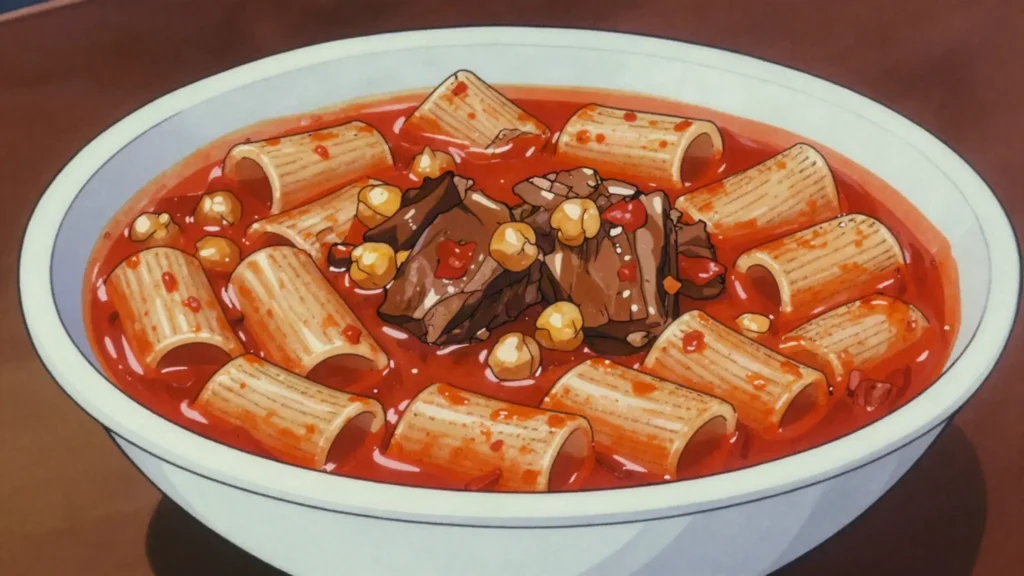
- The dish is ready when the sauce clings to the pasta and there is only a small amount of loose liquid left in the pot; it should be soupier than an Italian pasta but not swimming.
- Crumble the dried mint between your palms over the top, rest 5 minutes off the heat, and serve in wide bowls with lemon and harissa.
Technique
- Cooking the pasta in the sauce is what makes mbakbaka Libyan rather than Italian. The starch released thickens the broth and the pasta takes on colour and spice throughout.
- Bzaar is the house spice mix of Libya and varies family to family, but caraway and turmeric are constants. Buy it from a North African grocer or blend your own and keep it airtight.
- Judge the liquid before you add the pasta: roughly two and a half times the volume of the dry pasta. Too little and it will scorch, too much and you get soup.
- The Italian colonial period brought the pasta shapes, but the spicing, the chickpeas and the dried mint are entirely Libyan.
Substitutions
- No bzaar: mix 1 tsp turmeric, 1 tsp ground coriander, ½ tsp ground caraway, ½ tsp cinnamon, ¼ tsp black pepper and a pinch of clove.
- Beef shin or chicken thighs both work in place of lamb; reduce the initial simmer to 35 minutes for chicken.
Variations
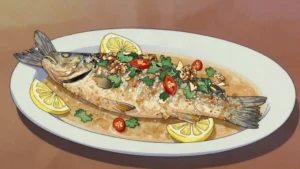
- Mbakbaka bel hoot, made with firm white fish added in the last ten minutes.
- A vegetarian version built on chickpeas and potato, eaten in Ramadan.
- Mbakbaka with extra filfil and no cinnamon, the fiery Benghazi style.
History
Named for the bubbling of the pot; pasta arrived with Italian colonial rule from 1911 and was absorbed into Libyan spice-heavy cooking rather than eaten Italian-style.
Frequently asked questions
What is Mbakbaka?
Mbakbaka is a main from Libya: pasta cooked directly in a spicy chickpea and lamb tomato broth. Named for the bubbling of the pot; pasta arrived with Italian colonial rule from 1911 and was absorbed into Libyan spice-heavy cooking rather than eaten Italian-style.
How long does Mbakbaka take to make?
Mbakbaka takes 20 min of preparation and 1 hr 15 min of cooking. The recipe makes 4–6 servings. It is rated easy to make.
What can I substitute in Mbakbaka?
Yes, within limits. No bzaar: mix 1 tsp turmeric, 1 tsp ground coriander, ½ tsp ground caraway, ½ tsp cinnamon, ¼ tsp black pepper and a pinch of clove. Beef shin or chicken thighs both work in place of lamb; reduce the initial simmer to 35 minutes for chicken.
What is the most important thing to get right in Mbakbaka?
Now add the dry pasta directly to the simmering sauce. This is the defining move of mbakbaka: the pasta is never boiled separately in water, it cooks in the broth and absorbs it.