
Ingredients
Dough
- 600 gplain flour
- about 350 ml warm water
- 2 teaspoonssalt
- 3 tablespoonsoil
Stew
- 1 kglamb, in pieces
- 2onions, chopped
- 5garlic cloves, crushed
- 4 tablespoonstomato paste
- 3tomatoes, chopped
- 4 tablespoonsoil
- 2 teaspoonsbzaar spice mix
- or 2 teaspoons mixed ground spices
- 1 teaspoonground turmeric
- 1 teaspoonchilli powder
- 1 teaspoonground cinnamon
- 1 litrewater
- salt and black pepper
Sometimes added
- 400 gchickpeas, cooked
- 2potatoes, in chunks
- 1courgette, in chunks
To finish
- olive oil, to drizzle
- chilli paste
Directions
- Put the flour and salt in a large bowl. Add the warm water in gradually. Bring it together into a soft dough. It should be softer than a bread dough. Turn it out onto a floured surface.
- Knead it for a good ten minutes. It should become smooth and elastic. Rub it all over with the oil now. Rest it covered for at least an hour. Resting lets it stretch out thin. Heat the oil in a large heavy pot. Add the lamb pieces in batches. Brown them well on every side. Do not crowd the pot at any point.
- Lift them out and set them aside. Building the sauce takes patience. Add the chopped onions to the pot. Cook them for a good ten minutes. Add the crushed garlic to the pot. Cook it for a good two minutes. Stir the tomato paste in as well.
- Fry it for a good three minutes. That frying takes the raw edge off it. Add all of the ground spices now. Fry them for one full minute more. Return the lamb pieces to the pot. Add the chopped tomatoes to it. Pour in all of the measured water. Season it with salt and black pepper. Bring it up to a gentle simmer.
- Cover it and let it cook slowly. Give it about one full hour of that. Divide the rested dough into pieces. Oil your hands and the work surface. Flatten each piece with your palms. Work it thinner and thinner still. It takes practice to do without tearing.
- Tear the thin sheets into rough pieces. Aim for pieces about five centimetres. Set a steamer basket over the simmering stew. Lay the torn dough pieces in loosely. Do not pack them down in it at all. Steam must circulate between them. Cover it and steam for about twenty minutes.
- Toss them halfway through with a fork. Judging the dough takes a look. Break one open to check the middle. Give them longer if the centre is doughy. Add potato and courgette to the stew. Add them for the last twenty minutes. Add cooked chickpeas at the same time. Lift the steamed dough into a wide bowl. Ladle hot sauce over it generously. Toss it all through with a fork.
- Let it stand for five minutes to soak. Add more sauce if it looks dry. It should be moist right through. Add sauce a ladle at a time to control it. Serving it is done hot from one dish. Pile it onto a large communal platter. Set the meat and vegetables on top. Serve chilli paste alongside it. It keeps two days refrigerated.
Technique
- Dishes of bread or dough soaked in stew run right across the Arab world under the general name tharid, with rfissa and trid in the Maghreb and fatteh in the Levant; ftat is the Libyan version.
- The dough is steamed over the stew rather than baked, so the steam carries the smell of the stew into it, which is the whole design of the dish.
- The finished dish should be moist right through but not swimming, with the torn pieces still distinguishable rather than a uniform paste.
Substitutions
- Torn flatbread can stand in for the fresh dough, though it soaks differently.
- Beef or chicken can replace lamb in the stew.
Variations
- Some households add chickpeas, potato and courgette to the stew.
- A version made with bought pastry sheets is a common shortcut.
- Rfissa in Morocco and fatteh in the Levant work on the same principle.
History
A dish of torn dough or bread moistened with stew, common in the Libyan interior and served at family gatherings and after Eid.
Frequently asked questions
What is Ftat?
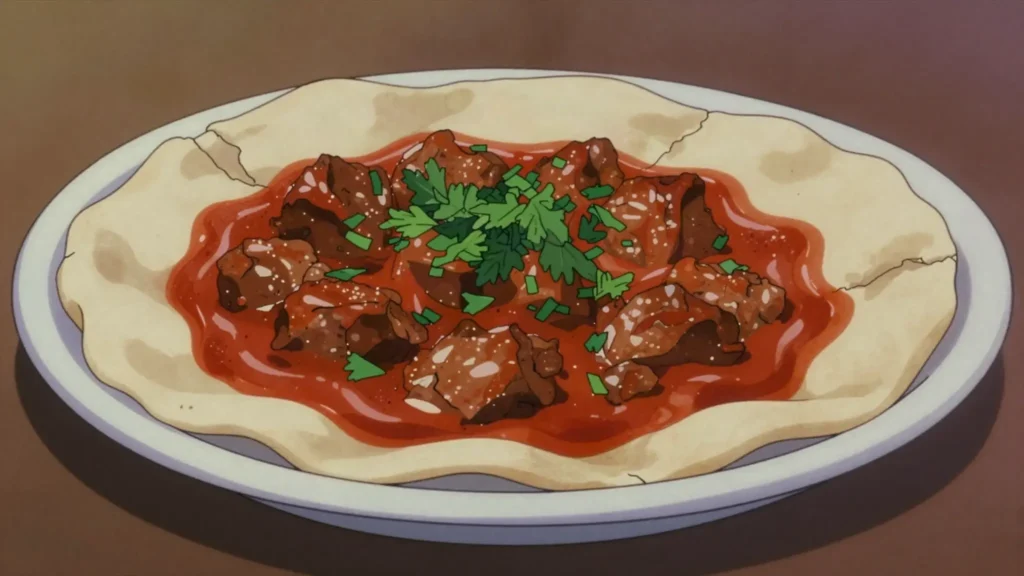
Ftat is a main from Libya: torn pieces of thin dough steamed and soaked in a meat and tomato sauce. A dish of torn dough or bread moistened with stew, common in the Libyan interior and served at family gatherings and after Eid.
How long does Ftat take to make?
Ftat takes 45 minutes plus resting of preparation and 1 hour 30 minutes of cooking. The recipe makes serves 6. It is rated hard to make.
What can I substitute in Ftat?
Yes, within limits. Torn flatbread can stand in for the fresh dough, though it soaks differently. Beef or chicken can replace lamb in the stew.
What is the most important thing to get right in Ftat?
Knead it for a good ten minutes. It should become smooth and elastic. Rub it all over with the oil now. Rest it covered for at least an hour. Resting lets it stretch out thin. Heat the oil in a large heavy pot. Add the lamb pieces in batches. Brown them well on every side. Do not crowd the pot at any point.