
Ingredients
The peas
- 400 gdried pigeon peas
- mbaazi, soaked overnight
- or 800 g fresh or frozen
The pot
- 1onion, chopped
- 4garlic cloves, crushed
- 3cm ginger, grated
- 2tomatoes, chopped
- 2 tablespoonsoil
- 1 teaspoonground cumin
- 1 teaspoonground turmeric
- 1green chilli, whole
- salt
The coconut
- 400 mlthin coconut milk
- the second pressing
- 400 mlthick coconut milk
- the first pressing
To serve
- mahamri
- coconut doughnuts
- or chapati
- black tea
Directions
- Spoon it off and thin the rest with water. Put the dried peas in a large bowl. Cover them well with cold water. Leave them overnight in the water.
- Discard the soaking water afterwards. Fresh green pigeon peas need no soaking. Drain the soaked peas and rinse them. Put them in a pot with fresh water. Bring them all up to a full boil. Skim off any foam that rises up. Grey foam rises in the first minutes. Let them simmer for about an hour. Judging them takes a firm squeeze.
- Squeeze a pea between your fingers. It should crush with little resistance. Take them off slightly before fully soft. Draining them is straightforward enough. Drain all of the cooked peas well. Keep a little of the cooking water. Heat the oil in a wide heavy pot. Add the chopped onion in to it.
- Cook it for a good eight minutes. Add the crushed garlic and grated ginger. Cook them for two more full minutes. Add the cumin and the turmeric. Fry them for about thirty seconds. Add the chopped tomatoes to the pot. Cook them down for about six minutes. The tomato should soften and break down. Cook it until it goes quite jammy. Add the drained peas to the pot.
- Turn them through the base gently. Adding the thin coconut is the next step. Pour in the thin coconut milk. Add the whole green chilli to it. Season it with a little salt now. Simmering it takes about twenty minutes. Bring it up to a gentle simmer.
- Let it simmer for about twenty minutes. Coconut milk splits if boiled hard. Keep it at a bare simmer throughout. Small bubbles should barely break the surface. Pour in the thick coconut milk. Stir it gently through the pot. Let it warm through for five minutes. The thick milk must not boil at all. Take the pot off as soon as it is hot. Judging it takes a careful look.
- Add reserved pea water if it is too thick. Simmer it a little longer if too thin. Lift the whole green chilli out. Discard it entirely before serving. Taste it and adjust the salt as needed. Coconut milk needs more salt than expected.
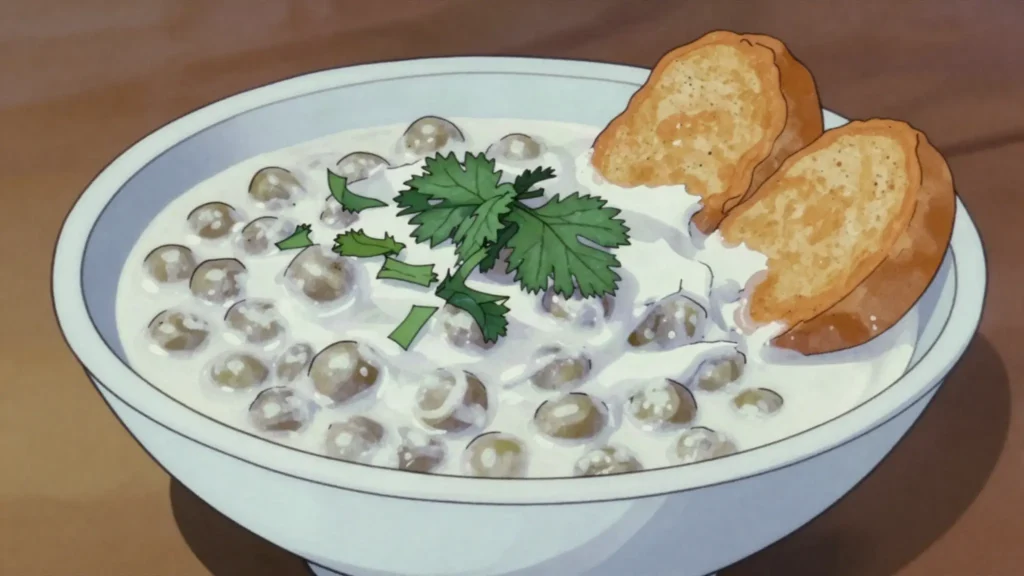
- Taste it properly right at the end. Serving it is always done warm. Spoon it out into warm deep bowls. Serve warm mahamri alongside it. Serve hot black tea alongside it. It keeps three days refrigerated.
Technique
- Grated coconut is squeezed first with a little water for thick cream and again with more for thin milk, and the order matters: the thin milk cooks the peas while the thick goes in only at the end to warm through. Thick coconut milk splits with long cooking, separating into oil and grain. Tinned milk can be separated the same way by refrigerating the tin unshaken and spooning the set cream off the top.
- Take the peas off the boil slightly before they are fully soft, since they soften further in the coconut stage; they should crush with little resistance but still hold their shape.
- Coconut milk dulls seasoning and needs more salt than expected, so taste it properly at the end rather than earlier.
Substitutions
- Fresh or frozen green pigeon peas need no soaking and cook in a fraction of the time.
- Chapati stands in for mahamri, the cardamom and coconut doughnuts it is usually eaten with.
Variations
- The green chilli goes in whole and unpierced for aroma without heat, and is lifted out before serving.
- Sweet fried mahamri with a savoury bean stew sounds unusual off the coast but is entirely standard in Mombasa.
- Pigeon pea is Cajanus cajan, usually given as domesticated in India and long since grown across Africa.
History
Pigeon peas came from India with Indian Ocean trade and took to the coastal climate; the coconut stew is a Mombasa breakfast fixture.
Frequently asked questions
What is Mbaazi wa nazi?
Mbaazi wa nazi is a salad & side from Kenya: pigeon peas stewed in coconut milk, the classic partner to mahamri. Pigeon peas came from India with Indian Ocean trade and took to the coastal climate; the coconut stew is a Mombasa breakfast fixture.
How long does Mbaazi wa nazi take to make?
Mbaazi wa nazi takes 15 minutes plus soaking of preparation and 1 hour 30 minutes of cooking. The recipe makes serves 6. It is rated easy to make.
What can I substitute in Mbaazi wa nazi?
Yes, within limits. Fresh or frozen green pigeon peas need no soaking and cook in a fraction of the time. Chapati stands in for mahamri, the cardamom and coconut doughnuts it is usually eaten with.
What is the most important thing to get right in Mbaazi wa nazi?
Turn them through the base gently. Adding the thin coconut is the next step. Pour in the thin coconut milk. Add the whole green chilli to it. Season it with a little salt now. Simmering it takes about twenty minutes. Bring it up to a gentle simmer.