
Ingredients
The pumpkin
- 1.5 kgpumpkin
- peeled, seeded and cut in chunks
- water, for boiling
- a pinch of salt
The groundnut
- 5 tablespoonspeanut butter
- unsweetened, or groundnut flour
- a little hot water, to loosen
To finish
- 2 tablespoonssugar
- or to taste
- a little more salt
To serve
- with sadza
- or alone in a bowl
- at harvest season
Directions
- Flour is the traditional form in Zimbabwe. It should be a thick smooth mash. Cut the pumpkin in half with a heavy knife. Use a heavy sharp knife and take care. Cut it on a stable flat surface. Work slowly rather than forcing it. Seeding it is straightforward enough.
- Scoop the seeds out with a spoon. Cut the halves into wedges first. Cut down the skin with a knife. Cutting it is straightforward enough. Cut the peeled wedges into chunks. Aim for about four centimetres across. Put the chunks in a large pot. Add water to come partway up them. Add a pinch of salt to the water. Do not cover them completely at all.
- Bring the pot up to a full boil. Cover it and lower the heat down. Let it cook for about twenty minutes. Judging it takes a careful test. Cook it on if it resists at all. Drain off any remaining water. Mashing it wet gives a sloppy result. Drain it very thoroughly first. Return the drained pumpkin to the pot.
- Set it back over a very low heat. Let it steam dry for a few minutes. Stir it as the water evaporates. It is worth the extra few minutes. Mash it with a proper potato masher. It should be smooth but not pureed. Put the peanut butter in a bowl. Add hot water a little at a time.
- Whisk it into a smooth loose cream. Thick paste added dry sits in lumps. Stir the loosened paste into the mash. Work it through all of it thoroughly. It should be evenly distributed.
- Set the pot back over a low heat. Let it cook for about ten minutes. Stir it regularly all the way through. Ten minutes makes a real difference. Stir right into the corners of the pot. Keep the heat low and quite steady. Add the sugar and stir it through.
- Add a little more salt as well. It should be sweet but not a dessert. Taste it and adjust both of them. Start with less than you think. Add more only if it really needs it. It should hold its shape on a spoon. Add hot water if it goes too stiff. Serving it is always done hot. Spoon it out into warm deep bowls. Serve sadza alongside it if you like. Both of them are done in Zimbabwe.
Technique
- Pumpkin and groundnut are intercropped on the same plot, both spreading along the ground between maize rows, and both come in at around the same time — so the dish combines what the plot produces. That is an agricultural logic rather than a culinary one.
- Loosen the peanut butter with hot water into a smooth pourable cream before it goes in, since thick paste sits in lumps that never disperse; then cook it a further ten minutes, stirring regularly, since raw peanut butter tastes chalky and it catches and burns bitter on the bottom.
- It sits between sweet and savoury and is neither a dessert nor purely savoury: the pumpkin is naturally sweet and sugar is often added, but salt and groundnut pull the other way. Start with less sugar than you think, since some households add none at all.
Substitutions
- Groundnut flour is the traditional Zimbabwean form and peanut butter the common shortcut; both give a similar result. Groundnut cannot be left out, so say clearly what is in it.
- Use a dense orange pumpkin, since watery varieties give a loose mash.
Variations
- The atlas also carries mokopu from Lesotho, pumpkin mashed with sugar or salt, and muboora from Zimbabwe, which is the leaves rather than the fruit; the groundnut is what distinguishes nhopi.
- Use only a few centimetres of water rather than covering the chunks, then drain and steam it dry in the pot before mashing.
- It is eaten as a side with sadza and also alone as a light meal; both are done.
History
Pumpkin and groundnuts are grown together on the same plot; the mash is a Shona harvest-season dish eaten with sadza or alone.
Frequently asked questions
What is Nhopi?
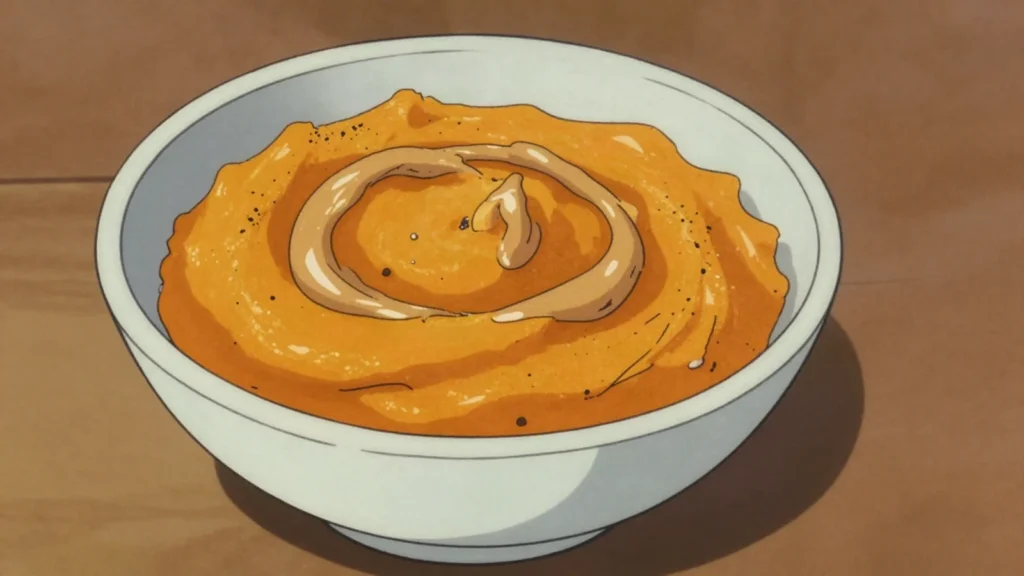
Nhopi is a salad & side from Zimbabwe: pumpkin mashed with peanut butter into a sweet-savoury orange purée. Pumpkin and groundnuts are grown together on the same plot; the mash is a Shona harvest-season dish eaten with sadza or alone.
How long does Nhopi take to make?
Nhopi takes 20 minutes of preparation and 40 minutes of cooking. The recipe makes serves 6. It is rated easy to make.
What can I substitute in Nhopi?
Yes, within limits. Groundnut flour is the traditional Zimbabwean form and peanut butter the common shortcut; both give a similar result. Groundnut cannot be left out, so say clearly what is in it. Use a dense orange pumpkin, since watery varieties give a loose mash.
What is the most important thing to get right in Nhopi?
Flour is the traditional form in Zimbabwe. It should be a thick smooth mash. Cut the pumpkin in half with a heavy knife. Use a heavy sharp knife and take care. Cut it on a stable flat surface. Work slowly rather than forcing it. Seeding it is straightforward enough.