
Ingredients
Seeds
- 300 gbaobab seeds
- with their white coating
- or cleaned baobab seeds
The coating
- 250 gsugar
- 100 mlwater
- 2 teaspoonsground chilli
- or to taste
- 1 teaspoonground cardamom, optional
- a pinch of salt
Colour
- red food colouring
- a few drops
- or beetroot powder
To serve
- in twists of paper
- sucked slowly
- from a Mombasa street seller
Directions
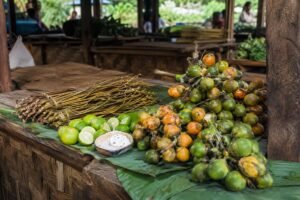
- Break open the baobab pod if you have one. Shake out the coated seeds inside. Pick out the fibrous strands with them. Crack it with a hammer or a heavy knife. They need only a quick look over. Pick out any remaining fibre or shell. Do not wash them at all first.
- Use them dry just as they come. Put the sugar and water in a heavy pan. Warm it until the sugar dissolves. Bring the pan up to a full boil. The syrup is taken to a thick sticky stage. Drop a little into cold water. It should form a soft pliable ball.
- Keep children well away from the pan. Have cold water nearby in case of a splash. Take the pan right off the heat. Stir in all of the ground chilli. Add the cardamom if you are using it. Add the salt and the colouring. Add it in a few drops at a time. It goes a long way in hot syrup.
- Stir it through until it is even. Tip the seeds into the hot syrup. Stir them all hard and very fast. Coat every single seed in the syrup. It becomes impossible to stir within a minute.
- Work fast from the moment they go in. Keep stirring to separate them. That crystallising helps them separate. Keep stirring as the syrup crystallises. It gives a dry crunchy coating. Tip them all onto a lined tray. Spread them out in a single layer. Let them cool down completely there.
- Let them stand for several hours. They should not be tacky at all. Pack them into an airtight jar. Keep them somewhere cool and dry. Serving them is done by the handful.
- Twist paper into small paper cones. Fill each with a handful of seeds. They keep a month in a sealed jar. Discard them if they go sticky or damp.
Technique
- The seed inside is hard and inedible: only the sweet coating and the sour white pulp are eaten, and the seed is sucked and then spat out. They are about the size of a bean and are not meant to be swallowed, so small children should not be given them and anyone eating them should suck rather than chew.
- Do not wash the seeds: the chalky white pulp coating them is the sour flavour that makes it mabuyu, and rinsing washes it straight off. Look for seeds with that coating intact rather than cleaned ones, which give only sweetness.
- Take the syrup to the soft ball stage, around one hundred and fifteen degrees, then keep stirring as it cools until it turns from glossy to sandy and grainy; that crystallising is what separates the seeds and gives a dry crunchy coating, where a glossy one stays sticky.
Substitutions
- Beetroot powder gives a natural alternative to red food colouring.
- Cardamom is added alongside the chilli in some versions.
Variations
- The chilli level varies considerably between sellers.
- Some are made without colouring at all and stay pale.
- They are sold in twists of paper by street sellers on the coast.
History
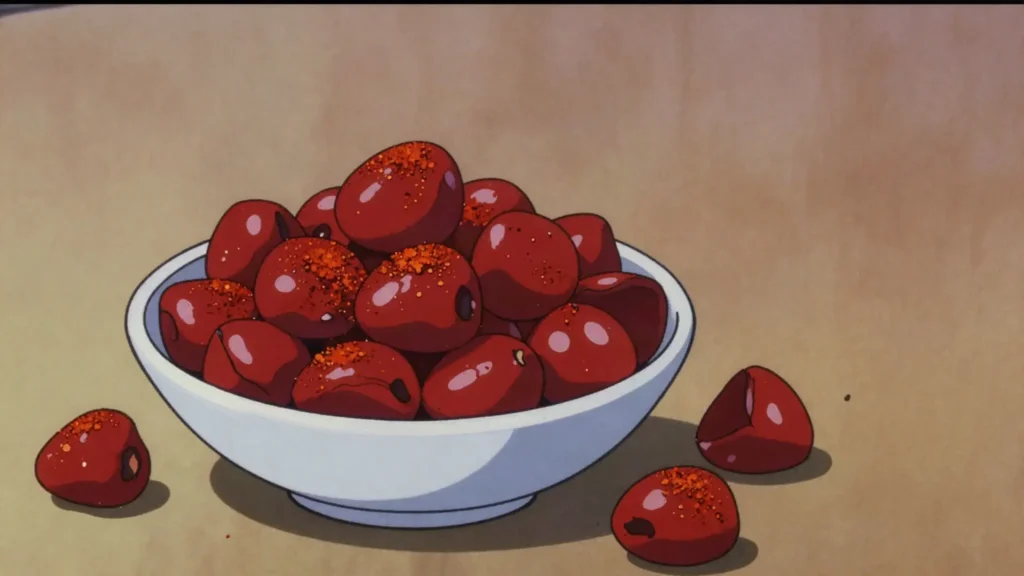
Sold in twists of paper on the Mombasa coast, the coating hiding a hard tart seed to be sucked slowly.
Frequently asked questions
What is Mabuyu?
Mabuyu is a snack from Kenya: baobab seeds coated in sugar syrup dyed red and spiced with chilli. Sold in twists of paper on the Mombasa coast, the coating hiding a hard tart seed to be sucked slowly.
How long does Mabuyu take to make?
Mabuyu takes 20 minutes of preparation and 25 minutes of cooking. The recipe makes about 400 g. It is rated medium to make.
What can I substitute in Mabuyu?
Yes, within limits. Beetroot powder gives a natural alternative to red food colouring. Cardamom is added alongside the chilli in some versions.
What is the most important thing to get right in Mabuyu?
Break open the baobab pod if you have one. Shake out the coated seeds inside. Pick out the fibrous strands with them. Crack it with a hammer or a heavy knife. They need only a quick look over. Pick out any remaining fibre or shell. Do not wash them at all first.