
Ingredients
Dough
- 500 gplain flour
- 7 ginstant yeast
- 1 tspsugar
- 1.5 tspfine salt
- 60 mlolive oil
- 300 mlwarm water
Za’atar topping
- 80 gza’atar blend (dried wild thyme, sumac, toasted sesame, salt)
- 120 mlextra virgin olive oil
Cheese topping, optional
- 300 gakkawi cheese, soaked and grated
- 100 glow-moisture mozzarella, grated
To serve
- 1tomato, sliced
- 1 handfulmint leaves
- 6green olives
- Sliced cucumber
Directions
- Whisk the yeast and sugar into the warm water and leave 10 minutes until foaming. Mix into the flour and salt with the olive oil.
- Knead 8–10 minutes to a soft, supple dough that springs back slowly when pressed. It should be softer than bread dough and just short of sticky.
- Cover and prove 1–1.5 hours in a warm place until doubled.
- Stir the za’atar and olive oil together to a loose, spoonable paste and let it stand; the sumac needs 20 minutes to bleed its colour and sourness into the oil.
- Heat the oven to its maximum, 250–280°C (475–525°F), with a baking stone or an upturned heavy tray on the middle shelf for at least 30 minutes.
- Knock back the dough, divide into 6, roll into balls and rest 15 minutes under a cloth so the gluten relaxes.
- Flatten each ball by hand on a floured bench to a 20 cm round about 5 mm thick, leaving the rim slightly thicker. Dimple the centre with your fingertips so the topping has somewhere to sit.
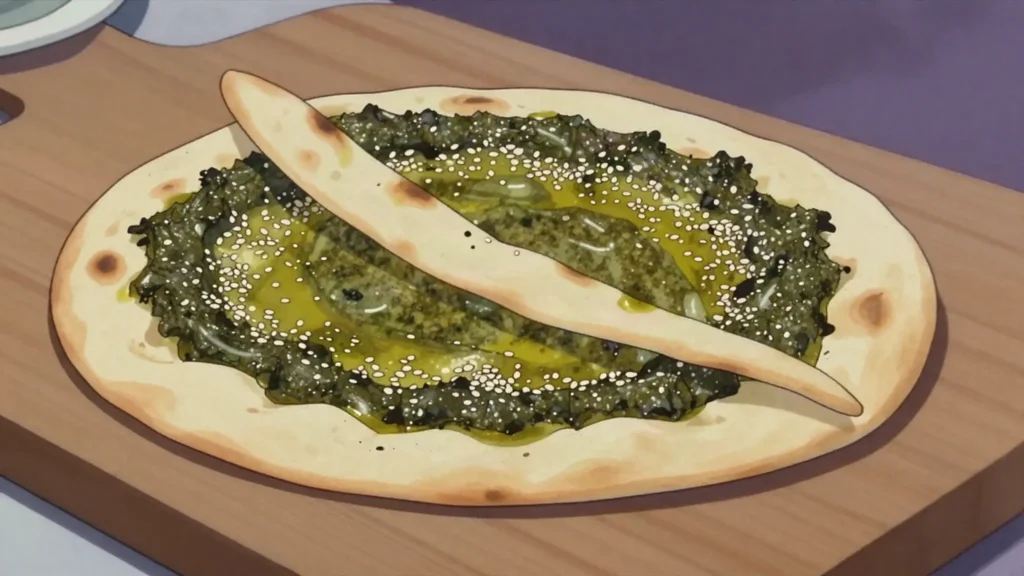
- Spread 2 heaped tablespoons of za’atar paste to the edge of each round, or scatter the cheese for a jibneh version, and slide onto the hot stone.
- Bake 6–8 minutes until the base is spotted brown and the rim is puffed and pale gold. The za’atar should look wet and dark, never dry or scorched: burnt sumac is bitter.
- Fold each manoushe in half around tomato, mint, olives and cucumber, wrap in paper and eat immediately, standing up, as Lebanon does at breakfast.
Technique
- Bakeries use a saj, a domed convex griddle, or a stone-floored gas oven that fires the base hard in under three minutes. A preheated stone at maximum oven heat is the honest home version.
- Real Lebanese za’atar is made with wild thyme (Origanum syriacum), not garden thyme, and is heavy on sumac and sesame. A dull, brown-green mix means old sumac.
- The oil-to-za’atar ratio matters more than the recipe suggests: the paste should slump slowly off the spoon. Too dry and it burns, too wet and it runs off the dough.
- Akkawi is a brined cheese and must be soaked in several changes of cold water for a few hours, or the manakish come out inedibly salty.
Substitutions
- No akkawi: use half mozzarella and half halloumi, soaked 30 minutes to draw out salt.
- No baking stone: preheat a heavy cast-iron pan on the hob until smoking, cook the base 2 minutes, then finish under a hot grill.
Variations
- Manoushe bi jibneh, the cheese version folded hot so it strings.
- Manoushe bi zaatar wa jibneh, half za’atar and half cheese, folded together.
- Manoushe bi keshek, with fermented yoghurt-and-bulgur powder, onion and walnut, a mountain winter breakfast.
History
A flatbread topped with za’atar, a blend of dried thyme, sumac and sesame seed mixed with olive oil, or alternatively with cheese or ground meat, baked until the bread is soft yet slightly crisp at the edges, documented across Lebanon and the wider Levant region for many generations as a common breakfast food. Its za’atar topping reflects the herb blend’s deep, centuries-old importance across Levantine cooking, with the specific composition of a given za’atar blend often varying by region, family or producer, each maintaining particular proportions passed down across generations. Manakish remains one of Lebanon’s most widely eaten breakfast foods, commonly sold fresh each morning from dedicated bakeries across the country.
Frequently asked questions
What is Manakish?
Manakish is a bread & pastry from Lebanon: breakfast flatbread smeared with za’atar-oil or cheese, folded hot. A flatbread topped with za’atar, a blend of dried thyme, sumac and sesame seed mixed with olive oil, or alternatively with cheese or ground meat, baked until the bread is soft yet slightly crisp at the edges, documented across Lebanon and the wider Levant region for many generations as a common breakfast food. Its za’atar topping reflects the herb blend’s deep, centuries-old importance across Levantine cooking, with the specific composition of a given za’atar blend often varying by region, family or producer, each maintaining particular proportions passed down across generations. Manakish remains one of Lebanon’s most widely eaten breakfast foods, commonly sold fresh each morning from dedicated bakeries across the country.
How long does Manakish take to make?
Manakish takes 30 min of preparation and 1 hr 30 min rising and baking of cooking. The recipe makes 6 flatbreads. It is rated medium to make.
What can I substitute in Manakish?
Yes, within limits. No akkawi: use half mozzarella and half halloumi, soaked 30 minutes to draw out salt. No baking stone: preheat a heavy cast-iron pan on the hob until smoking, cook the base 2 minutes, then finish under a hot grill.
What is the most important thing to get right in Manakish?
Bake 6–8 minutes until the base is spotted brown and the rim is puffed and pale gold. The za’atar should look wet and dark, never dry or scorched: burnt sumac is bitter.