
Ingredients
The sesame
- 500 gsimsim
- raw sesame seeds
- picked over for grit
To roast
- a dry heavy pan
- or a moderate oven
To pound
- a mortar and pestle
- or a heavy grinder
To use, per pot
- 4 tablespoonsodii
- loosened with hot water
- stirred into greens
Directions
- Keep pounding it until it does. They go from golden to black quickly. Spread the sesame out on a tray. Pick out any grit or small stones. Pick them out before roasting. Rinse the seeds in a fine sieve.
- Let them drain very thoroughly. They must be dried before roasting. Spread them out to dry completely. Or dry them briefly in the pan first. Heat a heavy dry pan over medium heat. Add all the sesame seeds to it. Stir them constantly throughout. Sesame burns in seconds if left still.
- Keep them moving for about eight minutes. Do not trust a clock alone here. Take them off soon after it starts. Take them off slightly early for that. Golden rather than dark is the target.
- Tip all of them out of the pan at once. Tip them out onto a cold tray. Spread them in a single layer. Piled seeds hold heat and keep roasting. Spread out they cool much faster. That stops them going too far. Let them cool down to just warm. Put the seeds in a heavy mortar.
- Pound them steadily and very hard. This takes real and sustained effort. Pound rather than grinding in circles. Lift the pestle and bring it down. Keep the mass in the middle of it.
- Keep going until that happens. Judging it takes a look and a feel. Pound it on if it is still gritty. It is not meant to be perfectly smooth. Heat is a problem for nsinjiro. Keep it all in a sealed clean jar. Keep it somewhere cool and dark. Keep the jar sealed and quite full.
- Stir it back in before you use it. Discard it if it smells at all off. Make small batches rather than large. Loosen the paste with hot water first.
- Stir it into a smooth loose cream. Thick paste added dry sits in lumps. Stir it into the cooked greens. Let it cook for ten more minutes. Ten minutes of it is about right. Stir it regularly all the way through. Keep the heat low and quite steady. It keeps a month sealed and cool.
Technique
- The atlas also carries nsinjiro from Malawi, roasted groundnut ground to a flour, and the two are a deliberate contrast: nsinjiro is stopped before it becomes a paste and kept dry, while odii is pounded on until the oil releases and it does become a paste. Heat is a problem for nsinjiro and not for odii, which wants the oil out — that is the whole difference between them.
- Sesame burns in seconds if left still, being tiny and high in oil, so stir constantly and never leave the pan. The seeds pop and jump as they approach done, which is a useful signal; take them off soon after it starts and slightly early, since they carry on roasting off the heat. Golden rather than dark is the target — a pale paste was underroasted and a black one burnt.
- The change from meal to paste is quite sudden: it is meal one moment and paste the next as the released oil binds it all at once. It takes real sustained effort, twenty minutes of pounding being normal, and is traditionally shared work.
Substitutions
- A heavy grinder run in bursts with the sides scraped down does the job; the heat it generates is not a problem here.
- Loosen the paste with hot water into a smooth cream before it goes into a pot, since thick paste sits in lumps that never disperse.
Variations
- Sesame allergy is a recognised serious allergy now labelled as a major allergen, and odii is entirely sesame, so say clearly when it is in a dish.
- The oil separates and rises as the jar sits, which is normal rather than spoilage; stir it back in before using.
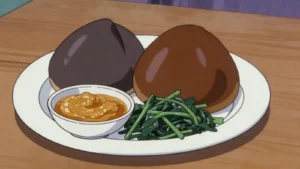
- It is stirred into cooked greens, goes into bean and meat stews, and is eaten with millet bread — a seasoning and a food at once.
History
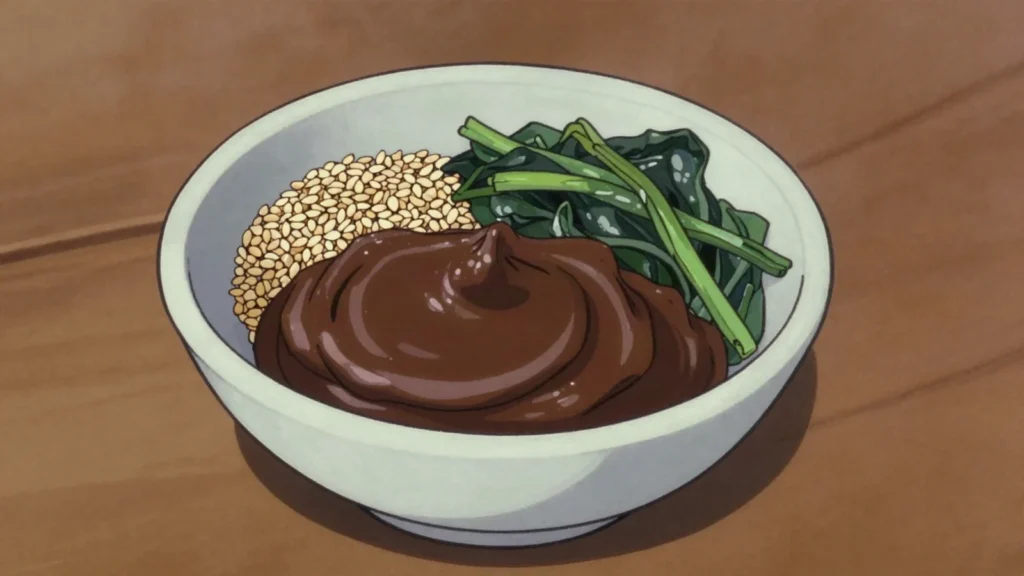
A northern Ugandan Acholi and Langi staple; simsim is roasted and pounded in a mortar until the oil releases into a paste.
Frequently asked questions
What is Odii?
Odii is a sauce & condiment from Uganda: roasted sesame ground to a thick dark paste, stirred into greens. A northern Ugandan Acholi and Langi staple; simsim is roasted and pounded in a mortar until the oil releases into a paste.
How long does Odii take to make?
Odii takes 20 minutes of preparation and 25 minutes of cooking. The recipe makes about 400 g. It is rated medium to make.
What can I substitute in Odii?
Yes, within limits. A heavy grinder run in bursts with the sides scraped down does the job; the heat it generates is not a problem here. Loosen the paste with hot water into a smooth cream before it goes into a pot, since thick paste sits in lumps that never disperse.
What is the most important thing to get right in Odii?
Let them drain very thoroughly. They must be dried before roasting. Spread them out to dry completely. Or dry them briefly in the pan first. Heat a heavy dry pan over medium heat. Add all the sesame seeds to it. Stir them constantly throughout. Sesame burns in seconds if left still.