
Ingredients
Pasta
- 450 gelbow macaroni
- salt
Sauce
- 60 gbutter
- 60 gplain flour
- 900 mlwhole milk
- 1 tspmustard powder
- ½ tspgrated nutmeg
- 1 tspsalt
- white pepper
- a dash of hot sauce
Cheese
- 300 gmature cheddar, grated
- 150 gGruyère or Monterey Jack, grated
- 50 gParmesan, grated
Topping
- 80 gpanko breadcrumbs
- 30 gbutter, melted
- 50 gParmesan
Directions
- Grate the cheese yourself from a block.
- Pre-grated cheese is coated in cellulose or potato starch to stop it clumping in the bag, and that coating makes the sauce grainy. This is the single most common cause of a broken mac and cheese.
- Boil the macaroni in well-salted water for two minutes less than the packet says.
- Undercook it deliberately. It finishes in the oven absorbing sauce, and pasta boiled to done comes out of the oven bloated and soft.
- Drain it and do not rinse it, because the surface starch is what makes the sauce cling to each piece.
- Make a roux with the butter and flour, cooking it 2 minutes without letting it colour.
- Add the milk gradually, whisking each addition in fully before the next, and cook until it thickens and coats a spoon.
- Take the pan off the heat before any cheese goes in.
- This is the critical moment. Cheese added to a sauce over direct heat splits: the proteins tighten and squeeze out the fat, and you get a grainy, oily sauce that cannot be fixed.
- Add the grated cheese a handful at a time, stirring until each melts before the next goes in.
- Stir in the mustard powder, nutmeg, salt, pepper and hot sauce.
- Mustard powder is not there to taste of mustard. It sharpens the cheese and it is in almost every good recipe for a reason.
- The sauce should look slightly too loose. It thickens considerably in the oven and the pasta drinks a great deal of it.
- Fold the pasta through the sauce and tip it into a buttered dish.
- Mix the panko with melted butter and Parmesan and scatter it over.
- Buttering the crumbs first is what makes them brown evenly instead of drying into pale dust.
- Bake at 190°C (375°F) for 25 to 30 minutes, until bubbling at the edges and deep golden on top.
- Rest it 10 minutes before serving so it sets enough to spoon.
- The dish reached America with Thomas Jefferson, who brought a macaroni machine back from Europe, and it was served at a state dinner in 1802.
- James Hemings, the enslaved chef Jefferson had trained in French cooking in Paris, is credited with bringing the technique into the household, which is the part of the story usually left out.
Technique
- The custard-style Southern version, bound with egg rather than a roux, is a distinct and equally traditional dish.
- A blend of cheeses beats a single cheese: cheddar for flavour, a good melter for texture, Parmesan for salt.
- It reheats poorly and is best eaten the day it is made.
Substitutions
- Any good melting cheese blend.
- Evaporated milk, which is very hard to split and is the reliable shortcut.
Variations
- The Southern baked custard version, bound with egg.
- Stovetop, without baking at all.
- With lobster, bacon or green chilli.
History
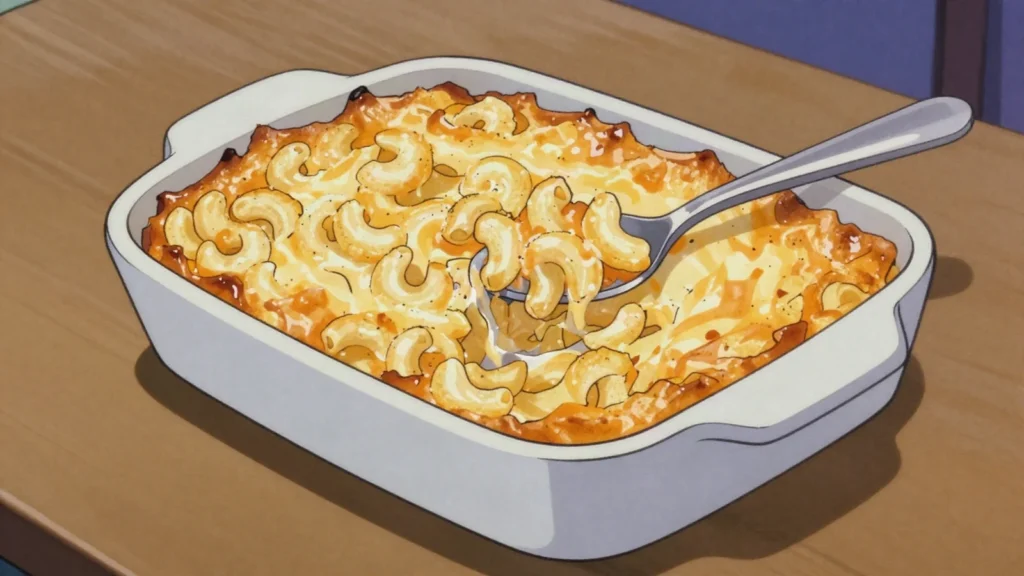
Pasta combined with a sauce made from melted cheese, typically baked until the top turns golden and slightly crisp, documented in America since the colonial period, with an early recorded version appearing in a cookbook associated with Thomas Jefferson, who encountered pasta dishes while serving as a diplomat in France and helped popularize macaroni in America following his return. Its subsequent development into a distinctly American comfort food, particularly through the widespread adoption of boxed, powdered-cheese versions during the 1900s, reflects the dish’s transformation from an elite, French-influenced dish enjoyed by figures like Jefferson into one of the most accessible, everyday comfort foods across all levels of American society. Macaroni and cheese remains one of the most iconic and widely eaten comfort foods in the United States.
Frequently asked questions
What is Macaroni and cheese?
Macaroni and cheese is a salad & side from United States: baked pasta in creamy cheddar sauce. Pasta combined with a sauce made from melted cheese, typically baked until the top turns golden and slightly crisp, documented in America since the colonial period, with an early recorded version appearing in a cookbook associated with Thomas Jefferson, who encountered pasta dishes while serving as a diplomat in France and helped popularize macaroni in America following his return. Its subsequent development into a distinctly American comfort food, particularly through the widespread adoption of boxed, powdered-cheese versions during the 1900s, reflects the dish’s transformation from an elite, French-influenced dish enjoyed by figures like Jefferson into one of the most accessible, everyday comfort foods across all levels of American society. Macaroni and cheese remains one of the most iconic and widely eaten comfort foods in the United States.
How long does Macaroni and cheese take to make?
Macaroni and cheese takes 20 min of preparation and 40 min of cooking. The recipe makes 6 servings. It is rated easy to make.
What can I substitute in Macaroni and cheese?
Yes, within limits. Any good melting cheese blend. Evaporated milk, which is very hard to split and is the reliable shortcut.
What is the most important thing to get right in Macaroni and cheese?
Drain it and do not rinse it, because the surface starch is what makes the sauce cling to each piece.