
Ingredients
Biscuits
- 350 gplain flour
- 1 tbspbaking powder
- 1 tspsalt
- ½ tspbicarbonate of soda
- 110 gvery cold butter, or lard
- 280 mlcold buttermilk
Gravy
- 450 gbreakfast sausagemeat, or skinned sausages
- 45 gplain flour
- 600 mlwhole milk
- plenty of coarsely ground black pepper
- salt
- a pinch of cayenne, optional
- a pinch of dried sage
Equipment
- a round cutter
- a heavy frying pan
To serve
- immediately, hot
Directions
- Use butter straight from the fridge, or freeze it and grate it into the flour. Cold pieces of fat melt in the oven and release steam, which pushes the layers apart and creates the flakiness.
- Warm butter simply absorbs into the flour and you get something dense and uniform instead. Cut or rub the butter into the dry ingredients until it looks like coarse crumbs with some pieces still the size of peas.
- Leave those larger pieces rather than rubbing everything smooth, since they are what make the layers. Use it cold and add it all at once, then stir only until the dough just comes together. It should look shaggy and untidy rather than smooth, and there should still be dry patches.
- Tip the dough onto a floured surface and pat it into a rectangle with your hands. Fold it in three like a letter, pat it out again, and repeat two or three times. Do not roll it with a rolling pin, which compresses it.
- Keep it thick, since biscuits rise upward and a thin slab of dough gives flat biscuits. Dip the cutter in flour and press straight down without twisting. Twisting seals and drags the cut edge, which pinches the layers together and stops the biscuit rising properly.
- Place them on the tray so their sides are touching. Bake at 220°C for twelve to fifteen minutes until well risen and golden on top. Brown the sausagemeat in a heavy frying pan over a medium heat, breaking it up as it cooks. Let it develop real colour rather than just cooking through, since those browned bits are the flavour of the gravy. Do not drain the fat away, since it is the base of the roux.
- Cook the flour for a full two minutes, stirring constantly. Now add the milk gradually, a splash at a time, whisking smooth after each addition. Bring it to a gentle simmer and cook until it thickens, five to ten minutes. Add far more coarsely ground black pepper than feels reasonable. Sawmill gravy should be visibly speckled and distinctly peppery, and this is what people judge it on.
- Season with salt, taste, and add a little sage or cayenne if you like. The gravy thickens further off the heat, so take it off slightly looser than you want it. Serve immediately, since the biscuits soften quickly under the gravy.
Technique
- A Southern biscuit is a soft flaky quick bread, not a crisp sweet one.
- Twisting the cutter seals the edge and stops the biscuit rising.
- The gravy is called sawmill gravy and should be heavily peppered.
Substitutions
- Milk soured with a spoonful of lemon juice in place of buttermilk.
- Any well-seasoned pork sausage, skinned.
Variations
- With chorizo or a spicier sausage.
- Made vegetarian, with mushrooms in place of sausage.
- With a fried egg on top.
History
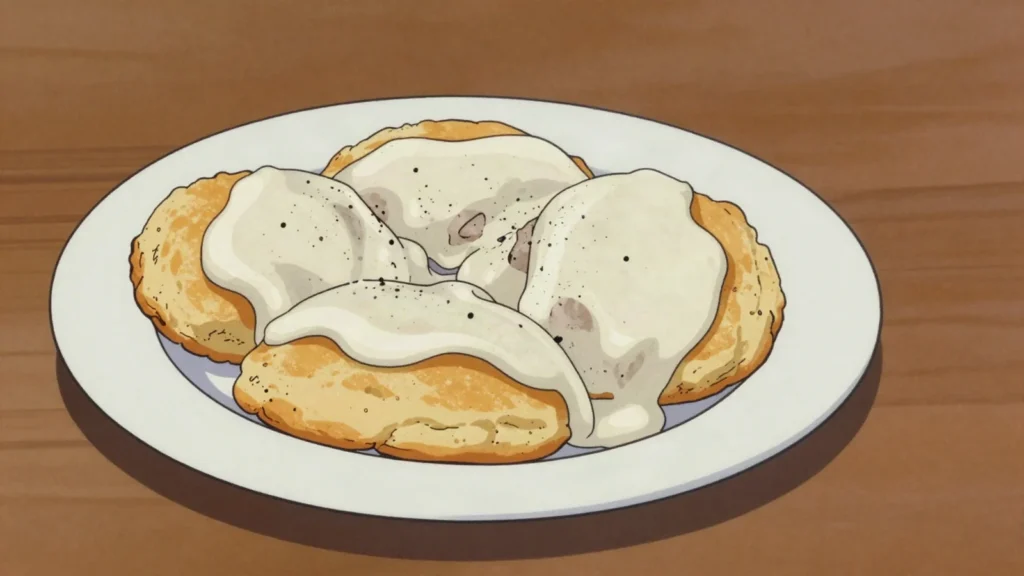
Soft, flaky biscuits, a bread style developed in the American South drawing on British baking tradition adapted with American ingredients and leavening methods, served smothered in a white gravy made from pan drippings, flour and milk, most often with crumbled sausage added. The dish developed specifically as an inexpensive, filling breakfast for poorer rural households and laborers, particularly in Appalachia and the wider American South, since its main ingredients, flour, fat and milk, were comparatively cheap and reliably available compared to more expensive proteins. Its exact point of invention is not precisely documented, though its association with Southern and Appalachian working-class cooking traditions through the 1800s and into the 1900s is well established, and it remains strongly identified with that regional culinary identity today.
Frequently asked questions
What is Biscuits and gravy?
Biscuits and gravy is a breakfast from United States: flaky biscuits smothered in peppery sausage cream gravy. Soft, flaky biscuits, a bread style developed in the American South drawing on British baking tradition adapted with American ingredients and leavening methods, served smothered in a white gravy made from pan drippings, flour and milk, most often with crumbled sausage added. The dish developed specifically as an inexpensive, filling breakfast for poorer rural households and laborers, particularly in Appalachia and the wider American South, since its main ingredients, flour, fat and milk, were comparatively cheap and reliably available compared to more expensive proteins. Its exact point of invention is not precisely documented, though its association with Southern and Appalachian working-class cooking traditions through the 1800s and into the 1900s is well established, and it remains strongly identified with that regional culinary identity today.
How long does Biscuits and gravy take to make?
Biscuits and gravy takes 20 min of preparation and 25 min of cooking. The recipe makes 4 servings. It is rated medium to make.
What can I substitute in Biscuits and gravy?
Yes, within limits. Milk soured with a spoonful of lemon juice in place of buttermilk. Any well-seasoned pork sausage, skinned.
What is the most important thing to get right in Biscuits and gravy?
Leave those larger pieces rather than rubbing everything smooth, since they are what make the layers. Use it cold and add it all at once, then stir only until the dough just comes together. It should look shaggy and untidy rather than smooth, and there should still be dry patches.