
Ingredients
Fruit and roots
- 4ripe plantains, skins well blackened, peeled and cut into thick 5 cm lengths
- 400 gsweet potato, peeled and cut into 4 cm chunks
- 300 gcassava, peeled, cored and cut into 4 cm chunks
- 200 gbreadfruit, peeled and cubed (optional, when in season)
Coconut syrup
- 800 mlthick coconut milk, ideally pressed from 2 fresh grated coconuts
- 150 gsugar, or 120 g palm sugar
- 1vanilla pod, split lengthwise, Seychellois if you can get it
- 1cinnamon stick
- ½ tspgrated nutmeg
- 1 pinchsalt
- 1strip lime zest
Directions
- Use plantains that look past their best, with skins fully black and soft to the squeeze. Green or yellow plantains stay starchy and will not sweeten into the syrup.
- Put the cassava and sweet potato into a wide heavy pan with the coconut milk, sugar, split vanilla pod, cinnamon, nutmeg, salt and lime zest.
- Bring to a bare simmer over medium-low heat. Coconut milk must never be allowed to boil hard here, or it splits into oil and curd and the syrup turns grainy.
- Simmer gently, uncovered, for 15 minutes, moving the pan rather than stirring so the pieces do not break.
- Add the plantain and the breadfruit if using, laying them in a single layer, and simmer a further 15–20 minutes.
- Baste the fruit with the syrup every few minutes using a spoon. As the liquid reduces, the plantain absorbs coconut and colours from pale yellow to a deep amber.
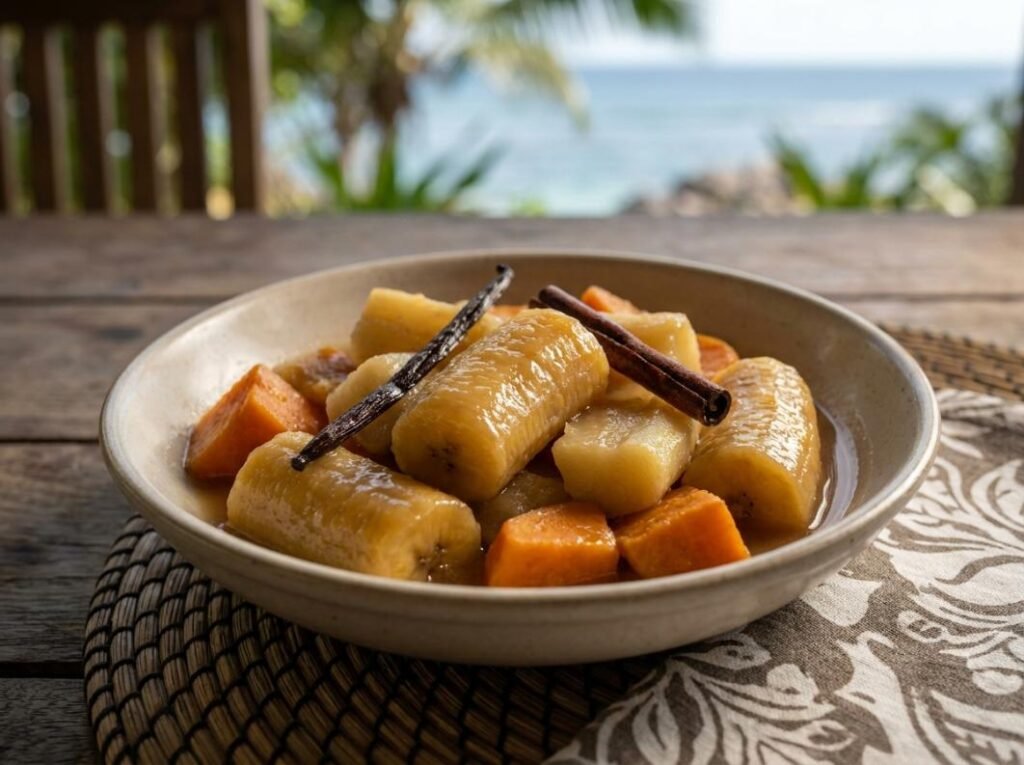
- It is ready when a knife slides through the cassava without resistance, the plantain is soft and glossy, and the coconut milk has reduced to a thick syrup that just coats everything, roughly a third of its original volume.
- Scrape the vanilla seeds from the pod into the pan, remove the cinnamon stick and lime zest, and take it off the heat. Let it stand 10 minutes so the syrup thickens further.
- Serve warm in bowls with plenty of syrup spooned over, or chilled, which is how it is often eaten in Seychelles in the heat of the afternoon.
Technique
- Ladob is a Seychellois Creole dish name that covers both a sweet and a savoury preparation. The sweet version here, ladob banann, is the dessert and the one people mean when they say ladob without qualification.
- The plantain must go in after the roots. It cooks in half the time and will disintegrate into the syrup if it goes in at the start.
- Fresh coconut milk gives a far better result than tinned. If pressing your own, use only the first thick press for this and keep the thin second press for another dish.
- Seychelles grows excellent vanilla on La Digue, and a real pod, split and simmered from the beginning, is worth the cost here; extract added at the end is a shadow of it.
Substitutions
- No fresh coconut? Full-fat tinned coconut milk works well; do not use a light or reduced-fat product, which will never reduce to a syrup.
- Cassava can be replaced entirely with more sweet potato, or with taro, which the islands call kanmbis.
- Palm sugar gives a rounder, more caramel flavour than white sugar and is closer to what is used locally.
Variations
- Ladob banann, made with plantain alone, the simplest and most common version.
- A version with sliced breadfruit as the main component, made when the trees are cropping.
- Some households add a splash of local rum to the syrup in the last 5 minutes.
History
A sweet dish combining ripe banana or sweet potato cooked in coconut milk with sugar, cinnamon and vanilla, developed in Seychellois cooking as a dessert or accompaniment reflecting the islands’ abundant local production of both bananas and coconuts. A savory version also exists, combining breadfruit or another starchy vegetable with coconut milk and salted fish rather than sugar, demonstrating the flexibility of the same basic coconut-milk-based cooking technique to produce either a savory main dish or a sweet dessert depending on the specific ingredients chosen. Ladob remains a traditional Seychellois dish, closely tied to the islands’ broader Indian Ocean coconut-based culinary identity shared with several other island nations across the region.
Frequently asked questions
What is Ladob?
Ladob is a dessert from Seychelles: plantain and sweet potato poached in vanilla coconut milk. A sweet dish combining ripe banana or sweet potato cooked in coconut milk with sugar, cinnamon and vanilla, developed in Seychellois cooking as a dessert or accompaniment reflecting the islands’ abundant local production of both bananas and coconuts. A savory version also exists, combining breadfruit or another starchy vegetable with coconut milk and salted fish rather than sugar, demonstrating the flexibility of the same basic coconut-milk-based cooking technique to produce either a savory main dish or a sweet dessert depending on the specific ingredients chosen. Ladob remains a traditional Seychellois dish, closely tied to the islands’ broader Indian Ocean coconut-based culinary identity shared with several other island nations across the region.
How long does Ladob take to make?
Ladob takes 20 min of preparation and 35 min of cooking. The recipe makes 6 servings. It is rated easy to make.
What can I substitute in Ladob?
Yes, within limits. No fresh coconut? Full-fat tinned coconut milk works well; do not use a light or reduced-fat product, which will never reduce to a syrup. Cassava can be replaced entirely with more sweet potato, or with taro, which the islands call kanmbis. Palm sugar gives a rounder, more caramel flavour than white sugar and is closer to what is used locally.
What is the most important thing to get right in Ladob?
Bring to a bare simmer over medium-low heat. Coconut milk must never be allowed to boil hard here, or it splits into oil and curd and the syrup turns grainy.