
Ingredients
Arroz blanco
- 400 glong-grain rice, rinsed
- 600 mlwater
- 2 tbspvegetable oil
- 1.5 tspsalt
Habichuelas guisadas
- 400 gcooked red kidney beans with 300 ml of their liquid
- 2 tbspoil
- 1 tbspsofrito (blended onion, garlic, bell pepper, coriander and culantro)
- 1 tbsptomato puree
- 150 gcalabaza (pumpkin), diced small
- 1 tspdried oregano
- 1 sprigculantro (recao)
- salt
Carne guisada
- 600 gbeef chuck, in 3 cm cubes
- juice of 1 lime and 1 tsp salt, to wash
- 2 tbspsofrito
- 1 tbsptomato puree
- 1 tspdried oregano
- half tsp ground black pepper
- 1 tbspwhite vinegar
- 1 tbspbrown sugar
- 2 tbspoil
- 300 mlwater
- 1bay leaf
To serve
- 1avocado, sliced
- a simple lettuce, tomato and onion salad
- fried ripe plantains (maduros)
Directions
- Wash the beef with lime juice and salt, rinse and dry, then marinate it with the sofrito, oregano, pepper, vinegar and a little salt for 30 minutes.
- Heat the oil in a heavy pot until almost smoking, sprinkle in the brown sugar and let it melt to a dark caramel, about 60 seconds. This is the Dominican way of colouring meat, and it must go dark amber without burning black.
- Add the drained beef to the caramel and sear hard, turning, for 5 minutes until every side is browned and lacquered.
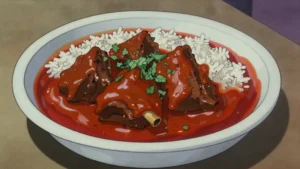
- Add the marinade, tomato puree, bay leaf and water, cover, and simmer 60–70 minutes until the beef is fork-tender and the sauce is glossy and reduced by half.
- For the beans, fry the sofrito and tomato puree in oil for 3 minutes, add the beans with their liquid, the diced calabaza, oregano and culantro, and simmer 20–25 minutes until the pumpkin dissolves and thickens the pot to the consistency of double cream.
- For the rice, heat the oil in a caldero, add the rice and salt and stir 2 minutes, then add the water. Boil hard, uncovered, until the water drops to the level of the grains and craters appear on the surface.
- Stir once from the bottom, cover tightly, and steam on the lowest heat for 20 minutes, so a crisp golden concon forms on the base of the pot.
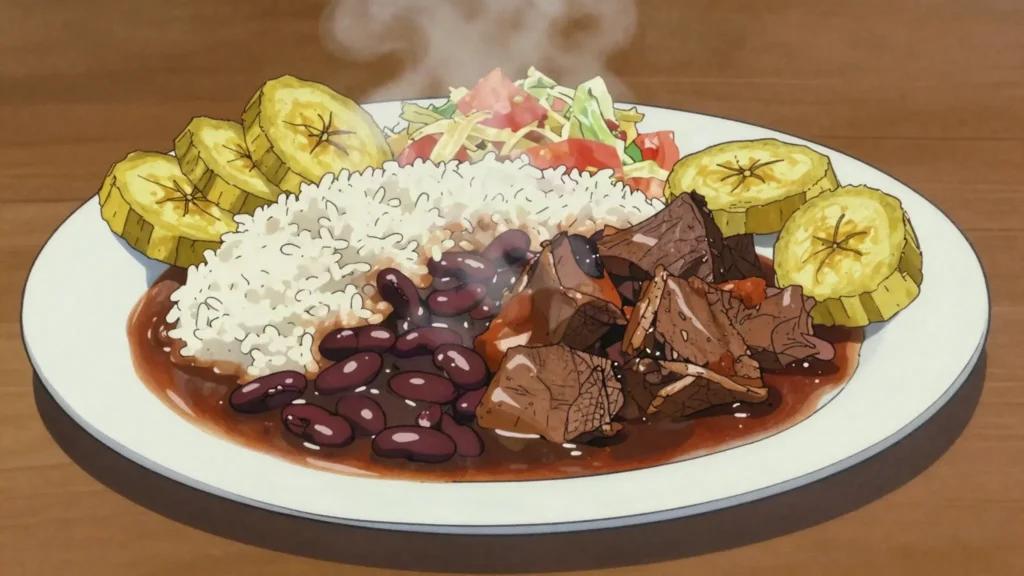
- Serve all three on one plate, side by side and not mixed: white rice, red beans, brown stewed meat, with salad, avocado and maduros around them.
Technique
- La Bandera means the flag, and the three components on one plate stand for the national colours. It is what most of the country eats at lunch, the main meal of the day.
- The burnt-sugar sear is the signature of Dominican carne guisada. Pull it off the heat the second it turns the colour of dark rum; a shade further and the whole pot is bitter.
- Concon, the toasted rice crust at the bottom of the caldero, is prized, not a mistake. Scrape it up and serve it.
Substitutions
- No culantro (recao): use double the quantity of fresh coriander, added later so it does not cook away.
Variations
- Made with chicken as pollo guisado, the most common weekday version.
- Bandera with white beans and pork instead of red beans and beef, common in the south.
History
A combination plate of white rice, red or black beans and stewed meat, its name meaning literally the flag, referencing the way the dish’s colours, white rice, dark beans and often colourful meat stew, are said to evoke the Dominican Republic’s own flag colours when served together on one plate. Widely considered the Dominican Republic’s most essential everyday meal, La Bandera reflects a broader Caribbean and Latin American tradition of a rice-and-beans base combined with a protein, though its specific naming and strong national identity as literally representing the flag gives it a particularly explicit patriotic symbolism not always found in similar rice-and-bean combination plates elsewhere in the region. It remains the most commonly eaten lunch combination across Dominican households.
Frequently asked questions
What is La Bandera?
La Bandera is a main from Dominican Republic: daily plate of rice, red beans, and stewed meat. A combination plate of white rice, red or black beans and stewed meat, its name meaning literally the flag, referencing the way the dish’s colours, white rice, dark beans and often colourful meat stew, are said to evoke the Dominican Republic’s own flag colours when served together on one plate. Widely considered the Dominican Republic’s most essential everyday meal, La Bandera reflects a broader Caribbean and Latin American tradition of a rice-and-beans base combined with a protein, though its specific naming and strong national identity as literally representing the flag gives it a particularly explicit patriotic symbolism not always found in similar rice-and-bean combination plates elsewhere in the region. It remains the most commonly eaten lunch combination across Dominican households.
How long does La Bandera take to make?
La Bandera takes 35 min of preparation and 1 hr 20 min of cooking. The recipe makes 4 servings. It is rated medium to make.
What can I substitute in La Bandera?
Yes, within limits. No culantro (recao): use double the quantity of fresh coriander, added later so it does not cook away.
What is the most important thing to get right in La Bandera?
Heat the oil in a heavy pot until almost smoking, sprinkle in the brown sugar and let it melt to a dark caramel, about 60 seconds. This is the Dominican way of colouring meat, and it must go dark amber without burning black.