
Ingredients
Grain and meat
- 500 gwhole wheat berries (jireesh or hab), soaked overnight in cold water
- 1 kglamb shoulder on the bone, or bone-in mutton, cut into large pieces
- 2.5 litreswater
- 1cinnamon stick
- 4green cardamom pods
- 1 tbspsalt
To finish
- 150 gghee (samn), melted
- 1 tspground cinnamon
- ½ tspground cumin, optional
- Sugar or date syrup, to pass at the table
Directions
- Drain the soaked wheat and rinse it until the water runs clear, rubbing the grains between your palms to loosen the bran.
- Put the wheat, meat, water, cinnamon stick, cardamom and salt in a heavy pot, bring to a boil and skim the grey foam carefully for the first 10 minutes.
- Cover and simmer on the lowest possible heat for 3 to 3.5 hours, stirring every 30 minutes and topping up with hot water so the mix stays soupy. The grain should collapse when pressed against the side of the pot.
- Lift out the meat, pull it off the bones and shred it finely with your fingers, discarding gristle, bone and the whole spices.
- Return the meat to the pot and begin beating: use a heavy wooden mad-rab (paddle) or a sturdy spoon, pressing and turning against the pot wall for 20–30 minutes.
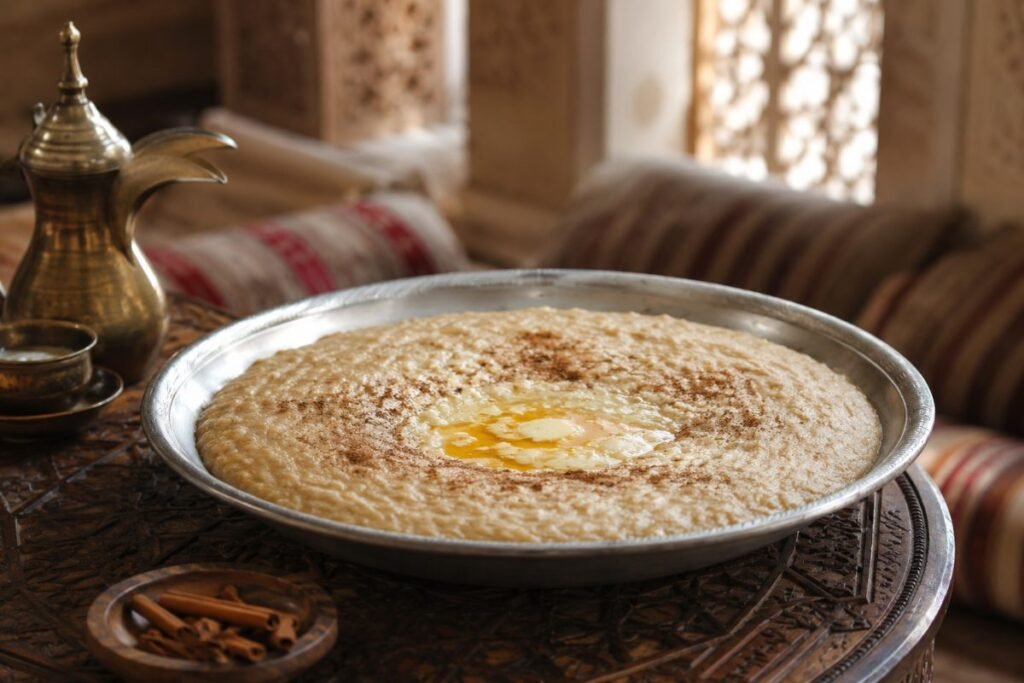
- Keep beating until no whole grains and no strands of meat remain and the harees pulls away from the pot in one glossy, elastic mass, like a very thick porridge that holds a ridge for a second.
- Check the seasoning, then spread the harees in a shallow dish and smooth the top with the back of a wet spoon.
- Pour the melted ghee generously over the surface until it pools, dust with cinnamon and serve hot, straight from the dish, at iftar.
Technique
- The beating, not the boiling, makes harees. If you can still see individual grains you have stopped too early, and the texture will read as porridge rather than the smooth, stretchy paste Emiratis expect.
- Traditional Ramadan harees is left overnight on embers or in a low tannour, which is why home cooks now use a pressure cooker for 45 minutes before beating.
- Season lightly: harees is deliberately plain, and the ghee, cinnamon and a little sugar carry all the flavour.
Substitutions
- No jireesh? Use pearled or cracked wheat, reducing the simmer to 2 hours; the texture will be slightly less silky.
- Chicken on the bone can replace lamb for a lighter, paler harees, common in Al Ain households.
Variations
- Jireesh, the coarser Emirati cousin, left deliberately grainy and often cooked with tomato and onion.
- Hareesa of the Levant and Armenia, the same wheat-and-meat porridge under a different name.
- A sweet finish, with sugar or date syrup stirred through and extra ghee, served at Eid breakfast.
History
Wheat and meat pounded together and cooked overnight for Ramadan, then shared between houses.
Frequently asked questions
What is Harees?
Harees is a main from Bahrain: velvety wheat-meat porridge topped with ghee. Wheat and meat pounded together and cooked overnight for Ramadan, then shared between houses.
How long does Harees take to make?
Harees takes 20 min of preparation and 4 hr of cooking. The recipe makes 6 servings. It is rated medium to make.
What can I substitute in Harees?
Yes, within limits. No jireesh? Use pearled or cracked wheat, reducing the simmer to 2 hours; the texture will be slightly less silky. Chicken on the bone can replace lamb for a lighter, paler harees, common in Al Ain households.
What is the most important thing to get right in Harees?
Lift out the meat, pull it off the bones and shred it finely with your fingers, discarding gristle, bone and the whole spices.