
Ingredients
The beef
- 700 gbeef
- sirloin, rump or tender braising cut
- cut into 2 cm cubes
- with some fat left on
The fat
- 4 tablespoonsniter kibbeh
- the spiced clarified butter
- or 3 tablespoons butter
- and 1 tablespoon oil
The aromatics
- 2onions, sliced
- 4 clovesgarlic, crushed
- a thumb of ginger, grated
- optional
- 2tomatoes, chopped
- or cut into wedges
- 4green chillies
- slit lengthways
- or to taste
The seasoning
- 1 teaspoonberbere
- optional, see the note
- half a teaspoon ground cardamom
- salt and black pepper
- a squeeze of lemon
To serve
- injera, the sour flatbread
- or bread
- ayib, fresh curd cheese
- hamli, the cooked greens
- a hot sauce
Directions
- Use a tender cut that suits quick cooking. A tender braising cut works if cut small. Cut it into cubes of about two centimetres. Keep them even so they cook at the same rate.
- Leave some fat on, which carries flavour. Pat the cubes completely dry with kitchen paper. Use the widest heavy pan you have. Cook the beef in two batches if the pan is small. Heat the pan until it is genuinely hot. Add half the niter kibbeh.
- Add the beef in a single layer. Do not move it for two minutes. Let it sit, then turn it. Sear it for about five minutes in total. It should be browned outside.
- Lift the beef out and set it aside. Add the rest of the niter kibbeh. Add the sliced onions.
- Cook them for about six minutes. They should soften and colour at the edges. Cook them for a minute. Add the berbere if you are using it. Add the cardamom.
- Add them and cook two or three minutes. They should soften but hold their shape. Return the beef and any juices to the pan. Toss everything together over high heat. Give it one or two minutes.
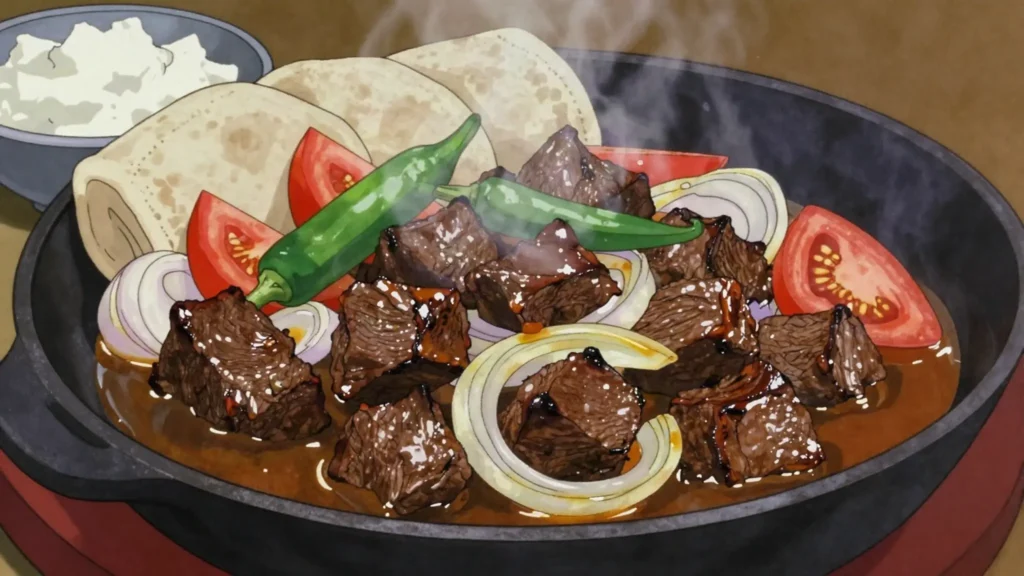
- Season with salt and pepper. Squeeze over lemon. There should be very little liquid. Serve it immediately, while hot. Bring the pan to the table if you can. Serve it on injera. Eating is done with the right hand.
Technique
- Pat the beef completely dry before it goes in the pan. Wet meat steams instead of searing, and browning is where most of the flavour comes from.
- Do not move the beef for the first two minutes. That contact is what browns it; constant stirring gives grey meat.
- Use the widest heavy pan you have and cook in two batches if needed. A crowded pan traps the liquid the meat releases and boils it, which is the commonest failure with any seared dish.
- Use a tender cut — sirloin, rump or fillet. Tough cuts do not become tender in twenty minutes and stay chewy; shin and brisket need hours.
- Clarified butter has a higher smoke point than butter, whose milk solids burn at high heat. That is a real practical reason to use niter kibbeh here beyond its flavour.
- Keep the onions firm and separate, cooked six minutes rather than collapsed. This is not the slow dry-cooked onion of the stews, and that bite is part of the dish.
- Do not cook the tomatoes into a sauce. Two or three minutes so they soften while holding their shape — kulwa is a fried dish, not a stew, and there should be very little liquid at the end.
- Whole-muscle beef cubes can be served slightly pink, since bacteria sit on the surface which has been seared — unlike mince. Cook them through if you prefer, or for anyone vulnerable.
- Berbere is used in some versions and not others; without it the dish is milder and cleaner, relying on green chilli. Both are made.
- Niter kibbeh carries much of the flavour of this cooking and keeps for months unrefrigerated because it is clarified. Buy it from an Eritrean or Ethiopian grocer; ghee with a little cardamom is the nearest substitute and is not the same.
- This is fried food among a platter of long-simmered stews, and that contrast is why it earns its place. It is a celebration dish, using good meat cooked fast, and cannot be eaten on an Orthodox fasting day — which is part of its festive character.
- Kulwa is the Tigrinya name; in Amharic the same dish is tibs. Eritrea and Ethiopia share a great deal of food alongside a difficult political history, and the atlas records both without adjudicating national claims to a dish.
Substitutions
- Lamb or goat replaces beef and is equally traditional.
- Ghee with a pinch of cardamom replaces niter kibbeh if you cannot buy it.
- Butter with a little oil replaces clarified butter, at the cost of the smoke point.
- Berbere can be added for heat or left out entirely.
- Rosemary is used in some Ethiopian versions and gives a quite different aroma.
- Bread replaces injera where teff flatbread is unavailable.
Variations
- Tibs is the Amharic name for the same dish.
- Derek tibs is the drier version, fried harder with less tomato.
- Zilzil tibs uses long strips of beef rather than cubes.
- Zigni is the hot berbere beef stew, the slow-cooked counterpart.
- Hamli and ayib be gomen are the greens dishes served alongside.
- A version finished with rosemary is common in parts of Ethiopia.
Frequently asked questions
What is Kulwa?
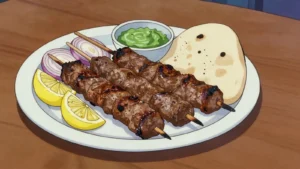
Kulwa is a main from Eritrea: beef cubes seared with butter, onion, tomato and green chili, served sizzling.
How long does Kulwa take to make?
Kulwa takes 15 minutes of preparation and 20 minutes of cooking. The recipe makes serves 4. It is rated easy to make.
What can I substitute in Kulwa?
Yes, within limits. Lamb or goat replaces beef and is equally traditional. Ghee with a pinch of cardamom replaces niter kibbeh if you cannot buy it. Butter with a little oil replaces clarified butter, at the cost of the smoke point. Berbere can be added for heat or left out entirely. Rosemary is used in some Ethiopian versions and gives a quite different aroma. Bread replaces injera where teff flatbread is unavailable.
What is the most important thing to get right in Kulwa?
Add the beef in a single layer. Do not move it for two minutes. Let it sit, then turn it. Sear it for about five minutes in total. It should be browned outside.