
Ingredients
Ragout
- 500 gbraised beef shin, finely shredded
- 80 gbutter
- 100 gplain flour
- 600 mlstrong beef stock
- 2 sheetsgelatine, softened
- 1 tbspmustard
- 2 tbspchopped parsley
- nutmeg
- salt
- white pepper
Coating
- 100 gplain flour
- 3eggs, beaten
- 250 gdried breadcrumbs
To fry
- oil, for deep frying
To serve
- a soft white bun
- mustard
Directions
- Braise the beef shin until it falls apart, then shred it very finely and keep the cooking stock.
- Make a thick roux with the butter and flour, cooking it 2 minutes.
- Whisk the hot stock in a ladleful at a time until you have a very thick, smooth sauce.
- Make it far thicker than any sauce you would eat. This has to set solid enough to shape and roll, and a pourable ragout is a guaranteed burst kroket.
- Stir in the softened gelatine, the shredded meat, mustard, parsley, nutmeg, salt and white pepper.
- The gelatine is what gives the classic kroket its molten interior: solid enough to shape when cold, liquid again when fried.
- Spread the mixture in a shallow tray, press film onto the surface, and refrigerate overnight until completely firm.
- It must be genuinely cold and firm. Anything less and it will not hold a shape.
- Cut the set ragout into portions and roll each into a cylinder with wet hands.
- Roll them tight and smooth, checking for cracks and sealing any you find.
- Coat each in flour, then egg, then breadcrumbs.
- Now do the egg and breadcrumbs a second time.
- Double-coat without exception. The filling turns to liquid in the fryer and a single crumb layer splits, which is how you lose the lot into the oil.
- Chill the coated kroketten for another hour so the crust sets hard.
- Heat the oil to 180°C (355°F) and fry them two or three at a time for 4 to 5 minutes until deep golden.
- Do not crowd the pan and do not move them too soon. Turned before the crust has set they split at the seam.
- Drain briefly and eat immediately.
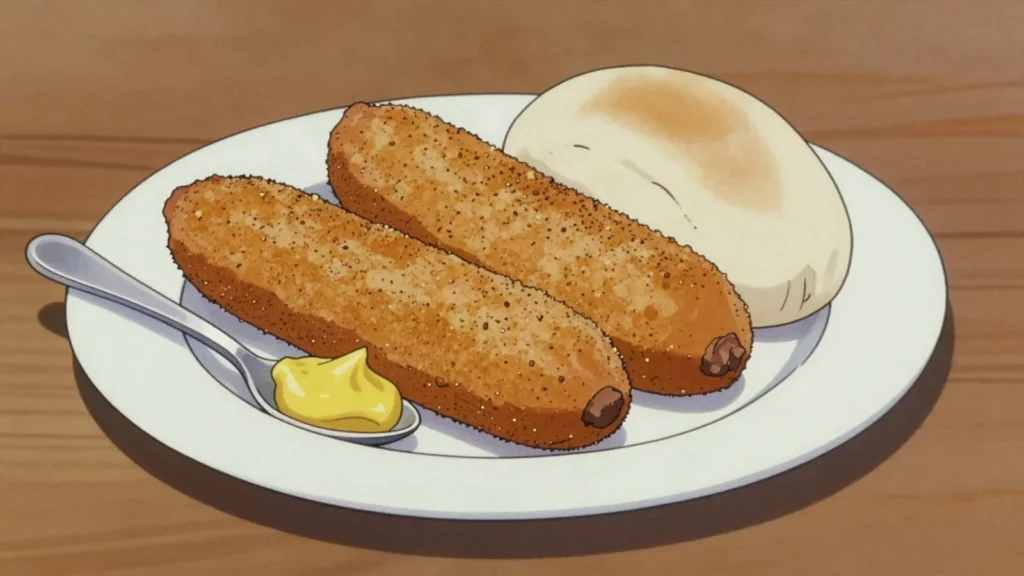
- The classic way is the broodje kroket: split a soft white bun, squash the hot kroket into it with the flat of your hand, and add mustard.
- Soft bread against a crisp hot kroket is the whole idea, and using a crusty roll is considered wrong.
- Warn whoever eats it that the inside is molten, because burnt mouths from a kroket are a genuine Dutch rite of passage.
Technique
- The vending-machine wall in a Dutch snackbar is a legitimate way to buy one.
- The bitterbal is the same ragout made as a small sphere and served with drinks.
- The frikandel and kroket are the two pillars of Dutch snack food.
Substitutions
- Shredded veal, chicken or a mix of beef and veal.
- Panko in place of fine breadcrumbs, giving a coarser crust.
Variations
- Bitterballen, the small round version.
- Garnalenkroket, made with brown shrimp.
- Groentekroket, the vegetable version.
History
From the French croquette; the Dutch version spread through the coin-operated automat walls of FEBO, opened in Amsterdam in 1960.
Frequently asked questions
What is Kroket?
Kroket is a snack from Netherlands: fried ragout roll, famously eaten in a soft bun. From the French croquette; the Dutch version spread through the coin-operated automat walls of FEBO, opened in Amsterdam in 1960.
How long does Kroket take to make?
Kroket takes 45 min plus overnight chilling of preparation and 40 min of cooking. The recipe makes about 12. It is rated hard to make.
What can I substitute in Kroket?
Yes, within limits. Shredded veal, chicken or a mix of beef and veal. Panko in place of fine breadcrumbs, giving a coarser crust.
What is the most important thing to get right in Kroket?
It must be genuinely cold and firm. Anything less and it will not hold a shape.