
Ingredients
Kibbeh shell
- 300 gfine bulgur
- 300 glean minced lamb
- 1onion, grated and drained
- 1 teaspoonground allspice
- 1/2 teaspoonground cinnamon
- 2 teaspoonssalt
- black pepper
- iced water, for shaping
Filling
- 250 gminced lamb
- with some fat
- 2onions, finely chopped
- 50 gpine nuts
- 1 teaspoonallspice
- 2 tablespoonsoil or ghee
- salt and black pepper
Yoghurt sauce
- 1.5 kgfull fat yoghurt
- 1egg white
- or 2 tablespoons cornflour
- 500 mlwater
- 2 teaspoonssalt
To finish
- 6garlic cloves, crushed
- 2 tablespoonsdried mint
- 3 tablespoonsghee or butter
- fresh coriander, optional
To serve
- plain rice
- or vermicelli rice
- flatbread
Directions
- Heat makes them contract and squeeze together. That stops them bonding directly to each other. Take it to a full boil once and it is safe. It is worked until it is smooth and cohesive.
- Rinse the fine bulgur in cold water. Drain it and then let it stand. Give it about twenty minutes to soften. Squeeze out any excess afterwards. Fine bulgur is what kibbeh needs. Put the softened bulgur in a large bowl. Add the lean minced lamb to it. Add the drained grated onion to it.
- Add the allspice, cinnamon and salt. Add plenty of black pepper as well. Knead it hard with wet cold hands. Work it for a good ten minutes. Dip your hands in iced water as you go. Cold water keeps the paste from sticking. Keep a bowl of it beside you throughout. Judging the paste takes a feel. Cover the paste over and chill it. Give it about thirty minutes to firm.
- Heat the oil in a wide heavy pan. Add the pine nuts to it first. Fry them until they are golden. Lift them out and set them aside. Take them out while still pale gold. Add the chopped onions to the pan. Cook them for a good eight minutes. Add the fattier minced lamb to it. Fry it until it is well browned.
- Add the allspice, salt and pepper. Stir the fried pine nuts back in. Let it cool completely before filling. Warm filling softens the kibbeh shell. Cold filling is far easier to work with.
- Take a piece of paste the size of an egg. Roll it into a smooth even ball. Turn the ball around your finger slowly. Press the walls out as it turns. Keep the walls even all the way round. Filling them takes a light touch.
- Spoon cold filling into the hollow. Fill it about two thirds full. Do not overfill it at any point. Pinch the open end firmly closed. Smooth it into a point with wet fingers. Check each one before cooking. Put the yoghurt in a large heavy pot. Whisk it until it is completely smooth.
- Beat the egg white in a separate bowl. Whisk it into the yoghurt thoroughly. Add the water and the salt to it. Set the pot over a medium heat. Stir it constantly with a wooden spoon.
- Keep the spoon moving the whole time. Do not stop stirring for any reason. Stir throughout that entire time. Judging the boil takes attention. Let it boil for a full minute. Add them one at a time carefully. Do not crowd the pot at any point. Let them simmer very gently indeed. Give them about twenty minutes.
- Melt the ghee in a small frying pan. Add the crushed garlic to the ghee. Cook it for under a single minute. Do not let the garlic brown at all. Add the dried mint off the heat. Stir the garlic and mint into the sauce. Let it simmer for five more minutes.
- Taste it and adjust the salt as needed. Yoghurt sauces need generous salt. Taste it properly before serving. Serving it is done hot in deep bowls. Ladle the sauce and kibbeh into bowls. Serve plain rice alongside it. Put flatbread out on the table too. Scatter fresh coriander if you like. It keeps three days refrigerated.
Technique
- Cooked yoghurt splits because heat makes its proteins contract and squeeze the water out; starch or egg white beaten in gets between them and stops them bonding directly, and constant stirring until it reaches a full boil is what carries it through. Once it has boiled it is stable and can be left; stopping short leaves it liable to split on reheating.
- The shell uses very lean meat, since fat in it makes the kibbeh fall apart, while the filling uses fattier meat to stay moist; fine bulgur is essential because coarse bulgur will not bind and the shells break up in the pot.
- Dried mint rather than fresh is a defining element here, with a deeper and quite different flavour; fresh mint is not a substitute for it.
Substitutions
- Cornflour and egg white both stabilise the yoghurt equally well.
- Beef stands in for lamb in both the shell and the filling.
Variations
- Some households add fresh coriander to the finished pot and others do not.
- The same yoghurt sauce carries meatballs or stuffed courgettes elsewhere.
- Vermicelli rice is the usual accompaniment, though plain rice is served too.
History
The yoghurt is stabilised with starch or egg so it does not split; a classic Damascus home dish.
Frequently asked questions
What is Kibbeh labaniyeh?
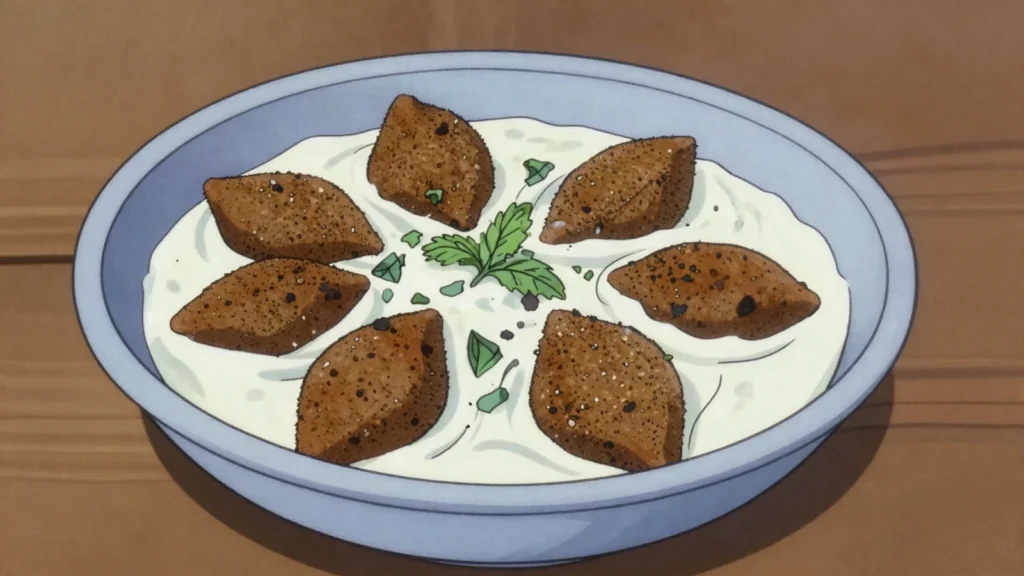
Kibbeh labaniyeh is a soup & stew from Syria: bulgur and meat torpedoes simmered in hot yoghurt sauce with dried mint. The yoghurt is stabilised with starch or egg so it does not split; a classic Damascus home dish.
How long does Kibbeh labaniyeh take to make?
Kibbeh labaniyeh takes 1 hour 30 minutes of preparation and 45 minutes of cooking. The recipe makes serves 6. It is rated hard to make.
What can I substitute in Kibbeh labaniyeh?
Yes, within limits. Cornflour and egg white both stabilise the yoghurt equally well. Beef stands in for lamb in both the shell and the filling.
What is the most important thing to get right in Kibbeh labaniyeh?
Spoon cold filling into the hollow. Fill it about two thirds full. Do not overfill it at any point. Pinch the open end firmly closed. Smooth it into a point with wet fingers. Check each one before cooking. Put the yoghurt in a large heavy pot. Whisk it until it is completely smooth.