
Ingredients
Meat and vegetables
- 2.5 kgmutton or lamb on the bone, cut through the bone into large pieces with a cleaver
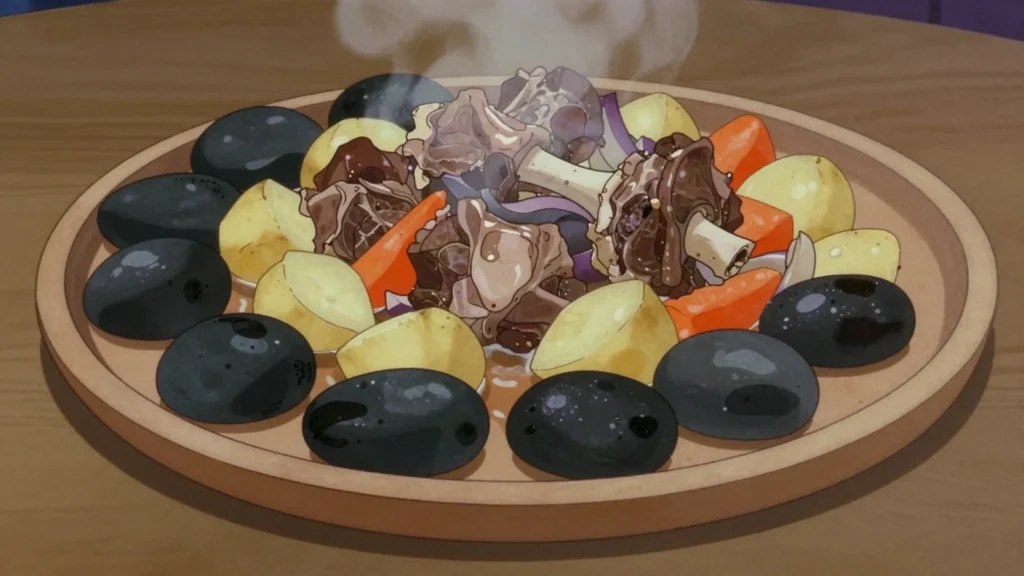
- 8–10river stones the size of a fist, smooth, dense and completely dry
- 6potatoes (800 g), peeled and halved
- 4carrots (350 g), cut into thick lengths
- 2onions, quartered
- 1whole head of garlic, halved across (optional)
- 1 tbspsalt
- 1 tspblack pepper
- 300 mlwater
- 1 handfulwild thyme or chives, if you have them
Vessel
- 1metal milk churn with a clamped lid, or a heavy stockpot with a tight-fitting lid and a weight
Directions
- Heat them for at least 45 minutes until they are glowing dull red and too hot to approach.
- Use only dense, dry river stones; porous or damp stones trap water, and a stone that explodes in a sealed can is a serious hazard.
- Pour the water into the bottom of the churn. Now build the layers with long tongs, alternating as you go: a hot stone, then meat, then a stone, then meat and vegetables, until everything is in.
- Finish with the onions, garlic and herbs on top, then clamp or weight the lid down firmly.
- Set the churn over a low fire or on hot embers, or in the countryside simply leave it standing beside the fire, and cook for 1 hour to 1 hour 30 minutes. Do not seal the vessel completely airtight.
- Roll the churn gently on its side once or twice during cooking, using cloths, so the juices redistribute and nothing catches on the base. Open it when the meat pulls easily from the bone and the potatoes are soft; the smell that comes out of the can is the point of the whole exercise.
- Serve the meat and vegetables straight from the can onto a shared platter, with the smoky broth from the bottom poured over, and eat with the hands and a knife.
Technique
- Khorkhog is the herder’s celebration meal, cooked outdoors for guests and family, usually with an animal slaughtered that day, and it uses the milk churn precisely because every camp has one.
- The seasoning is salt, pepper and the meat itself. Elaborate marinades and spice mixes are not part of the dish, and Mongolians would consider them a distraction from the mutton.
- Stone safety matters. Choose dense, smooth, thoroughly dry stones, never sandstone, shale or anything porous or picked out of water that day, and never seal the vessel so tightly that steam cannot escape.
- Boodog is the related method in which the animal, usually a goat or a marmot, is cooked from the inside with hot stones placed within the carcass and the skin sealed shut.
Substitutions
- No fire or stones: layer the meat and vegetables in a heavy casserole with the same small amount of water, seal with foil and a lid, and cook at 160°C (325°F) for 2 hours 30 minutes. You lose the seared stone contact and the smoke, but the texture is close.
- No milk churn: any heavy pot with a well-fitting but not clamped lid works, weighted with a stone.
- Beef short rib can replace mutton, though it needs an extra 30 minutes and lacks the characteristic fat.
Variations
- Some cooks add a splash of vodka or a few juniper berries to the churn, a modern touch found in tourist camps.
- In the Gobi, camel is sometimes cooked the same way.
- Restaurant khorkhog in Ulaanbaatar is served in a small individual can, cooked in the kitchen and brought to the table sealed.
History
A method of cooking meat, typically mutton or goat, by sealing it in a large metal container along with heated stones and a small amount of water, then shaking or rotating the sealed vessel so the hot stones cook the meat from the inside as well as from ambient heat, a technique closely tied to Mongolia’s nomadic herding tradition and its practical need to cook substantial amounts of meat without a fixed kitchen or oven. The heated stones themselves, traditionally handled and eaten from directly afterward, passed hand to hand while still warm, are considered to carry good luck or health benefits in Mongolian folk tradition, and the communal, often outdoor preparation of khorkhog remains closely associated with celebration, guest hospitality and significant family or community gatherings rather than routine daily cooking.
Frequently asked questions
What is Khorkhog?
Khorkhog is a main from Mongolia: mutton slow-cooked in a sealed pot with fire-heated stones and vegetables. A method of cooking meat, typically mutton or goat, by sealing it in a large metal container along with heated stones and a small amount of water, then shaking or rotating the sealed vessel so the hot stones cook the meat from the inside as well as from ambient heat, a technique closely tied to Mongolia’s nomadic herding tradition and its practical need to cook substantial amounts of meat without a fixed kitchen or oven. The heated stones themselves, traditionally handled and eaten from directly afterward, passed hand to hand while still warm, are considered to carry good luck or health benefits in Mongolian folk tradition, and the communal, often outdoor preparation of khorkhog remains closely associated with celebration, guest hospitality and significant family or community gatherings rather than routine daily cooking.
How long does Khorkhog take to make?
Khorkhog takes 30 min of preparation and 1 hr 30 min of cooking. The recipe makes 6–8 servings. It is rated medium to make.
What can I substitute in Khorkhog?
Yes, within limits. No fire or stones: layer the meat and vegetables in a heavy casserole with the same small amount of water, seal with foil and a lid, and cook at 160°C (325°F) for 2 hours 30 minutes. You lose the seared stone contact and the smoke, but the texture is close. No milk churn: any heavy pot with a well-fitting but not clamped lid works, weighted with a stone. Beef short rib can replace mutton, though it needs an extra 30 minutes and lacks the characteristic fat.
What is the most important thing to get right in Khorkhog?
Set the churn over a low fire or on hot embers, or in the countryside simply leave it standing beside the fire, and cook for 1 hour to 1 hour 30 minutes. Do not seal the vessel completely airtight.