
Ingredients
The rice
- 300 grice
- cooked and cooled
- ideally cooked the day before
- about 700 g cooked weight
- any plain long or medium grain
The meat
- 500 gmutton or lamb
- shoulder or leg, cut into strips
- with its fat left on
- or beef, cut the same way
The vegetables
- 1large onion, sliced
- 2carrots, cut into batons
- quarter of a white cabbage
- shredded
- 1potato, diced, optional
- 2 clovesgarlic, sliced
- optional
The seasoning
- 2 tablespoonsoil
- or mutton fat, rendered
- 1 teaspoonsalt
- or to taste
- 1 teaspoonblack pepper
- 2 tablespoonssoy sauce
- optional, modern
- a splash of water or stock
To serve
- hot, on its own
- a bowl of suutei tsai
- the salted milk tea
- pickles, optional
Directions
- Use cooked rice that is cold and dry. Freshly cooked rice is soft and full of moisture. Break it up with wet hands before cooking. That is worth five minutes of work. Cut it into thin strips rather than cubes. Cut across the grain where you can see it. Keep some pieces of fat among the meat.
- Cut them into pieces of roughly similar size. Carrot batons about the thickness of a pencil. Use what you have, which is the spirit of it. Use the widest heavy pan you have. Cook in two batches if the pan is small. Heat the pan until it is genuinely hot. Add a little oil, or a piece of the mutton fat. Add the meat in a single layer.
- Let it sit for a minute before stirring. Now stir-fry it for about five minutes. Season it with salt and pepper. Add the onion and cook two minutes.
- Add the carrot and potato and cook five minutes. Those are the hardest and need longest. Add the garlic if you are using it. Add the cabbage last. Cabbage needs only three or four minutes.
- Add a little water or stock if the pan is dry. Cover it briefly to steam the vegetables through. The pan must be dry before the rice goes in. Add the broken-up cold rice. Toss and press the rice against the pan. Use a spatula to fold rather than to stir. Press it flat, let it sit, then fold it over.
- Keep doing that for five or six minutes. The rice should heat right through. Season with salt and plenty of black pepper. Use it or leave it out as you prefer.
- Taste it and correct the salt. Mutton takes more salt than people expect. Grind over more pepper generously. Serve it hot, straight from the pan. Serve suutei tsai alongside if you can. It keeps three days refrigerated. Cool it quickly, within an hour. Reheat it thoroughly in a hot pan.
Technique
- Use rice cooked the day before, cold from the refrigerator. Fresh rice is soft and wet and turns to mush in the pan; cold rice has firmed and dried on the surface so the grains separate and fry. That is the difference between fried rice and porridge, and it holds in every fried rice tradition.
- Cool cooked rice within an hour and refrigerate it, use it within a day, and never use rice that has stood out overnight. Bacillus cereus spores survive cooking, germinate at room temperature and produce a toxin that reheating does not destroy.
- Break the cold rice up with wet hands before it goes in the pan. Lumps that go in as lumps come out as lumps.
- Do not trim the fat off the mutton. It renders and cooks everything else, and it carries the flavour through the rice — in a cold climate fat is fuel, and this is a practical fact rather than a stylistic one. Rendering a piece of fat instead of adding oil gives more flavour still.
- Let the meat sit for a minute before stirring. That contact browns it; stirring from the start gives grey meat.
- Get the pan dry before the rice goes in. Any liquid left from steaming the vegetables makes wet rice.
- Fold and press the rice against the pan rather than stirring it. Press flat, let it sit, fold over — that contact heats and dries the grains, and some catching and crisping is good.
- Use the widest pan you have and cook in two batches if it is small. Surface area matters more than anything; a crowded pan steams.
- Keep the vegetables with some bite. The contrast against soft rice is the texture of the dish.
- Mutton is stronger than lamb and harder to buy in many countries; lamb shoulder is the practical substitute and beef works with a different flavour.
- Soy sauce is common in modern Mongolian home cooking, arriving through contact with China and Russia, but it is not part of the older tradition. The atlas records both rather than pretending either way.
- Tsuivan is the same dish made with hand-cut noodles steamed over the meat instead of rice — the meat, onion, carrot and cabbage are identical.
Substitutions
- Lamb shoulder replaces mutton and is far easier to buy outside Mongolia.
- Beef replaces mutton with a milder flavour.
- Any plain long or medium grain rice serves; it only needs to be cold.
- Potato, turnip or pepper join or replace the listed vegetables; the dish is deliberately flexible.
- Soy sauce is optional and modern; salt and pepper alone is the older seasoning.
- Rendered mutton fat replaces oil and gives considerably more flavour.
Variations
- Tsuivan, the same stir-fry with hand-cut steamed noodles, is Mongolia’s best known everyday dish.
- Guriltai shul is the soup version with noodles in broth.
- Buuz, steamed mutton dumplings, are the festive dish eaten at Tsagaan Sar.
- Khuushuur are the fried flat meat pastries eaten at Naadam.
- Boodog and khorkhog cook meat with hot stones and are the outdoor dishes.
- A version with potato replacing much of the rice is made in some households.
Frequently asked questions
What is Budaatai Khuurga?
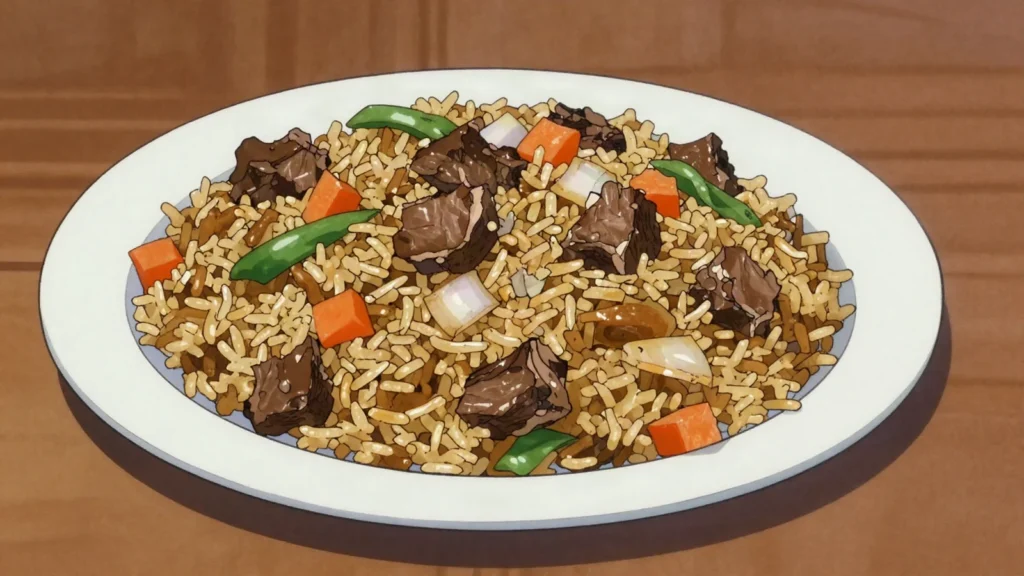
Budaatai Khuurga is a main from Mongolia: homestyle fried rice with mutton and vegetables.
How long does Budaatai Khuurga take to make?
Budaatai Khuurga takes 20 minutes of preparation and 30 minutes of cooking. The recipe makes serves 4. It is rated easy to make.
What can I substitute in Budaatai Khuurga?
Yes, within limits. Lamb shoulder replaces mutton and is far easier to buy outside Mongolia. Beef replaces mutton with a milder flavour. Any plain long or medium grain rice serves; it only needs to be cold. Potato, turnip or pepper join or replace the listed vegetables; the dish is deliberately flexible. Soy sauce is optional and modern; salt and pepper alone is the older seasoning. Rendered mutton fat replaces oil and gives considerably more flavour.
What is the most important thing to get right in Budaatai Khuurga?
Use cooked rice that is cold and dry. Freshly cooked rice is soft and full of moisture. Break it up with wet hands before cooking. That is worth five minutes of work. Cut it into thin strips rather than cubes. Cut across the grain where you can see it. Keep some pieces of fat among the meat.