
Ingredients
Dough
- 400 gplain flour
- 1 tspsalt
- 250 mlwarm water
Layering
- 100 gbutter, softened, or rendered mutton fat
- 4 tbspcaster sugar
- 2 tbspplain flour
To serve
- extra sugar, to dust
- salted milk tea
Directions
- Put the flour and salt in a bowl and make a well in the centre. Pour in the warm water gradually, mixing with a fork as you go. Bring it together into a firm dough that is not sticky.
- Knead it on a lightly floured surface for eight minutes until smooth. It should be firmer than a bread dough and should hold its shape. Cover it with a cloth and let it rest for thirty minutes. The rest is what makes the dough roll out thin without springing back.
- Beat the softened butter with the sugar and the two tablespoons of flour. The flour keeps the fat from simply running out when the pancake heats.
- Butter is what most households use now and is easier to find. Divide the rested dough into six pieces and roll each into a ball. Keep the ones you are not working on under the cloth. Roll one ball out as thin as you can manage, into a rough circle. It should be thin enough to see the board through in places.
- Spread a thin even layer of the butter paste over the whole surface. Leave a bare centimetre clear around the edge so it can seal. Roll the circle up tightly from one edge into a long rope.
- Pinch the ends closed so the paste cannot escape during cooking. Press the coil down gently with your palm to flatten it. Roll it out again into a disc about eighteen centimetres across. Roll gently here, since pressing hard squeezes the layers together.
- Repeat with the remaining pieces and keep the discs separated by paper. Now cooking, which is done in a dry pan over a moderate heat. Heat a heavy frying pan over a medium heat with no oil in it. The pan must not be too hot, or the outside colours before the layers cook.
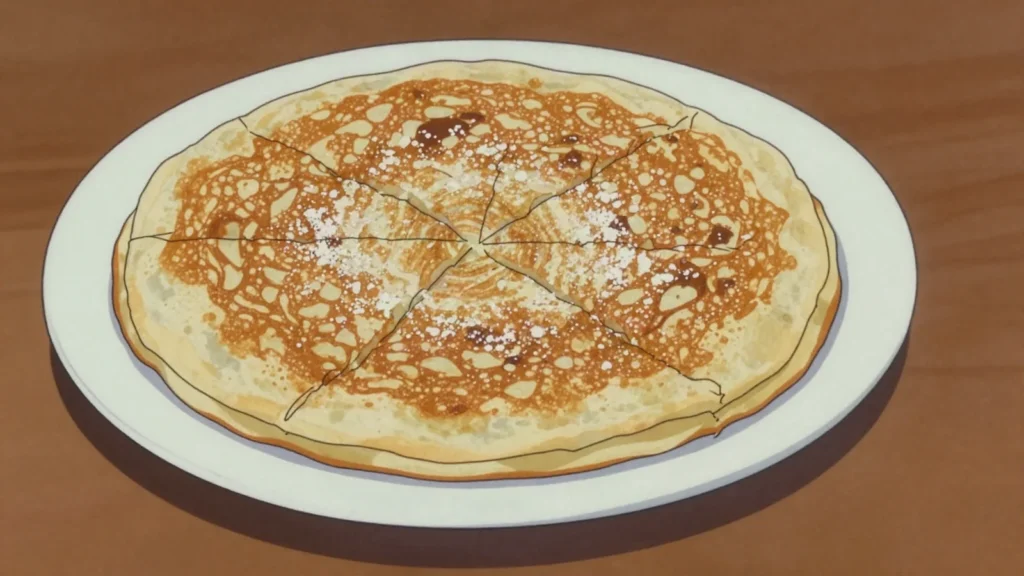
- Lay one disc in the dry pan and cook it for about three minutes. Turn it and cook the other side for another three minutes. Both sides should be patchy gold rather than evenly brown. Press it lightly with a spatula if it puffs unevenly. Lift it onto a board and let it sit for a moment. Now serving, which is done in wedges rather than whole.
- Dust the hot pancake with extra sugar while it is still warm. Cut it into six or eight wedges with a knife or a scraper. The cut edge should show visible layers, which is the sign it worked. Serve it warm, with salted milk tea, which is the usual accompaniment. It is at its best fresh but will keep for a day wrapped in a cloth.
Technique
- Roll the dough very thin before spreading the fat, since that is what makes the layers.
- Cook in a dry pan over a moderate heat, not a hot one.
- Roll the coiled disc gently, since heavy pressure crushes the layers together.
Substitutions
- Butter in place of rendered mutton fat, which is what most households now use.
- A heavy frying pan in place of a Mongolian dry pan.
Variations
- Savoury, with mutton fat and salt and no sugar.
- With ground nuts worked into the butter paste.
- Made larger and cut into many small wedges for a crowd.
History
A pastry of Buddhist monastery kitchens that spread to households, cooked in a dry pan and layered with butter or mutton fat.
Frequently asked questions
What is Gambir?
Gambir is a bread & pastry from Mongolia: layered pan-fried pancake brushed with fat and sugar, folded into wedges. A pastry of Buddhist monastery kitchens that spread to households, cooked in a dry pan and layered with butter or mutton fat.
How long does Gambir take to make?
Gambir takes 30 min plus 30 min resting of preparation and 30 min of cooking. The recipe makes 6 pancakes. It is rated medium to make.
What can I substitute in Gambir?
Yes, within limits. Butter in place of rendered mutton fat, which is what most households now use. A heavy frying pan in place of a Mongolian dry pan.
What is the most important thing to get right in Gambir?
Spread a thin even layer of the butter paste over the whole surface. Leave a bare centimetre clear around the edge so it can seal. Roll the circle up tightly from one edge into a long rope.