
Ingredients
Base
- 400 mldark soy sauce
- 300 gpalm sugar
- gula jawa or gula merah
- or 300 g dark brown sugar
- 150 mlwater
Aromatics
- 4garlic cloves, bruised
- 3cm galangal, sliced
- 2star anise
- 3salam leaves
- or 3 bay leaves
- 1 stalklemongrass, bruised
- 1cinnamon stick
Used in
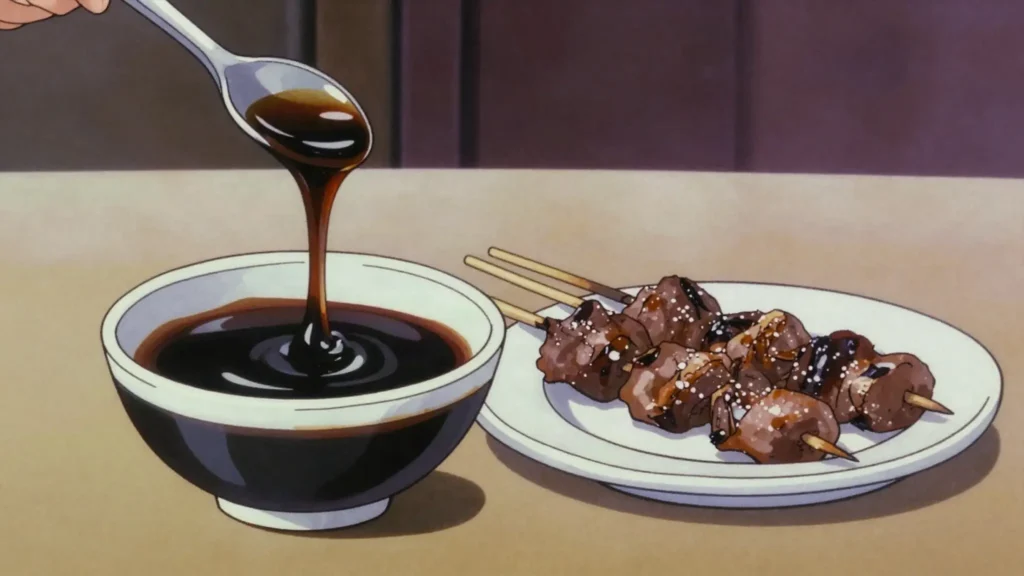
- satay, brushed and dipped
- nasi goreng
- mie goreng
- as a table condiment
Directions
- Chop the palm sugar discs into small pieces. Put the chopped sugar in a heavy pan. Add the measured water to the pan. Warm it gently over a low heat. Stir it until every piece has dissolved. Do not let it boil at this stage.
- Pour in all of the dark soy sauce. Stir it into the dissolved sugar. Bring it up to a bare simmer only. Slice the galangal into thin rounds.
- Add them with the star anise and salam leaves. Add the cinnamon stick to the pan. Let it simmer very gently indeed.
- Keep the heat as low as it will go. Give it about thirty to forty minutes. Stir it every few minutes throughout. It should reduce by roughly a third. Dip a cold spoon into the syrup.
- Lift it out and let it cool a moment. It should coat the back of the spoon. Pour it through a fine mesh sieve. Discard all the whole aromatics. Let it cool completely before bottling. Pour it into a clean dry bottle. A sterilised bottle keeps it longer.
- Seal it and store it in a cool place. Understanding how it keeps is worth a note. Brush it onto satay as it grills.
- Brush it on only near the end of grilling. The sugar burns quickly over hot coals. Stir it into nasi goreng at the end. Serve it in a small dish at the table. It keeps for months sealed and cool.
Technique
- The word kecap relates to a Hokkien word for a fermented fish brine, and the English word ketchup traces to that same root; English ketchup did not come from Indonesian kecap directly, both descend from the same Chinese source, and tomato ketchup came much later and separately.
- The palm sugar is close to the weight of the soy itself, which is what makes this a syrup rather than a sauce, sweet first and salty second, where ordinary soy sauce is the other way round.
- The syrup thickens considerably as it cools, so stop reducing while it still seems a little thin; over-reduced syrup sets hard and unusable, and sugar this concentrated burns from caramel to acrid in moments, so keep the heat low throughout.
Substitutions
- Dark brown sugar stands in for gula jawa, though it lacks the smoky note.
- Bay leaves work in place of salam leaves, which are a different plant.
Variations
- Commercial makers differ in their aromatics, with galangal and star anise common.
- Kecap asin is the salty unsweetened version of the same sauce.
- It is brushed on satay, stirred into fried rice and used at the table.
History
Chinese soy sauce adapted in Java with large amounts of palm sugar; the word kecap is also the origin of the English word ketchup.
Frequently asked questions
What is Kecap Manis?
Kecap Manis is a sauce & condiment from Indonesia: thick sweet soy syrup heavy with palm sugar, brushed on satay and stirred into rice. Chinese soy sauce adapted in Java with large amounts of palm sugar; the word kecap is also the origin of the English word ketchup.
How long does Kecap Manis take to make?
Kecap Manis takes 10 minutes of preparation and 40 minutes of cooking. The recipe makes about 500 ml. It is rated medium to make.
What can I substitute in Kecap Manis?
Yes, within limits. Dark brown sugar stands in for gula jawa, though it lacks the smoky note. Bay leaves work in place of salam leaves, which are a different plant.
What is the most important thing to get right in Kecap Manis?
Chop the palm sugar discs into small pieces. Put the chopped sugar in a heavy pan. Add the measured water to the pan. Warm it gently over a low heat. Stir it until every piece has dissolved. Do not let it boil at this stage.