
Ingredients
The fish
- 400 gcooked tuna
- smoked Maldivian tuna, ideally
- or 2 tins tuna, well drained
- flaked finely
The starch
- 300 gcooked rice
- cooled, day-old is best
- or 200 g cooked rice
- and 200 g boiled mashed potato
The coconut and aromatics
- 100 gfresh grated coconut
- or 70 g unsweetened desiccated coconut
- soaked and squeezed
- 1onion, very finely chopped
- 2hot chillies, finely chopped
- or to taste
- a few curry leaves, shredded
- 4 clovesgarlic, crushed
- a thumb of ginger, grated
- juice of half a lime
The spices
- 1 teaspoonground cumin
- half a teaspoon turmeric
- half a teaspoon black pepper
- a pinch of ground fennel
- optional
- 1 teaspoonsalt
- or to taste
To bind
- 1egg, beaten
- optional
- 2 tablespoonsflour
- only if needed
For frying
- 1 litrevegetable oil
- or coconut oil
- or enough for 6 cm depth
To serve
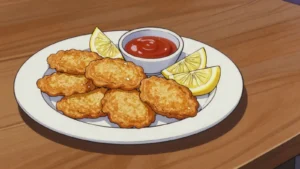
- hot, with sweet black tea
- chilli sauce
- lime wedges
Directions
- Drain it extremely thoroughly. Press it in a sieve to get the last liquid out. Wet fish makes a wet mixture. Use cooked rice that is cold. Freshly cooked rice is wet and sticky. Use it within a day. Never use rice that stood out overnight.
- Use unsweetened desiccated coconut only. Soak it in warm water for fifteen minutes. Squeeze it out thoroughly. Chop it very finely indeed. Squeeze it if it seems wet. Put the flaked tuna in a large bowl. Add the cold rice. Add the coconut and all the aromatics. Add the spices and the salt. Add the lime juice. Mix it with your hands thoroughly.
- Squeeze and work it as you go. It also helps everything bind. Work it for a couple of minutes. Squeeze a small ball in your palm. If it holds firmly, it is right. Taste a small pinch of the mixture. It should taste clearly seasoned and quite hot.
- Adjust it to your own tolerance. If you added raw egg, do not taste it. Taste before the egg goes in instead. Wet your hands so the mixture releases. Roll walnut-sized balls. Press them firmly so they hold. Keep them small. Chill the shaped balls for thirty minutes. Use a deep heavy pot. Fill it no more than one third full. Never leave hot oil unattended.
- Keep a well fitting lid within reach. If it catches fire, turn off the heat and cover it. Heat the oil to one hundred and seventy-five degrees. It should sizzle immediately and rise.
- Fry them for three or four minutes. Turn them once the crust has formed. They should be deep golden brown. Lift them out with a slotted spoon. Drain them on a rack over kitchen paper. Let the oil recover between batches. If one falls apart, the mixture is too wet.
- Add a little flour to what is left. Serve them hot, within minutes. Serve sweet black tea alongside. Serve a chilli sauce. Serve lime wedges. They keep two days refrigerated. Freeze them on a tray before bagging. Fry them from frozen at a lower temperature. Give them an extra two minutes.
Technique
- Drain the tuna extremely thoroughly, pressing it in a sieve. Wet fish makes a wet mixture and a wet mixture falls apart in the oil, which is the commonest failure here.
- Use cold day-old rice. Freshly cooked rice is wet and sticky and turns the mixture to paste, while cold rice holds its grain structure.
- Cool cooked rice within an hour and refrigerate it, use it within a day, and never use rice that has stood out overnight. Bacillus cereus spores survive cooking and produce a toxin reheating does not destroy.
- Chill the shaped balls for thirty minutes before frying. They firm considerably and hold together far better in the oil — a small step with a real effect.
- Do not move them for the first minute in the oil. They need time to form a crust; once the outside sets they are robust, but moved early they break apart.
- Test the bind by squeezing a ball in your palm. Crumbling means add egg, then flour; sticky and wet means add more rice.
- Chop the onion very finely and squeeze it if it seems wet. Coarse onion breaks the balls apart and adds water.
- Mix with your hands, squeezing and working the mixture for a couple of minutes. That breaks the rice down slightly and helps everything bind.
- Keep them walnut-sized. Larger ones stay cool in the middle and break apart more easily.
- Use unsweetened desiccated coconut, soaked and squeezed, if you cannot get fresh or frozen grated. Sweetened coconut is entirely wrong here.
- Curry leaves are a fresh aromatic leaf and nothing to do with curry powder. Fresh or frozen both work; dried have almost no flavour.
- Taste the mixture before any raw egg goes in, and season it boldly — frying mellows it, and Maldivian food is genuinely hot.
- Maldivian tuna is pole-and-line caught with very little bycatch. Buying tinned, look for pole-and-line or MSC certification; skipjack is in better shape than the severely depleted bluefin. This contains fish, a potentially severe allergen — say so plainly.
Substitutions
- Tinned tuna, well drained, replaces smoked Maldivian valhoamas.
- Boiled mashed potato replaces some or all of the rice and binds more reliably.
- Frozen grated coconut replaces fresh; unsweetened desiccated, soaked, is the fallback.
- Smoked mackerel gives something closer to the smoked-fish character of the original.
- The egg can be left out if the mixture already holds.
- Coconut oil replaces vegetable oil for frying and is what is used in the islands.
Variations
- Gulha are the hollow version, with a filling inside a dough shell.
- Bis keemiya is the folded fried pastry parcel with tuna, cabbage and egg.
- Masroshi is a flatbread stuffed with the same tuna and coconut mixture.
- Kulhi boakibaa is the baked spiced fish cake made with rice and coconut.
- Foni boakibaa is the sweet version of the same baked cake.
- Sri Lankan and south Indian fish cutlets are close regional relatives.
Frequently asked questions
What is Kavaabu?
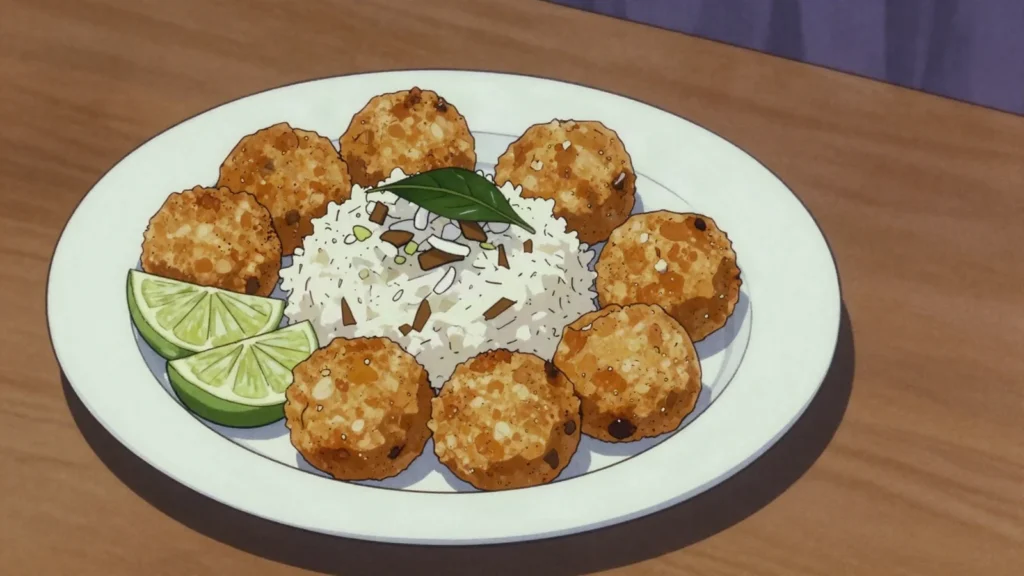
Kavaabu is a snack from Maldives: fried balls of tuna, rice and coconut spiced with curry leaf and chilli.
How long does Kavaabu take to make?
Kavaabu takes 30 minutes of preparation and 25 minutes of cooking. The recipe makes makes about 24. It is rated easy to make.
What can I substitute in Kavaabu?
Yes, within limits. Tinned tuna, well drained, replaces smoked Maldivian valhoamas. Boiled mashed potato replaces some or all of the rice and binds more reliably. Frozen grated coconut replaces fresh; unsweetened desiccated, soaked, is the fallback. Smoked mackerel gives something closer to the smoked-fish character of the original. The egg can be left out if the mixture already holds. Coconut oil replaces vegetable oil for frying and is what is used in the islands.
What is the most important thing to get right in Kavaabu?
Drain it extremely thoroughly. Press it in a sieve to get the last liquid out. Wet fish makes a wet mixture. Use cooked rice that is cold. Freshly cooked rice is wet and sticky. Use it within a day. Never use rice that stood out overnight.