
Ingredients
Fish
- 1.5 kgcarp fillets or steaks
- juice of 2 lemons
- 2 teaspoonssalt
- 1 teaspoonblack pepper
To coat
- 150 gplain flour
- 3eggs, beaten
- 200 gfine breadcrumbs
- or plain flour alone
To fry
- 150 mloil
- 50 gbutter or lard
To serve
- lemon wedges
- boiled potatoes with dill
- or bread, if served cold
- grated horseradish
- pickled beetroot
Directions
- Cut fine slashes across the fillet. Cut down to the skin but not through it. Rinse the fillets thoroughly in cold water. Pat every piece completely dry.
- Check for large bones and pull them out. Use tweezers or a pair of small pliers. Scoring them takes a sharp knife. Lay a fillet down with the skin side down. Cut fine parallel slashes across it. Space them about three millimetres apart.
- Rub the fish with lemon juice and salt. Let it sit for at least an hour. Rinse and dry it before coating. Flour alone gives a thin crisp skin. Put the flour in one shallow dish.
- Beat the eggs in a second shallow dish. Put the breadcrumbs in a third. Season the flour with salt and pepper. Coating them is done in order. Dredge a piece of fish in the flour. Shake off all of the excess flour. Dip it fully in the beaten egg. Press it into the breadcrumbs.
- Press the crumbs on firmly all over. Frying them needs the right heat. Heat the oil in a wide heavy pan. Add the butter or the lard to it. Get it properly hot before the fish goes in.
- Lay the pieces in without crowding. Fry them for about four minutes. Turn them over once with a fish slice.
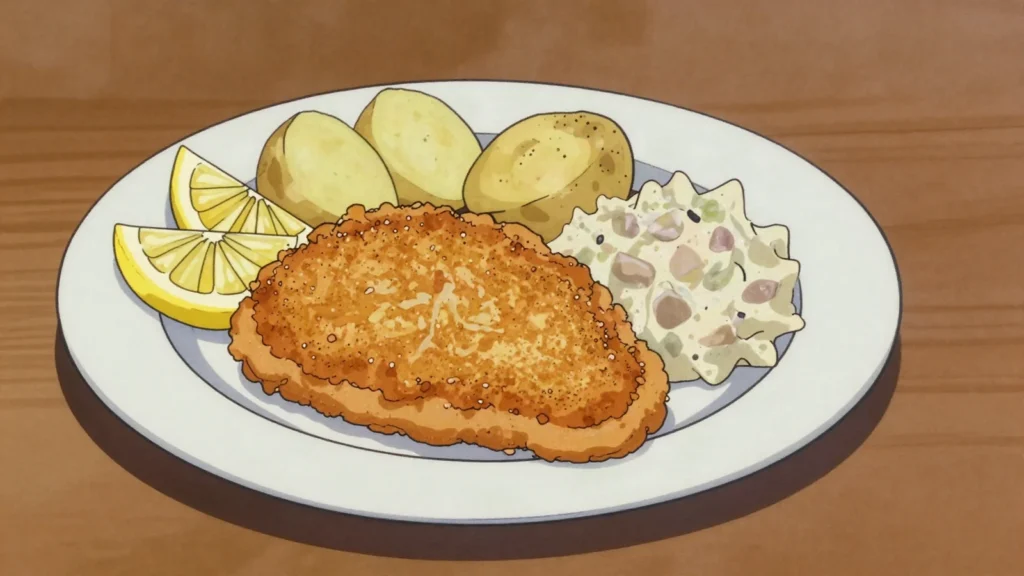
- Fry the other side for four minutes. Judging when they are done matters. Lift them out onto a wire cooling rack. A rack keeps the coating crisp underneath. Serve it hot with boiled potatoes and dill. Or serve it cold with bread instead.
Technique
- Poland after the war was short of food and sea fish was scarce, so the state promoted inland-farmed carp for Christmas Eve in nineteen forty-seven and it became the fixed tradition; Cistercian monks had been farming carp in dug ponds since the twelfth century, and the campaign built on that.
- Live carp were traditionally kept in the bathtub for a day or two before Christmas to purge any muddy taste, a custom now widely debated in Poland on animal welfare grounds, with the law tightened on live fish sales and many households buying them already killed.
- Carp has many fine forked Y-bones running through the flesh that cannot all be pulled out, so the fillet is scored with fine parallel slashes a few millimetres apart, cutting those bones into short pieces that crisp and become edible in the frying.
Substitutions
- Flour alone gives a thin crisp skin, and flour, egg and crumbs give a thicker crust; both are traditional.
- Soaking in milk instead of lemon water also reduces any muddiness.
Variations
- It is served hot with potatoes or cold with bread, both entirely traditional.
- Karp w galarecie sets the fish in its own jelly instead.
- Grated horseradish is the standard accompaniment either way.
History
Carp were farmed in monastery ponds from the Middle Ages; a 1947 state campaign made carp the standard Polish Christmas Eve fish.
Frequently asked questions
What is Karp smażony?
Karp smażony is a main from Poland: fried carp fillets served cold or hot on Christmas Eve. Carp were farmed in monastery ponds from the Middle Ages; a 1947 state campaign made carp the standard Polish Christmas Eve fish.
How long does Karp smażony take to make?
Karp smażony takes 30 minutes of preparation and 25 minutes of cooking. The recipe makes serves 6. It is rated medium to make.
What can I substitute in Karp smażony?
Yes, within limits. Flour alone gives a thin crisp skin, and flour, egg and crumbs give a thicker crust; both are traditional. Soaking in milk instead of lemon water also reduces any muddiness.